Taiwan Indicts Nvidia Manager as AI Chip Export Probe Raises New Compliance Risks
The indictment of nine people over the alleged diversion of Nvidia-powered AI servers to China underscores the growing legal and commercial pressure surrounding advanced-chip exports.

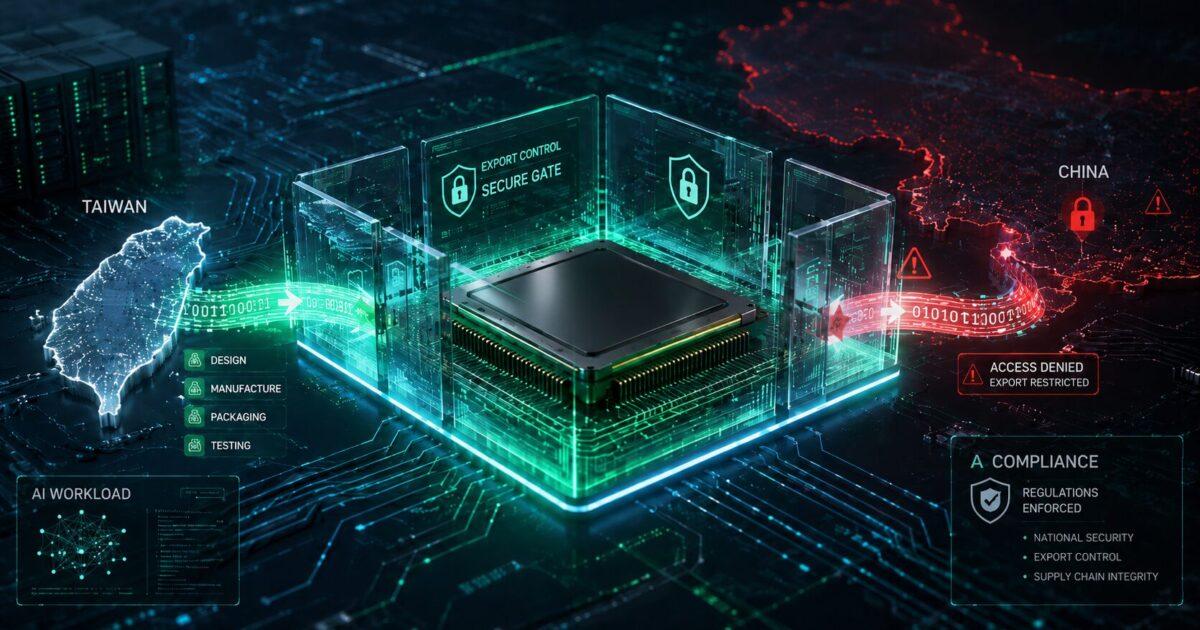
Taiwan’s decision to indict nine people in connection with the alleged illegal export of advanced artificial-intelligence servers to China places a fresh spotlight on one of the technology industry’s most sensitive business risks: controlling where high-performance computing equipment ultimately ends up.
The case includes an employee at Nvidia’s Taiwan unit and employees at Super Micro Computer, whose servers were equipped with advanced Nvidia chips. Taiwanese prosecutors said eight defendants were charged with breach of trust and document forgery in connection with the diversion of 74 servers to China. Fifty of those servers were allegedly routed through Indonesia, eight through Japan, while the remainder went directly to China. Another 56 servers were intercepted by Taiwanese authorities before export.
The significance of the case goes beyond the individuals named in the indictment. It highlights how export controls are becoming an operational issue for the entire artificial-intelligence hardware ecosystem. Washington has imposed restrictions on the export of advanced AI semiconductors to China since 2022, making licensing and supply-chain verification increasingly important for companies that design, manufacture, distribute or integrate high-performance computing systems.
For Nvidia, the case creates another reminder that its competitive advantage depends not only on chip performance and demand, but also on the ability to maintain tight control over distribution channels. Nvidia has previously emphasized that it sells products primarily through established partners and that transactions are subject to export-compliance reviews.
That makes the commercial dimension particularly important. Advanced AI servers represent high-value infrastructure rather than ordinary technology products, and unauthorized diversion can expose manufacturers and distributors to financial, regulatory and reputational costs. Prosecutors in Taiwan specifically said the alleged activity increased corporate compliance costs and damaged the country’s international reputation.
The episode also illustrates a structural challenge for the semiconductor market. AI infrastructure increasingly depends on a global network connecting chip designers, server manufacturers, distributors, logistics providers and regional resellers. That model improves scalability, but it also creates more points at which products can be redirected, documentation can be manipulated or final destinations can become difficult to verify.
The alleged movement of servers through multiple jurisdictions reinforces that vulnerability. Indonesia, Japan and Hong Kong were identified in the investigation as transit points, showing how complex logistics networks can complicate efforts to enforce technology restrictions.
The case is also important from a regulatory perspective because Taiwan’s legal framework does not mirror every U.S. restriction on advanced semiconductor exports. Authorities have therefore relied on other legal provisions, including alleged document falsification and breach-of-trust offenses, to pursue the defendants. Prosecutors have argued that stronger mechanisms are needed as Taiwan faces greater pressure to prevent advanced technology from reaching restricted markets.
For companies operating in the AI hardware market, the broader lesson is clear: export compliance is becoming part of corporate strategy rather than a back-office function. Companies may need stronger customer verification, end-use monitoring, transaction screening and distributor controls as governments increasingly connect semiconductor trade with national security.
The competitive implications could also widen. Businesses with more sophisticated compliance infrastructure may gain an advantage because customers, governments and financial institutions are likely to place a higher premium on traceability and regulatory reliability. At the same time, companies with weaker controls could face slower sales processes, higher compliance expenses and greater exposure to investigations.
The Nvidia case therefore reflects a broader transformation in the AI industry. As advanced computing becomes strategically important to governments and enterprises, the value of the technology is being matched by the intensity of efforts to regulate its movement. For Nvidia, Super Micro and other companies across the supply chain, the ability to secure both technological leadership and distribution integrity is becoming increasingly central to long-term growth.
The case also signals that the next phase of competition in AI hardware will not be defined solely by processor speed, server capacity or market share. It will increasingly depend on who can build the most resilient and transparent supply chains while operating within a rapidly evolving global export-control environment.
News You Should See
2026 Nobel Medicine Prize Honors Scientists Behind Optogenetics Breakthrough
Oil Prices Edge Lower as Stronger Middle East Exports and G7 Reserves Ease Supply Concerns
Trump Offers U.S. Assistance to Russia After Death at Siberian Plague Research Institute
Trump Takes Economic Message to Nebraska as GOP Faces Rising Cost-of-Living Pressure
U.S. Appeals Court Weighs Trump Administration’s $2.6 Billion Harvard Funding Fight
U.S. Midterm Elections Begin With Resilient Jobs Market and Persistent Cost Pressures
Latest News
The 2026 Nobel Prize in Physiology or Medicine honors Karl Deisseroth, Peter Hegemann and Georg Nagel for pioneering research behind optogenetics and its impact on neuroscience.
Oil prices edged lower as stronger Middle Eastern exports and a planned G7 release of 100 million barrels eased immediate supply concerns, while Gulf security risks and the Strait of Hormuz kept markets alert.
President Donald Trump said the United States would help Russia if needed after a laboratory worker died at a Siberian plague research institute, as Russian authorities imposed precautionary quarantine measures.
Trump’s Nebraska campaign stop highlights rising fuel and grocery costs, beef prices and growing economic pressure on Republicans ahead of the November midterm elections.
A U.S. appeals court is reviewing the Trump administration’s effort to cut Harvard’s federal research funding, with more than $2.6 billion at stake.
The U.S. enters the 2026 midterm elections with unemployment at 4.2%, while higher living and energy costs create economic pressure for households and businesses.
US services growth eased in September as input prices climbed to their highest level since July 2022, with fuel costs, supply-chain disruptions and strong demand increasing pressure on businesses.
Rising Treasury yields are increasing U.S. borrowing costs as Washington manages record debt, persistent inflation and strong economic demand, narrowing its policy options.
A EGP 16 million corporate partnership will establish and equip a bone marrow transplant unit at Cairo’s Coptic Hospital, supporting access to specialized treatment for patients.