Supreme Court Takes Up Trump Immigration Detention Policy
The case could determine whether immigrants living in the U.S. can seek bond hearings while challenging deportation, with federal appeals courts divided over the administration’s interpretation of immigration law.

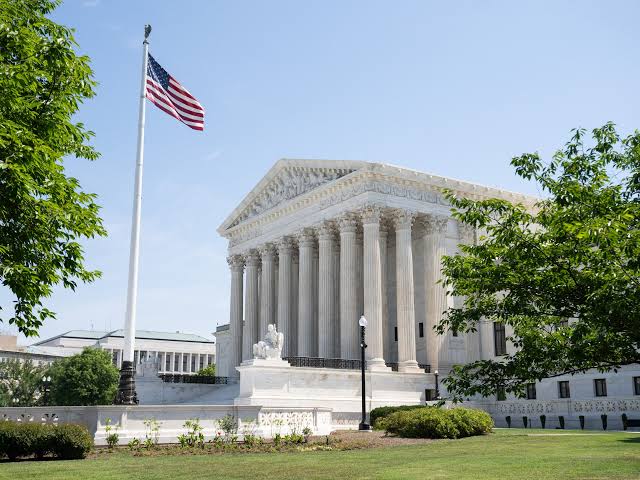
The U.S. Supreme Court’s decision to review the Trump administration’s mandatory detention policy places a broader question about the structure of immigration enforcement before the nation’s highest court: whether immigrants living in the United States can obtain a bond hearing while their deportation cases move through the legal system.
The case arrives amid a dispute among federal courts over how immigration law should be applied to people who are arrested away from the border. Most appellate courts that have examined the issue have concluded that federal law does not permit the government to automatically deny bond hearings to such immigrants. The 5th and 8th U.S. Circuit Courts of Appeals have reached a different interpretation, creating a legal divide that has produced varying detention practices across the country.
At the center of the Supreme Court case is Ricardo Aparecido Barbosa da Cunha, a Brazilian citizen who authorities say entered the United States illegally about two decades ago and later applied for asylum in 2016. Following his September 2025 arrest, an immigration judge determined that his detention was mandatory. His attorneys say he has never been charged with or convicted of a crime and sought a bond hearing to challenge his continued detention.
The legal dispute has implications beyond one individual case because the administration’s interpretation reaches immigrants apprehended inside the country rather than being limited to people encountered at the border. Attorneys representing the plaintiffs, including the American Civil Liberties Union, argue that the policy could affect a large population of noncitizens who previously had an opportunity to seek a hearing on whether continued detention was necessary.
From an institutional perspective, the Supreme Court review could provide a clearer national framework for immigration detention. The current split has allowed different federal circuits to operate under competing interpretations, creating differences in how similarly situated immigrants are treated depending on where their cases are processed. The administration has argued that the conflicting rulings have disrupted the consistent administration of immigration law and contributed to thousands of court petitions challenging the policy.
The dispute also places legal administration and government resources at the center of the immigration strategy. A broader mandatory-detention framework can alter the workload facing immigration courts, federal judges, detention facilities and government attorneys, while continued litigation can add another layer of procedural demands. The administration’s position is that its interpretation is authorized by a 1996 immigration law, while opponents contend that the approach departs from the way the law was applied by previous administrations.
For the government, the Supreme Court case represents an opportunity to establish a nationwide legal standard for an important component of its immigration enforcement program. For immigrants and their attorneys, the ruling could clarify the availability of bond hearings for people arrested within the United States while their deportation proceedings remain unresolved.
The court is expected to hear the case in the coming months. Until then, the conflicting appellate decisions will continue to shape detention practices in different parts of the country, leaving the scope of mandatory detention dependent in part on the jurisdiction in which an immigration case is handled.
News You Should See
2026 Nobel Medicine Prize Honors Scientists Behind Optogenetics Breakthrough
Oil Prices Edge Lower as Stronger Middle East Exports and G7 Reserves Ease Supply Concerns
Trump Offers U.S. Assistance to Russia After Death at Siberian Plague Research Institute
Trump Takes Economic Message to Nebraska as GOP Faces Rising Cost-of-Living Pressure
U.S. Appeals Court Weighs Trump Administration’s $2.6 Billion Harvard Funding Fight
U.S. Midterm Elections Begin With Resilient Jobs Market and Persistent Cost Pressures
Latest News
The 2026 Nobel Prize in Physiology or Medicine honors Karl Deisseroth, Peter Hegemann and Georg Nagel for pioneering research behind optogenetics and its impact on neuroscience.
Oil prices edged lower as stronger Middle Eastern exports and a planned G7 release of 100 million barrels eased immediate supply concerns, while Gulf security risks and the Strait of Hormuz kept markets alert.
President Donald Trump said the United States would help Russia if needed after a laboratory worker died at a Siberian plague research institute, as Russian authorities imposed precautionary quarantine measures.
Trump’s Nebraska campaign stop highlights rising fuel and grocery costs, beef prices and growing economic pressure on Republicans ahead of the November midterm elections.
A U.S. appeals court is reviewing the Trump administration’s effort to cut Harvard’s federal research funding, with more than $2.6 billion at stake.
The U.S. enters the 2026 midterm elections with unemployment at 4.2%, while higher living and energy costs create economic pressure for households and businesses.
US services growth eased in September as input prices climbed to their highest level since July 2022, with fuel costs, supply-chain disruptions and strong demand increasing pressure on businesses.
Rising Treasury yields are increasing U.S. borrowing costs as Washington manages record debt, persistent inflation and strong economic demand, narrowing its policy options.
A EGP 16 million corporate partnership will establish and equip a bone marrow transplant unit at Cairo’s Coptic Hospital, supporting access to specialized treatment for patients.