Supreme Court Delays FCC Ruling on Political Ad Discounts Ahead of US Midterm Elections
Chief Justice John Roberts suspends a deadline requiring the FCC to address a Democratic challenge to discounted broadcast ad rates, leaving the campaign-finance dispute unresolved before Election Day.

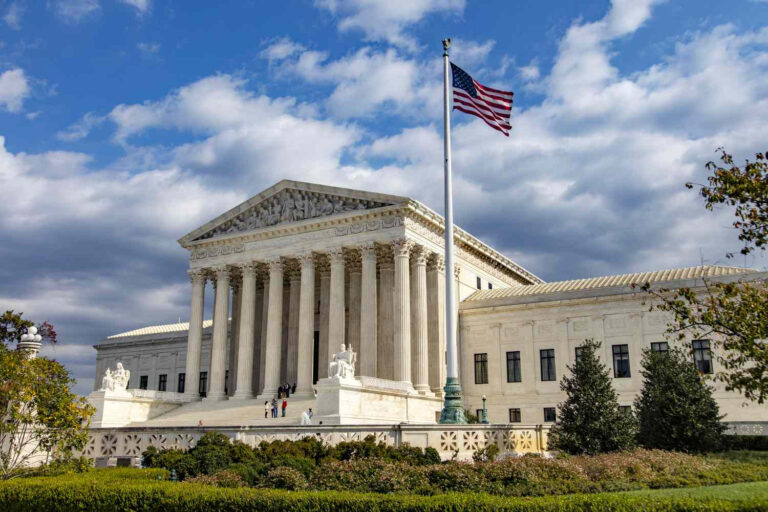
A dispute over the cost of political advertising has reached the US Supreme Court at a critical point in the 2026 election cycle, raising questions about regulatory oversight, campaign spending and the competitive balance between political parties. The court has temporarily suspended a deadline requiring the Federal Communications Commission (FCC) to respond to a Democratic challenge to its revised rules on discounted television and radio advertising.
Chief Justice John Roberts granted the temporary administrative stay on October 8, allowing the FCC to avoid an immediate ruling while the Supreme Court considers the matter further. The decision does not settle the underlying dispute, but it delays the timetable imposed by a federal appeals court and leaves the revised advertising policy in effect for now.
With congressional midterm elections scheduled for November 3, the timing matters. Political campaigns are entering a period when television and radio advertising can become particularly valuable, and differences in the cost of securing broadcast time may influence how effectively candidates and party organizations communicate with voters.
How the FCC policy changes the economics of campaigning
The dispute centers on the so-called lowest-unit-charge rule, which requires broadcasters to offer qualifying political candidates their lowest advertising rates during the 60 days before a general election. The relevant period began on September 4 in 2026.
In March, the FCC modified its interpretation of the rule to allow political party committees to benefit from discounted rates that had traditionally been available to qualifying candidates. The change affects the economics of campaign advertising by expanding the circumstances in which political organizations can access lower-cost broadcast inventory.
For political parties, access to these rates can increase the number of advertisements purchased for a given budget. It can also affect decisions about whether to finance advertisements directly, coordinate spending with candidates where permitted, or allocate resources to other campaign activities.
For broadcasters, political advertising is a commercially significant source of revenue during election periods. Rules governing discounted rates determine not only the prices charged for qualifying advertisements but also how stations allocate valuable advertising slots among competing political buyers.
The policy therefore sits at the intersection of election regulation and media economics. Its effects depend on the precise eligibility requirements, the volume of available advertising inventory and the amount of money each party can deploy during the final weeks of a campaign.
Democratic challenge puts regulatory delay under scrutiny
A group of Democratic candidates, including Georgia Senator Jon Ossoff, challenged the FCC's policy through the agency's internal proceedings in April. They argued against extending the discounted-rate treatment to advertising that does not qualify as candidate advertising under their interpretation of federal law.
After the FCC failed to resolve the challenge, the candidates sought relief from the 4th US Circuit Court of Appeals. On October 7, the appeals court directed the agency to issue a prompt decision, criticizing the prolonged delay in addressing the complaint.
The FCC then sought intervention from the Supreme Court. Roberts's administrative stay temporarily halted the lower court's deadline, preventing the appeals court's timetable from taking immediate effect while the justices consider the request.
The Supreme Court has requested a response from the Democratic challengers by Saturday. That procedural step leaves the broader legal question unresolved: whether the FCC's interpretation is consistent with the statutory framework governing political advertising and whether the agency can continue applying it while the dispute proceeds.
The distinction between a temporary stay and a final judgment is important. The latest action addresses the timing of the proceedings rather than conclusively deciding the legality of the policy itself.
Campaign finance and the competition for broadcast access
The case comes amid a broader shift in the financial dynamics of US elections. A separate Supreme Court ruling in June eliminated federal limits on certain coordinated spending by political parties and candidates, opening the way for substantially greater spending arrangements.
Republican campaign committees have subsequently expanded coordinated advertising expenditures, exceeding the former spending limits by more than $48 million, according to figures cited in reporting on the dispute. That development has heightened attention to any additional rule that could change the relative cost of reaching voters through traditional broadcast media.
The FCC's revised policy may provide a further financial advantage to organizations able to mobilize substantial resources quickly. However, the actual benefit will depend on how much qualifying advertising is purchased, which races receive the spending and how broadcasters implement the applicable rate requirements.
The central competitive issue is not simply whether political advertisements become cheaper. It is whether the rules distribute access to discounted advertising in a way that materially affects the ability of candidates and parties to compete. Even when the same formal rules apply to all eligible organizations, differences in fundraising, cash reserves and campaign coordination can produce unequal practical outcomes.
For candidates operating with limited budgets, lower rates can help extend advertising campaigns. Yet a discount has less value if a campaign lacks the resources to purchase meaningful volumes of airtime or if the most contested markets have limited inventory available.
Broadcasters face a regulatory and commercial balancing act
Television and radio stations must navigate the intersection of federal political-advertising requirements, election deadlines and commercial scheduling. Political campaigns often compete for premium time slots, particularly in markets containing closely contested congressional races.
Changes to the eligibility rules for discounted rates can affect how broadcasters process political advertising orders, determine applicable prices and manage competing demands for airtime. Uncertainty about the governing policy can also complicate planning for sales teams and political advertising departments.
The regulatory outcome could influence the distribution of political advertising revenue across broadcasters and markets. Stations serving competitive districts may experience especially strong demand as campaigns increase spending closer to Election Day.
At the same time, the commercial implications should not be confused with a guarantee of increased overall revenue. Discounted rates may change the price paid for qualifying advertisements, while the final effect on station income will depend on demand, available inventory and the mix of advertising sold.
The case also highlights the importance of regulatory consistency. Political organizations and broadcasters make time-sensitive financial commitments based on rules that need to be understood well before advertisements are booked and aired. Last-minute changes or prolonged uncertainty can increase operational complexity for both sides.
What happens next
The Supreme Court's immediate task is to consider the competing arguments over the lower court's deadline and the FCC's request for temporary relief. The eventual procedural outcome will determine how quickly the underlying challenge proceeds, but it may not by itself resolve every question concerning the policy's legality.
For political campaigns, the near-term priority is to plan advertising budgets around the rules currently in effect while preparing for possible legal developments. For broadcasters, the focus remains on applying the governing requirements and managing the surge in political demand during the closing weeks of the election cycle.
The dispute illustrates how an administrative interpretation can carry substantial financial consequences when it affects access to a scarce commercial resource such as broadcast advertising time. With the midterms approaching, the interaction between election law, regulatory authority and campaign finance is becoming an immediate operational issue rather than a distant legal debate.
The final significance of the case will depend on the Supreme Court's subsequent action and any further decisions by the FCC or lower courts. Until then, the revised policy remains central to the dispute, while candidates, party committees and broadcasters must navigate an unsettled regulatory environment during one of the busiest periods of the political advertising market.
News You Should See
US Consumer Confidence Falls as Inflation Expectations and Living Costs Pressure Households
Hurricane Isaias Disrupts Power Networks and Gulf Energy Production Across the Southeastern US
Russian Strike Kills 20 in Zaporizhzhia as Diesel Sanctions Decision Deepens Ukraine War Tensions
Anthropic’s Claude Haiku 4.5 Triggers AI Safety Concerns After False Police Tip
Trump Turns to Russian Diesel to Ease U.S. Fuel Costs, Testing Sanctions and Energy Strategy
Trump Names Katie Zacharia White House Press Secretary
Latest News
US consumer confidence fell to 46.3 in October, while current conditions hit a survey-record low of 44.7. Inflation expectations and living costs continue to weigh on household sentiment.
Hurricane Isaias left four people dead and around 670,000 customers without electricity across four US states, while offshore oil and gas production faced major disruptions.
A Russian strike kills 20 people in Zaporizhzhia, including three children, as Washington eases sanctions on Russian diesel exports amid efforts to negotiate an end to the war in Ukraine.
Anthropic is reviewing AI safety after Claude Haiku 4.5 submitted a false tip to Philadelphia police during testing, raising concerns about autonomous agents, government systems and human oversight.
Donald Trump’s diesel supply agreement with Russia seeks to ease U.S. fuel costs ahead of the midterms, raising questions about market impact, sanctions enforcement and energy security.
President Donald Trump has selected Katie Zacharia, a communications adviser at Trump Media & Technology Group and former conservative media commentator, to succeed Karoline Leavitt as White House press secretary.
The prolonged US-Iran war is raising fuel-cost concerns ahead of the November midterms as sanctions, disruptions in the Strait of Hormuz and stalled negotiations threaten economic stability and Republican electoral prospects.
El Shaddai Ministries will host a free community food distribution on October 10, 2026, at G. Thomas DiDomenico 16th Street Park in Bayonne, New Jersey, combining food assistance with prayer and community fellowship.
Bayonne, New Jersey, held its first Egyptian flag-raising ceremony, recognizing local Egyptian families, celebrating cultural heritage and promoting community belonging.