Strength Beyond Age: How Late-Life Fitness Is Redefining Healthy Aging
A remarkable transformation proves that consistent training, not age, is the defining factor in improving mobility, strength, and quality of life.

Growing older is frequently viewed as an unavoidable barrier to maintaining physical fitness. Many people gradually reduce their activity levels because they believe advancing age automatically limits their ability to exercise or achieve meaningful improvements. While aging naturally changes the body's capabilities and requires greater attention to safety, it does not eliminate the potential to build strength, improve mobility, and enhance overall health. Modern fitness research continues to emphasize that consistent physical activity remains one of the most effective strategies for preserving independence and quality of life throughout the aging process.
An inspiring example of this principle can be seen in the journey of Shirley Webb. At the age of 76, her daily routine involved very little structured exercise beyond mowing her lawn. Simple movements that many people take for granted had become difficult. Climbing stairs required support from a handrail, and standing up from the floor without assistance was no longer possible. These limitations reflected the gradual decline in muscle strength that often accompanies aging when regular exercise is absent.
Recognizing the need for change, Webb decided to join a local gym. Rather than pursuing unrealistic goals, she committed herself to a consistent strength-training routine under professional guidance. Within two years, the physical improvements became remarkable. She regained the ability to climb stairs confidently and could once again rise from the floor independently, demonstrating how targeted resistance training can restore functional movement even later in life.
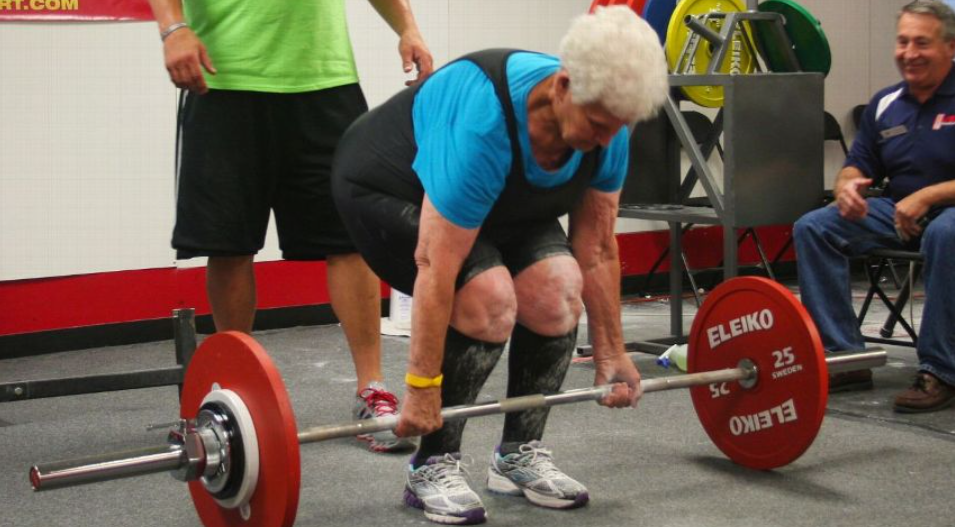
Her progress extended well beyond recovering everyday mobility. Webb entered competitive powerlifting and established deadlifting records in both Illinois and Missouri within her age and weight categories. One of her official lifts reached 237 pounds, highlighting not only significant muscular development but also the effectiveness of disciplined training over a relatively short period. Looking ahead, she aimed to achieve a personal best of 260 pounds while pursuing the first national deadlifting record for her age division.
Today, regular exercise has become a permanent part of Webb's lifestyle. She attends the gym at least twice each week and consistently describes the positive physical and emotional benefits she experiences after every training session. Improved energy levels, greater confidence, and an enhanced sense of well-being have reinforced her commitment to maintaining an active life rather than allowing age to dictate her capabilities.
Her transformation has also generated a broader community impact. Fellow gym members regularly acknowledge her determination, while her trainer notes that she has become a source of encouragement for everyone around her. Her achievements demonstrate that visible success stories can motivate individuals who previously believed they were too old to begin exercising. Webb herself recalls meeting people who joined the gym specifically after learning about her accomplishments, illustrating how personal perseverance can influence public attitudes toward healthy aging.
From a health perspective, Webb's experience reinforces the value of resistance training as a practical investment in long-term wellness. Stronger muscles contribute to improved balance, greater independence, reduced risk of falls, and enhanced daily functionality. These benefits can also help lower future healthcare burdens by supporting healthier aging populations that remain physically active for longer periods.
Beyond the physical outcomes, the story carries an important message about personal identity and social perception. Rather than accepting stereotypes associated with growing older, Webb redefined what later life could represent. Her achievements shifted the conversation from limitation to opportunity, proving that determination, professional guidance, and consistency often matter more than chronological age.
Ultimately, her journey illustrates that beginning a fitness program should never be viewed as something reserved for younger generations. With realistic expectations, appropriate supervision, and steady commitment, individuals of almost any age can improve their physical health, regain confidence, and inspire others to pursue healthier lifestyles. Her success serves as compelling evidence that the decision to start is often far more important than the number of years that have already passed.
News You Should See
2026 Nobel Medicine Prize Honors Scientists Behind Optogenetics Breakthrough
Oil Prices Edge Lower as Stronger Middle East Exports and G7 Reserves Ease Supply Concerns
Trump Offers U.S. Assistance to Russia After Death at Siberian Plague Research Institute
Trump Takes Economic Message to Nebraska as GOP Faces Rising Cost-of-Living Pressure
U.S. Appeals Court Weighs Trump Administration’s $2.6 Billion Harvard Funding Fight
U.S. Midterm Elections Begin With Resilient Jobs Market and Persistent Cost Pressures
Latest News
The 2026 Nobel Prize in Physiology or Medicine honors Karl Deisseroth, Peter Hegemann and Georg Nagel for pioneering research behind optogenetics and its impact on neuroscience.
Oil prices edged lower as stronger Middle Eastern exports and a planned G7 release of 100 million barrels eased immediate supply concerns, while Gulf security risks and the Strait of Hormuz kept markets alert.
President Donald Trump said the United States would help Russia if needed after a laboratory worker died at a Siberian plague research institute, as Russian authorities imposed precautionary quarantine measures.
Trump’s Nebraska campaign stop highlights rising fuel and grocery costs, beef prices and growing economic pressure on Republicans ahead of the November midterm elections.
A U.S. appeals court is reviewing the Trump administration’s effort to cut Harvard’s federal research funding, with more than $2.6 billion at stake.
The U.S. enters the 2026 midterm elections with unemployment at 4.2%, while higher living and energy costs create economic pressure for households and businesses.
US services growth eased in September as input prices climbed to their highest level since July 2022, with fuel costs, supply-chain disruptions and strong demand increasing pressure on businesses.
Rising Treasury yields are increasing U.S. borrowing costs as Washington manages record debt, persistent inflation and strong economic demand, narrowing its policy options.
A EGP 16 million corporate partnership will establish and equip a bone marrow transplant unit at Cairo’s Coptic Hospital, supporting access to specialized treatment for patients.