Spain Beyond the Tourist Map: The Cultural Codes Shaping the Modern Visitor Experience
From informal queues and extended meals to sun-led schedules and regional cuisine, understanding Spain's social codes can transform tourism from consumption into cultural participation.

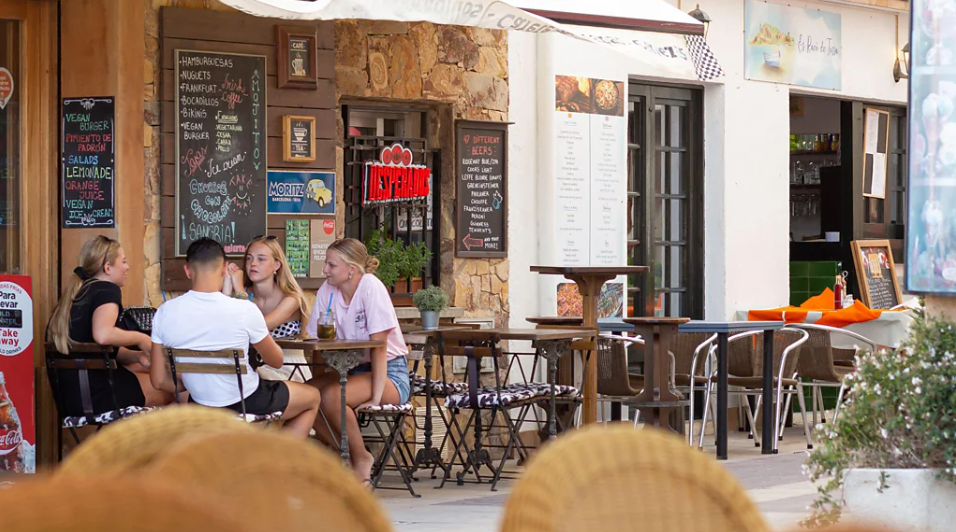
Spain's appeal has long been associated with a distinctive contradiction: it can appear remarkably relaxed while operating according to a sophisticated set of social expectations. Long lunches, late dinners, crowded plazas and an apparently flexible approach to time may give visitors the impression that everyday life is governed by spontaneity. In reality, many of these behaviours reflect deeply established cultural systems.
For travellers, understanding those systems has a practical value that goes beyond avoiding awkward situations. They provide a framework for interpreting how Spanish cities function, how residents use public spaces, how restaurants structure their service and why regional identity remains so influential in everyday consumption.
The idea of “no hay prisa”, or “there is no rush”, together with expressions such as “tranquilo”, captures part of the country's public image. Meals can extend well beyond the point at which food has been consumed, evenings can continue late into the night, and the famous siesta remains one of Spain's best-known cultural symbols. Yet the slower rhythm should not be confused with an absence of organisation. Instead, Spain has developed a different relationship with time, space, community and consumption.
Jill Petzinger, a British journalist and professional travel adviser specialising in Spain and Southern Europe, has been based in Valencia since 2021 and has travelled extensively across the country, examining its regional cuisines and cultural traditions. Her observations highlight five social patterns that can help visitors understand Spain beyond its conventional tourist image.
The first concerns one of the country's most understated systems: the informal queue.
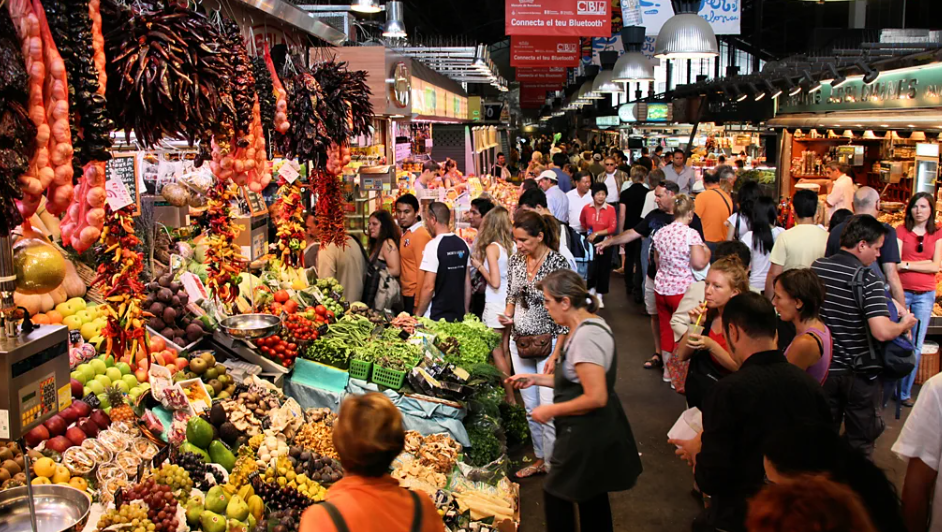
In places such as covered markets, pharmacies, bakeries, bars and neighbourhood shops, visitors may encounter what initially appears to be a disorderly gathering rather than a conventional queue. People can be standing in different locations, browsing displays or moving around the premises without forming a clearly visible line.
This apparent lack of structure is not necessarily disorder. It reflects a system based on social recognition and mutual trust. Small premises and narrow market aisles can make a traditional single-file queue inconvenient, while the informal arrangement allows people to move around without necessarily losing their position.
The key is to establish who arrived last.
A visitor can approach someone nearby and ask “¿Quién es el último?” or simply “¿El último?”, meaning “Who is last?”. The person will identify the individual who currently holds the last position. Once that relationship is established, the visitor can move around the shop or market while retaining their place.
The system works because it depends on collective participation rather than physical barriers or numbered tickets. It illustrates a broader characteristic of Spanish public life: social interaction frequently performs functions that, in other societies, would be delegated to formal systems.
For international visitors, the important lesson is not simply to learn a Spanish phrase. It is to recognise that local efficiency can operate through cultural conventions that may initially be invisible to outsiders.
The second principle appears after the meal rather than during it.
A visitor may assume that finishing the final bite of tortilla or drinking the last of a glass of Rioja means the dining experience has ended. In Spain, however, the meal can enter a different stage at precisely that moment.
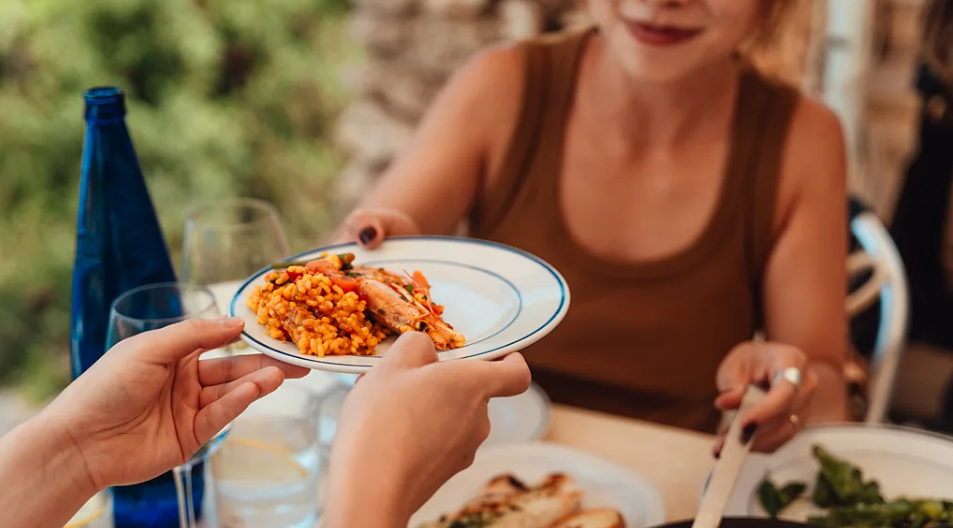
This tradition is known as “sobremesa”, literally referring to the period spent “over the table”. It describes the extended time after eating when people remain seated to talk, drink coffee, have another beverage or simply continue socialising.
Sobremesa is significant because it demonstrates that food in Spain can function as a social platform rather than merely a means of consuming calories. The restaurant table becomes a setting for maintaining relationships, exchanging news and extending communal interaction.
The tradition is often associated with Spain's agricultural history. After lunch, intense heat could make an immediate return to outdoor work impractical, giving families a reason to remain around the table. Although contemporary Spain is no longer organised around agricultural labour to the same extent, the social function of sobremesa has survived.
For visitors, the practical response is simple: do not interpret an apparently finished meal as an immediate signal to leave. Put the phone away, continue the conversation and ask for the bill when genuinely ready. Spanish waiters are accustomed to allowing customers to remain at the table without constantly prompting them to vacate it.
From an economic perspective, this tradition also reveals an important characteristic of Spain's hospitality model. The value of a restaurant experience is not always measured exclusively by the speed at which a table turns over. Time itself can form part of the product being offered.
The third principle is perhaps the one most closely connected to geography: organise the day around the sun.
Spain's late lunches, late dinners and long periods of afternoon closure can appear inefficient or confusing to visitors accustomed to earlier European schedules. Yet the country's rhythm has historical and environmental foundations.
Agricultural communities traditionally began work early, taking advantage of cooler morning temperatures before the strongest heat arrived. Lunch could then take place later, while the hottest period of the day created an incentive for people to slow down or remain indoors.
Modern Spain has also inherited a historical complication in its relationship with time. During the 1940s, General Francisco Franco moved Spain's clocks forward to align the country with Nazi Germany. Although Spain subsequently remained in the Central European time zone, many established daily habits continued to follow the country's traditional solar rhythm.
The result was a gradual mismatch between clock time and solar time. Lunch that had traditionally taken place around 13:00 shifted toward 14:00, while dinner moved later as daylight patterns and social routines evolved.
The contemporary working environment has changed considerably. Spain's average working week is slightly longer than the EU average, at approximately 36.3 hours compared with 35.9 hours. At the same time, the traditional siesta has become less universal, particularly because around 80% of the country's population now lives in urban areas.
For many city workers, returning home for a midday nap is no longer practical. The post-lunch period may instead be spent returning to work or completing personal errands.
For travellers, therefore, the useful interpretation of the Spanish schedule is not that the country simply “moves slowly”. Rather, visitors should design their day around climate, operating hours and local demand.
The period from roughly 13:00 to 18:00 can be particularly challenging during hot weather. A lighter breakfast can help travellers manage the later lunch schedule, while checking opening hours before crossing a city can prevent arriving at an attraction or shop during a closure.
Dinner presents another important distinction. Restaurants opening at 19:00 are often primarily serving tourists. Travellers who wait until approximately 20:30 or 21:00 are more likely to encounter establishments operating according to local dining patterns.
The fourth cultural code involves physical space.
Spain has a notably tactile social environment. Touching someone's arm while speaking, greeting friends with embraces, exchanging kisses and standing relatively close to other people can be ordinary parts of social interaction.
Crowded streets, bars, plazas and public spaces reinforce this behaviour. Spanish social life has historically been strongly connected to public environments, meaning that people frequently interact in spaces where physical proximity is unavoidable.
Visitors from cultures that place greater emphasis on personal distance may initially interpret a shoulder bump, close conversation or crowded queue as intrusive. In many Spanish contexts, however, such proximity does not automatically communicate hostility or disrespect.
The appropriate strategy is to recognise the difference between intentional aggression and ordinary physical closeness. Travellers should maintain whatever personal space is realistically available while accepting that busy public environments will involve accidental contact.
If someone needs to pass through a crowded area, a simple “perdón” is generally sufficient. The response “no pasa nada”, meaning approximately “it's no problem”, reflects the informal and forgiving character of many such interactions.
This principle has broader implications for understanding Spanish urban culture. Public space is not merely infrastructure through which people move. Plazas, streets, cafés and bars are social environments where community life takes place. The closer physical interaction is therefore partly a consequence of how society uses shared spaces.
The fifth principle concerns food and the difference between a tourist image of Spain and the country's actual regional culinary identity.
International visitors often associate Spanish cuisine with a familiar trio: paella, tapas and sangria. These products are undoubtedly important to the country's global image, but treating them as universal representations of Spanish food overlooks the extraordinary regional diversity of the country.
Spain contains 17 autonomous communities on the mainland, each with distinctive culinary traditions shaped by geography, agriculture, history and local identity. Historically, communities relied heavily on what was produced in their own regions, and this connection between food and place remains culturally significant.
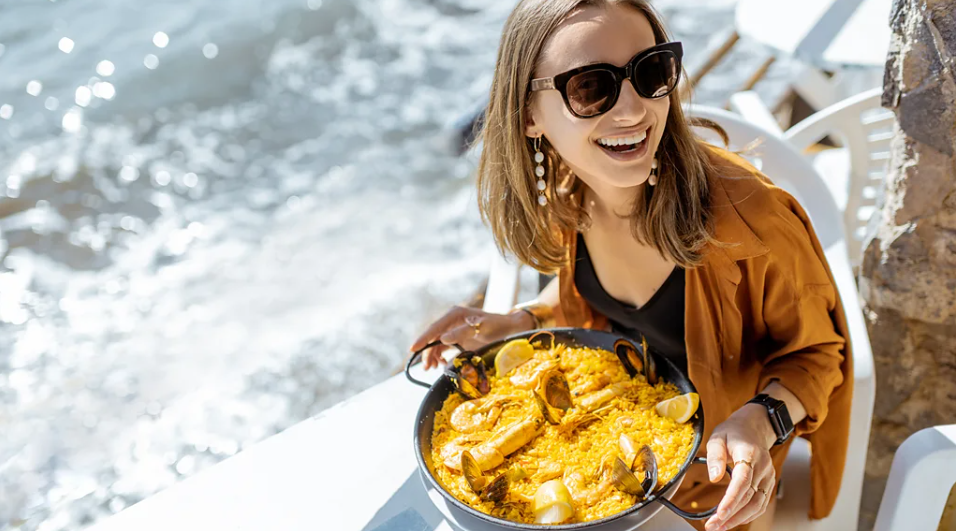
Paella is strongly associated with Valencia and also has connections to the wider eastern Mediterranean culinary tradition. Its status as a substantial meal means that it is traditionally more appropriate for lunch than for dinner.
Travellers should therefore be cautious about ordering paella late at night simply because it appears prominently on tourist menus.
The same principle applies to regional specialities. Basque Country is particularly associated with pintxos, while Madrid offers cocido, a substantial chickpea-based stew that is especially appropriate during colder months. In Andalusia and across much of Spain during summer, gazpacho provides a more seasonally appropriate example of local cuisine.
Sangria also illustrates the difference between international perception and local practice. Although Spaniards certainly drink it, it is not necessarily the default drink ordered at a neighbourhood bar. It is more closely associated with a punch-style drink for gatherings and parties.
Visitors seeking a more locally grounded bar experience can instead consider tinto de verano, a combination of red wine and lemonade without hard liquor, or a small caña of draft beer. The smaller beer format also has a practical advantage in hot weather because it can remain cold for longer.
Restaurant selection itself can become part of the cultural strategy. A menu dominated by photographs may be a warning sign that an establishment is primarily targeting tourists. Travellers interested in regional food can look instead for weekday menú del día offerings, traditionally structured multi-course meals that provide an accessible way to experience local cooking.
The menú del día is itself changing. Shorter lunch breaks and the growth of newer dining concepts have contributed to the decline of the traditional format in some areas. Nevertheless, restaurants filled with local customers and handwritten or chalkboard daily menus can offer useful signals that the food is seasonal and directed toward the surrounding community.
Taken together, these five patterns reveal something larger about Spain's tourism economy.
The country's most valuable cultural experiences are not necessarily the attractions that appear most prominently in international advertising. They are often embedded in ordinary behaviours: knowing how to enter an informal queue, understanding when a meal has socially ended, adjusting an itinerary to the sun, accepting the realities of crowded public spaces and choosing food according to regional rather than global expectations.
For the visitor, learning these conventions can reduce friction. For the tourism industry, they represent a form of intangible cultural capital.
Spain's identity as a destination is built not only on beaches, architecture and famous dishes, but also on the rhythms and social practices that make everyday life recognisably Spanish. Travellers who understand those systems are better positioned to participate in local life rather than simply consume a packaged version of it.
The strategic lesson is therefore straightforward: experiencing Spain well requires more than knowing where to go. It requires understanding how the destination works.
When visitors adapt their schedules to local rhythms, engage with regional food cultures, respect informal social systems and allow time for interaction, they gain access to a version of Spain that cannot be fully represented by a tourist map.
For Spain's tourism economy, that distinction matters. The strongest destination experience is often created when visitors move beyond the globally recognisable symbols of a country and begin engaging with the everyday practices that sustain its cultural identity.
News You Should See
2026 Nobel Medicine Prize Honors Scientists Behind Optogenetics Breakthrough
Oil Prices Edge Lower as Stronger Middle East Exports and G7 Reserves Ease Supply Concerns
Trump Offers U.S. Assistance to Russia After Death at Siberian Plague Research Institute
Trump Takes Economic Message to Nebraska as GOP Faces Rising Cost-of-Living Pressure
U.S. Appeals Court Weighs Trump Administration’s $2.6 Billion Harvard Funding Fight
U.S. Midterm Elections Begin With Resilient Jobs Market and Persistent Cost Pressures
Latest News
The 2026 Nobel Prize in Physiology or Medicine honors Karl Deisseroth, Peter Hegemann and Georg Nagel for pioneering research behind optogenetics and its impact on neuroscience.
Oil prices edged lower as stronger Middle Eastern exports and a planned G7 release of 100 million barrels eased immediate supply concerns, while Gulf security risks and the Strait of Hormuz kept markets alert.
President Donald Trump said the United States would help Russia if needed after a laboratory worker died at a Siberian plague research institute, as Russian authorities imposed precautionary quarantine measures.
Trump’s Nebraska campaign stop highlights rising fuel and grocery costs, beef prices and growing economic pressure on Republicans ahead of the November midterm elections.
A U.S. appeals court is reviewing the Trump administration’s effort to cut Harvard’s federal research funding, with more than $2.6 billion at stake.
The U.S. enters the 2026 midterm elections with unemployment at 4.2%, while higher living and energy costs create economic pressure for households and businesses.
US services growth eased in September as input prices climbed to their highest level since July 2022, with fuel costs, supply-chain disruptions and strong demand increasing pressure on businesses.
Rising Treasury yields are increasing U.S. borrowing costs as Washington manages record debt, persistent inflation and strong economic demand, narrowing its policy options.
A EGP 16 million corporate partnership will establish and equip a bone marrow transplant unit at Cairo’s Coptic Hospital, supporting access to specialized treatment for patients.