SpaceX’s Public Market Debut Reveals a New Corporate Narrative Driven by Elon Musk’s Vision
The company’s first earnings call highlighted the contrast between Elon Musk’s ambitious long-term forecasts and executives’ measured operational messaging, reflecting the strategic communication challenges of a newly public aerospace giant.

SpaceX entered a new phase in its corporate history with its first earnings call as a publicly traded company, offering investors their earliest opportunity to evaluate not only the company's financial performance but also its leadership philosophy and long-term strategic direction. Rather than focusing exclusively on revenue, profitability, or operational execution, the event quickly evolved into a broader discussion about how Elon Musk intends to position SpaceX as one of the world's largest infrastructure and technology companies over the coming decade.
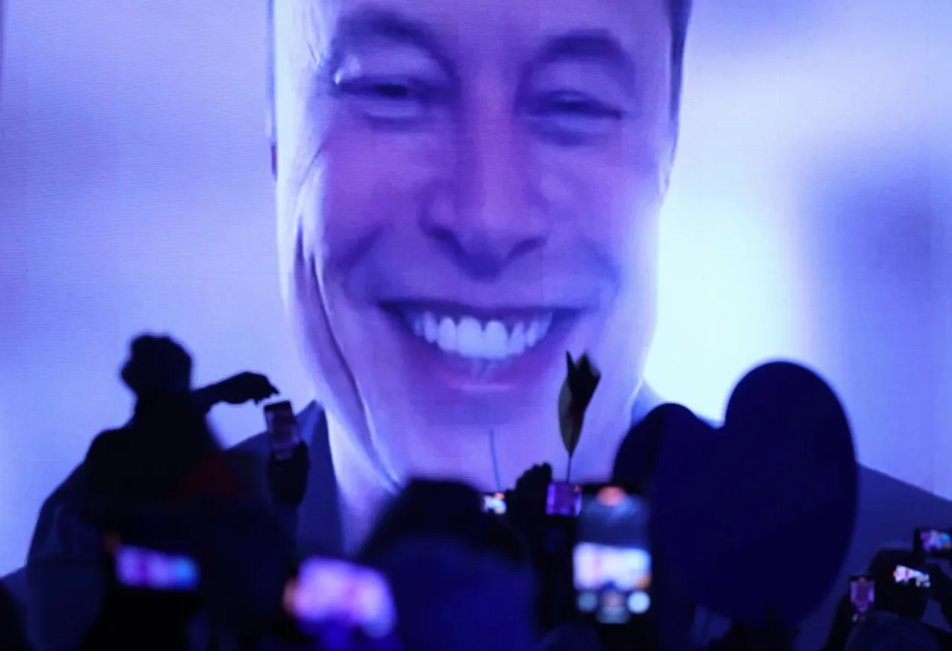
Throughout the conference call, Musk repeatedly outlined aggressive long-term expectations that significantly exceeded the carefully structured statements delivered by other members of SpaceX's executive leadership. The contrast revealed an increasingly familiar communication model in which visionary projections are balanced by executives responsible for translating those ambitions into realistic operational and financial guidance suitable for public-market investors.
One of the most significant strategic themes centered on Starlink. Musk argued that the satellite internet constellation could eventually provide the majority of the world's internet traffic in countries where regulatory approval exists, suggesting this milestone could be achieved within less than ten years. His statement reflected SpaceX's belief that the upcoming V3 generation of Starlink satellites—with dramatically higher bandwidth and network capacity—could fundamentally reshape global internet infrastructure.
Chief Operating Officer Gwynne Shotwell later presented a more measured interpretation of the same objective. Rather than predicting market dominance, she emphasized that the expanded satellite constellation would significantly improve service quality while supporting a rapidly growing global customer base. She described Starlink as becoming a significant contributor to worldwide internet traffic instead of claiming majority control, illustrating the company's effort to maintain credibility while preserving its long-term growth narrative.
The earnings call also highlighted the growing importance of SpaceX's cloud computing and AI infrastructure business. Chief Financial Officer Bret Johnsen explained that demand for leased compute capacity continues to accelerate as artificial intelligence companies seek access to high-performance computing resources. According to management, newly signed agreements are generating exceptionally attractive economics, with capital investments recovering their costs in less than a year.
Johnsen further disclosed that during the opening weeks of the third quarter alone, SpaceX secured approximately $6.7 billion in additional cloud-services contracts covering a six-month period beginning later in the year. Based on existing commercial momentum, management projected that the company could achieve an annualized revenue run rate approaching $100 billion by the end of the year, carefully framing the projection around expected December revenue rather than guaranteeing a full-year financial outcome.
Musk expanded considerably beyond that guidance. He suggested the projected $100 billion annualized revenue level represented only a baseline scenario and argued actual performance could exceed internal expectations. He also revealed that SpaceX had accelerated its internal timeline for reaching $1 trillion in annual revenue from 2031 to 2030 while suggesting an even earlier achievement could not be ruled out.
Another major discussion focused on Starship and NASA's Artemis lunar exploration program. Musk indicated confidence that Starship could potentially transport humans by the end of the following year and predicted launch frequencies could eventually reach one mission every day—or possibly more. Such projections reinforced his long-standing belief that fully reusable launch systems will dramatically reduce the cost of space transportation while supporting large-scale commercial expansion beyond Earth.
Shotwell again introduced greater operational caution by stressing that SpaceX remains committed to meeting NASA's required development milestones before pursuing crewed missions. She reiterated the company's broader objective of enabling astronauts to return to the lunar surface around 2028 without committing to Musk's accelerated schedule.
Technical readiness remains one of the central challenges facing SpaceX. The company continues working toward full reusability of Starship, particularly improving the thermal protection system that shields the spacecraft during atmospheric re-entry. Following the latest Starship test flight—which concluded with the vehicle splashing down in the Indian Ocean largely intact—Musk argued that the heat shield issue was effectively resolved, although further validation through repeated successful missions will remain essential before regulators and customers consider the technology fully mature.
Beyond the technical announcements, the earnings call offered valuable insight into SpaceX's evolving corporate identity. The company is no longer solely a launch provider. Instead, it is positioning itself as a diversified technology enterprise spanning commercial launch services, satellite communications, AI computing infrastructure, government contracting, and future space transportation.
From an investor perspective, the conference also illustrated one of the principal governance questions surrounding SpaceX as a newly public company: balancing Musk's highly ambitious public forecasts with the legal, regulatory, and disclosure responsibilities associated with listed corporations. While visionary leadership has historically been central to SpaceX's brand, public-market expectations require greater precision, accountability, and consistency in forward-looking statements.
Ultimately, the company's first earnings call underscored that SpaceX's competitive strategy extends beyond rockets. Its future valuation increasingly depends on its ability to integrate satellite communications, artificial intelligence infrastructure, reusable launch systems, and long-term commercial space ambitions into a coherent business ecosystem capable of sustaining exceptional growth while maintaining investor confidence.
News You Should See
2026 Nobel Medicine Prize Honors Scientists Behind Optogenetics Breakthrough
Oil Prices Edge Lower as Stronger Middle East Exports and G7 Reserves Ease Supply Concerns
Trump Offers U.S. Assistance to Russia After Death at Siberian Plague Research Institute
Trump Takes Economic Message to Nebraska as GOP Faces Rising Cost-of-Living Pressure
U.S. Appeals Court Weighs Trump Administration’s $2.6 Billion Harvard Funding Fight
U.S. Midterm Elections Begin With Resilient Jobs Market and Persistent Cost Pressures
Latest News
The 2026 Nobel Prize in Physiology or Medicine honors Karl Deisseroth, Peter Hegemann and Georg Nagel for pioneering research behind optogenetics and its impact on neuroscience.
Oil prices edged lower as stronger Middle Eastern exports and a planned G7 release of 100 million barrels eased immediate supply concerns, while Gulf security risks and the Strait of Hormuz kept markets alert.
President Donald Trump said the United States would help Russia if needed after a laboratory worker died at a Siberian plague research institute, as Russian authorities imposed precautionary quarantine measures.
Trump’s Nebraska campaign stop highlights rising fuel and grocery costs, beef prices and growing economic pressure on Republicans ahead of the November midterm elections.
A U.S. appeals court is reviewing the Trump administration’s effort to cut Harvard’s federal research funding, with more than $2.6 billion at stake.
The U.S. enters the 2026 midterm elections with unemployment at 4.2%, while higher living and energy costs create economic pressure for households and businesses.
US services growth eased in September as input prices climbed to their highest level since July 2022, with fuel costs, supply-chain disruptions and strong demand increasing pressure on businesses.
Rising Treasury yields are increasing U.S. borrowing costs as Washington manages record debt, persistent inflation and strong economic demand, narrowing its policy options.
A EGP 16 million corporate partnership will establish and equip a bone marrow transplant unit at Cairo’s Coptic Hospital, supporting access to specialized treatment for patients.