S&P 500 Rally Masks Market Weakness as AI Chipmakers Drive 2026 Gains
The S&P 500 has climbed 14% to record highs in 2026, but more than 40% of its constituent stocks are down for the year, exposing the growing gap between headline index performance and the broader US equity market.

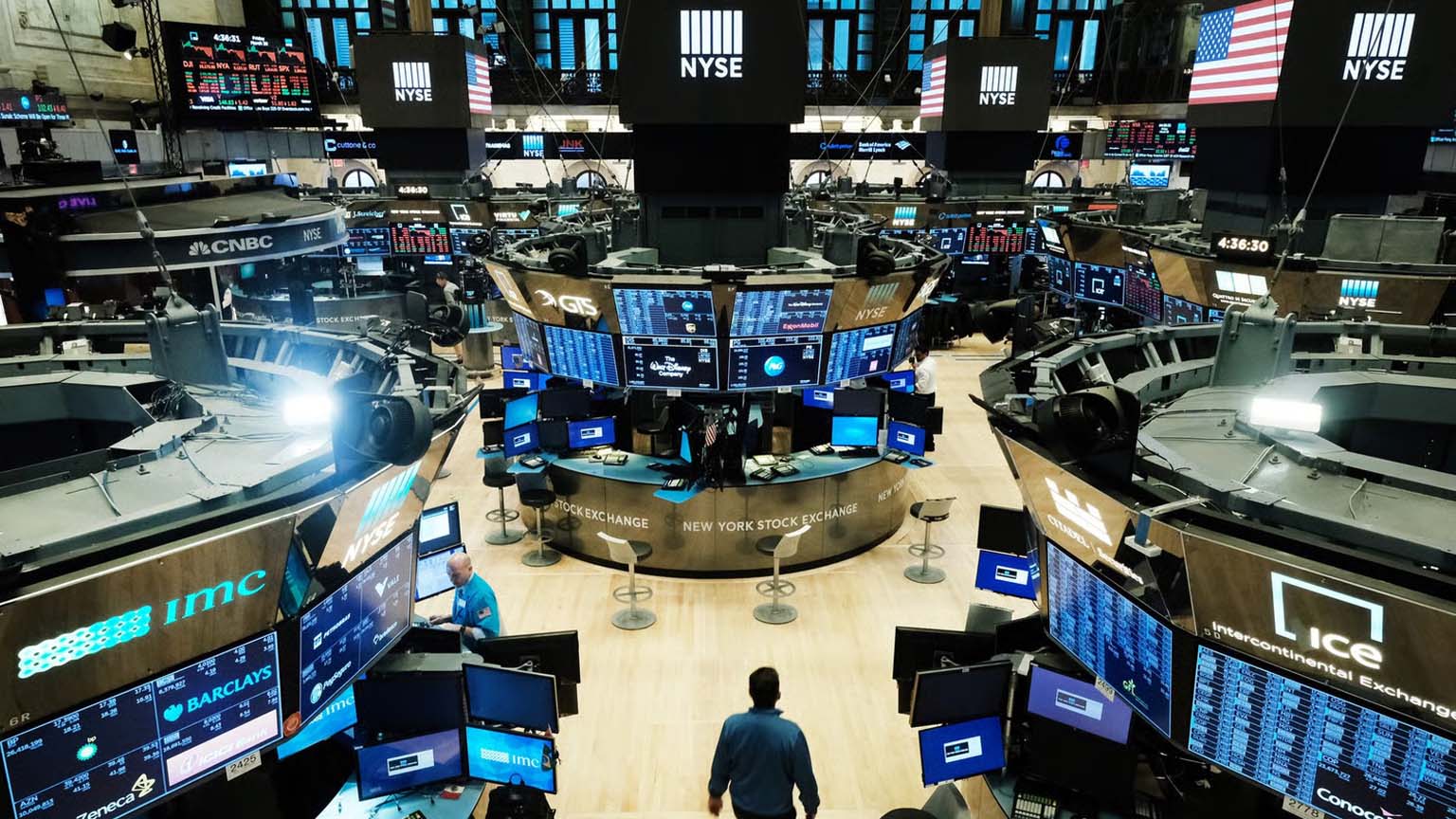
The US stock market’s advance in 2026 is presenting investors with two contrasting realities. The S&P 500 has risen 14% and reached record highs, yet more than two in five companies in the benchmark have recorded losses since the beginning of the year. The divergence suggests that the headline performance of the market is providing a more optimistic picture than the experience of a substantial share of listed businesses.
The rally has increasingly depended on a relatively small group of companies benefiting from investment in artificial intelligence, particularly semiconductor and memory-chip manufacturers. Their strong performance has lifted the capitalization-weighted index even as weakness persists across numerous other stocks.
AI investment reshapes the market’s leadership
The scale of gains among selected technology companies illustrates how concentrated the market’s advance has become. Memory-chip makers Sandisk and Micron Technology have more than tripled in value during 2026, according to an analysis of market data. Nvidia, Apple, Micron and Advanced Micro Devices have also made substantial contributions to the S&P 500’s overall increase.
Nvidia alone has accounted for almost two percentage points of the benchmark’s gain, while Apple, Micron and AMD have each contributed more than one percentage point. Tesla, by comparison, has declined 15% this year, subtracting approximately 0.3 percentage points from the index’s performance.
These differences matter because the S&P 500 assigns greater weight to companies with larger market capitalizations. A handful of highly valued businesses can therefore drive the index higher even when a significant portion of its constituents are losing ground.
The median S&P 500 stock has gained only about 4% in 2026, considerably less than the index’s 14% increase. More than 200 current constituents have declined, and approximately one-quarter of the index’s stocks have fallen by at least 11%.
The figures indicate that investors who hold a diversified portfolio resembling the average constituent have experienced a markedly different year from investors whose returns are concentrated in the market’s largest technology leaders.
Corporate performance is becoming increasingly uneven
The market’s narrow leadership reflects more than enthusiasm for a single group of companies. It also points to differences in earnings growth, capital investment and exposure to changing economic conditions.
Businesses connected to AI infrastructure and semiconductor demand have attracted substantial investor attention as the expansion of computing capacity creates opportunities for chipmakers and other technology suppliers. Strong earnings growth among AI-related companies has helped sustain the broader index, even as profit expansion in other industries remains relatively subdued.
For investors, the challenge is distinguishing companies whose valuations are supported by durable earnings growth from those benefiting primarily from a powerful market narrative. The commercial opportunity associated with AI is significant, but individual companies face different competitive pressures, investment requirements and prospects for converting demand into sustained profits.
This distinction is particularly important for businesses committing large amounts of capital to technology infrastructure. The market’s current preferences reward perceived exposure to AI, but long-term corporate performance will depend on execution, customer demand, pricing power and the ability to generate returns on investment.
Higher interest rates increase pressure beyond technology
Monetary policy presents another challenge for companies outside the market’s strongest-performing themes. The Federal Reserve’s September interest-rate increase, together with expectations of further tightening, has raised concerns about financing costs and the resilience of economic growth.
Higher borrowing costs can affect companies through several channels. Businesses may face more expensive debt, consumers may become more cautious about discretionary purchases, and investors may assign lower valuations to future earnings when yields rise.
Industrial companies, consumer-goods sellers and real estate businesses are among the sectors facing headwinds in this environment. Energy has been a notable exception, benefiting from higher prices, while technology has posted the strongest gains among the major sectors.
Eight of the S&P 500’s 11 sector indexes were higher for the year in the reported analysis. Energy had advanced 42%, while technology had climbed 32%. However, technology’s much greater representation in the index meant it contributed more than 10 percentage points to the benchmark’s increase. Energy’s contribution was less than one percentage point despite its strong sector performance.
The comparison demonstrates why a sector’s percentage gain and its influence on the overall index are not the same. Market capitalization, rather than performance alone, determines how heavily a sector affects the benchmark.
Market breadth raises questions about the rally’s resilience
One of the clearest signs of the uneven advance is the proportion of companies trading above their long-term trend lines. Fewer than half of current S&P 500 constituents were trading above their 200-day moving averages in the reported data. The proportion had stood at 40% a week earlier, its lowest level since May 2025.
This measure does not predict a market reversal on its own, but it provides a useful counterpoint to the index’s record highs. When fewer companies participate in an advance, overall performance becomes more dependent on the continued strength of its leading stocks.
That concentration creates two possible paths. If AI-related earnings continue to exceed expectations and investment spreads to other industries, the rally could gain broader support. Stronger participation from companies outside the dominant technology group would make the market’s advance less dependent on a narrow set of names.
Alternatively, disappointing results from major technology companies, a reassessment of AI-related valuations or further increases in interest rates could have an outsized effect on the index. The same concentration that amplifies gains when leading stocks rise can magnify losses when they come under pressure.
The possibility of sector rotation is also important. Some investment strategists have indicated a preference for large, financially strong companies with improving earnings expectations, while considering opportunities to increase exposure to riskier stocks if broader market weakness produces more attractive valuations.
What investors should watch next
The next stage of the market’s performance will depend on whether corporate earnings can justify current valuations and whether economic conditions allow gains to spread beyond a small group of market leaders.
Investors will need to assess earnings quality, future revenue growth, capital spending and management guidance rather than relying exclusively on index records. Interest-rate expectations and the financial outlook for consumer-facing and interest-sensitive businesses will also influence whether the rally becomes more balanced.
For corporate leaders, the market environment reinforces the importance of demonstrating measurable returns from AI investments, maintaining financial flexibility and communicating credible growth strategies. Companies outside the leading technology group may need to show that they can protect margins and expand earnings despite higher financing costs.
The S&P 500’s 14% advance remains a substantial gain, but the distribution of returns offers a more complicated picture of the US economy and its listed companies. The central question is no longer simply whether the index can reach new highs. It is whether the earnings strength supporting those highs can broaden across the market or whether performance will remain concentrated among a relatively small number of technology and AI beneficiaries.
News You Should See
Egyptian Healthcare Leader Dr. Hossam Abdel Maksoud Honored by The New York Foundling
U.S. Producer Prices Surge as Fuel Costs Intensify Inflation Concerns
IMF Calls for Stronger China Stimulus as Growth Slows and Deflation Risks Persist
AI Infrastructure Investment Faces Rising Costs and Greater Investor Scrutiny
Brewers Move Within One Win of World Series as Dodgers Face Elimination
Trump Takes Midterm Campaign to Arizona and Montana as Republicans Face Tougher Races
Latest News
Dr. Hossam Abdel Maksoud, founder of Dawah Pharma and CEO of Community Care Rx, receives recognition from The New York Foundling for his contributions to healthcare access and community service.
U.S. producer prices rose 1.3% in September and 6.3% year over year as gasoline and diesel costs surged, complicating the inflation outlook and Federal Reserve rate expectations.
The IMF urges China to expand fiscal stimulus, strengthen household demand and address its prolonged property crisis as growth is forecast to slow to 4.5% in 2026 and 4.0% in 2027.
Rising borrowing costs and investor caution are reshaping AI infrastructure investment, putting data center debt, project economics and long-term returns under closer scrutiny.
The Milwaukee Brewers beat the Los Angeles Dodgers 6-2 to take a 3-0 NLCS lead. Jake Bauers, Garrett Mitchell and Jackson Chourio powered Milwaukee to the brink of its first World Series appearance since 1982.
Trump campaigned in Arizona and Montana for Republicans as Democrats promoted affordability, healthcare and congressional oversight ahead of the 2026 midterms.
Trump campaigns for Alaska Sen. Dan Sullivan as Democrat Mary Peltola mounts a challenge ahead of the November 3 midterms, with inflation and fuel prices shaping the race.
Aberdeen police urge Heritage Square residents to check for missing valuables after superintendent Nicholas Brent’s arrest. The investigation continues, and the allegations remain unproven.
The Law Offices of Marc S. Albert announced six personal injury and medical malpractice settlements totaling $7.446 million, including cases involving a hospital respiratory emergency, vehicle crashes, a fall and a bicyclist.