Southern Syria Faces Worst Drought in 40 Years, Farmers Fear Total Collapse
Syria’s Southern Breadbasket Hit by Worst Drought in 40 Years Amid Water Crisis

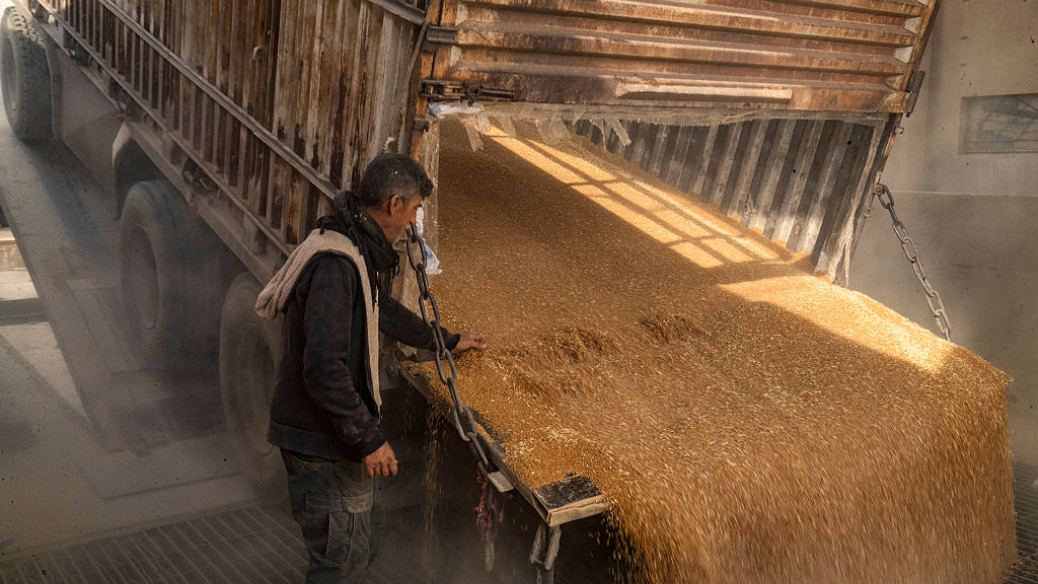
Southern Syria’s Breadbasket Faces Agricultural Collapse Amid Worst Drought in 40 Years
Farmers in southern Syria are bracing for a catastrophic harvest season as the provinces of Daraa, Suweida, and Quneitra endure their worst drought in four decades.
Long considered Syria’s “breadbasket,” the southern region is now suffering from a perfect storm: severe drought, crumbling infrastructure, unaffordable inputs, and, increasingly, regional insecurity.
“This is the first time in forty years I’ve seen the soil crack open from thirst,” says Khaled Ali, a 62-year-old farmer in rural Daraa, who lost his entire wheat crop — over 200 dunums — to dry conditions and skyrocketing costs.
Over half of irrigated lands have now become reliant on sparse rainfall, and nearly 40% of cultivated areas have gone completely barren. Olive trees — once numbering 6 million in 2012 — have declined to just 3.5 million, and grape farming has nearly vanished.
A key contributor to the crisis is the Israeli occupation of southern Syrian territory since late 2024. Farmers and local officials say Israel has seized vital water infrastructure, including the Al-Mantara dam in Quneitra, which feeds eight other dams in the southwest. These sources are now either blocked or redirected, choking off water to agricultural towns in Daraa and surrounding regions.
Rainfall in Daraa has dropped dramatically — just 113 mm this year, a 60% decline from last season and the lowest level since 1985, according to the local agriculture directorate.
In villages like Ma'ariya, water levels at key sources such as the Sahm Golan and Abidin dams are critically low. Farmers have been forced to dig wells as deep as 40 meters, but many of these yield water rich in calcium carbonate, which is damaging crops instead of saving them.
“The soil is dying. Every dead tree is a decade of lost work,” laments Mohammed Salkhadi, an olive farmer in Jasim.
In Suweida, once renowned for its apple orchards and vineyards, the situation is equally grim. Apple farmer Omar Mufadi explains that a single tree needs 120 liters of water per day — a cost that now exceeds the market value of the entire crop. Fertilizer prices have also soared, rising from 15,000 Syrian pounds in 2020 to over 200,000 today.
With traditional farming becoming untenable, communities are turning to ancient and alternative solutions. In Khabab and nearby villages, residents are reviving Roman and Nabataean rainwater wells. Others are practicing shade farming in caves and under trees to grow low-water herbs for the pharmaceutical market.
“These herbs need only 20% of the water used by vegetables,” says Firas Harb, a farmer who’s had some success amid the crisis.
A new generation is also exploring "aetheric farming" — compact, water-efficient systems using rooftops and vertical pipes. Agricultural engineer Issam Hamandi believes these innovations are not just helpful but essential, warning that 65% of farmland in Daraa and Suweida could vanish within five years if the crisis persists.
Yet amid ingenuity and determination, farmers face another major challenge: a near-total lack of government support.
A source within the Suweida Directorate of Agriculture revealed that the state’s aid budget has failed to meet even 2% of farmers’ actual needs for years. This year, there is no aid at all. Subsidies for fertilizers and drought-resistant seeds — once a lifeline — have disappeared.
As Syria’s southern agricultural communities battle unprecedented hardship, they’re left to weather the storm alone, with dwindling resources and little hope of relief.
News You Should See
Queens Celebrates Arts, Music and Family Activities with Diverse Weekend Events
Hollywood Faces New AI Debate as Startup Explores Selling Digital Versions of Human Faces
Arsenal Face Goalkeeping Concerns After David Raya Injury
European Leaders Urge New Iran Policy, Back Democratic Opposition and Reject Monarchy
Bayonne Mayor Sharon Ashe-Nadrowski Joins Thanksgiving Turkey Drive, Praises Community Organizations and Invites Residents to Attend
Seattle Communities Celebrate Holiday Season with Local Markets and Cultural Activities
Latest News
Queens hosts a weekend of cultural events featuring artisan markets, children's classical music activities, documentary screenings, gardening workshops and theater.
A microdrama startup explores selling AI-generated digital faces, raising concerns about consent, ownership, compensation, and the future of Hollywood performers.
Arsenal draw 2-2 with Newcastle as goalkeeper David Raya suffers an injury, raising concerns for Mikel Arteta ahead of upcoming Premier League fixtures.
Former European leaders and parliamentarians call for a new Western policy toward Iran, supporting an Iranian-led democratic transition and stronger human rights measures while rejecting a return to monarchy.
Bayonne Mayor Sharon Ashe-Nadrowski joins a Thanksgiving turkey drive with local organizations, police officers, and volunteers to support families.
Explore holiday markets, handmade gifts, live music, and cultural events in Shoreline and Lake Forest Park, Washington, on November 22.
Nvidia faces contrasting industry expectations as AI demand grows, with its financial performance and leadership shaping the future of computing.
Signal introduces mobile screenshot restrictions on Android and iOS as concerns grow over AI-powered surveillance and digital privacy.
AI agents are transforming messaging platforms by helping users organize daily activities, plan travel, manage work, and complete everyday tasks.