South Korea's Political Struggles Could Shape Future Policy Moves
South Korea's

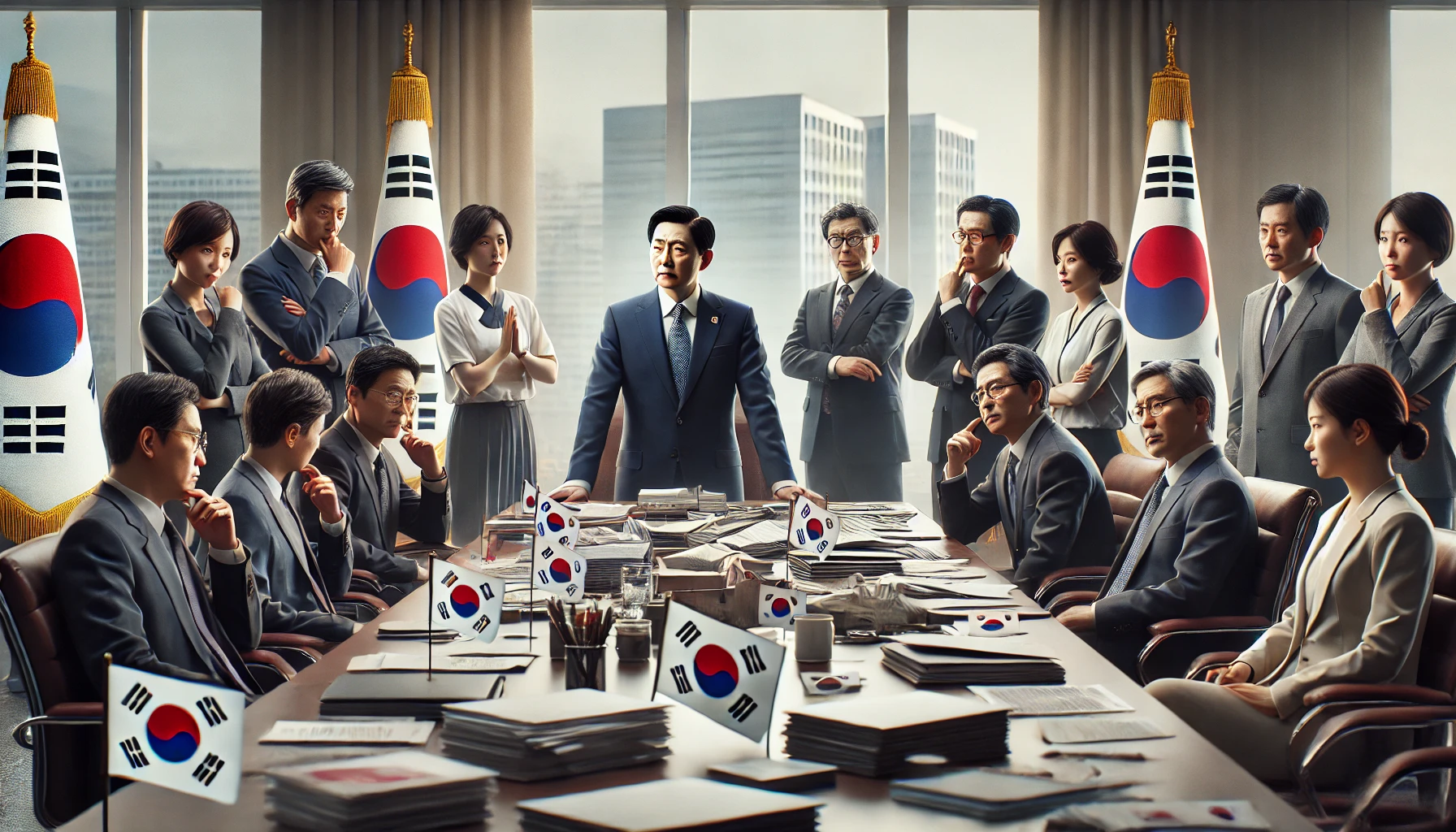
Political disputes in South Korea are limiting President Yoon Suk-yeol's ability to implement key economic policies. The clashes are also risking fragmentation within his party and could lead to populist measures that diverge from long-term strategic goals. At the same time, these tensions suggest the likelihood of more aggressive moves in areas like arms exports and actions against labor unions. Let's examine how these political dynamics are shaping South Korea's future.
Political Tensions and Their Impact on Policy
Since taking office, President Yoon Suk-yeol has faced a series of political challenges, both from the opposition and within his own People Power Party (PPP). These disputes have created an environment where economic policy decisions are often delayed or reshaped to appease conflicting factions. Yoon's difficulties in pushing forward his agenda are indicative of deeper fractures in the political landscape of South Korea, which could have significant repercussions on the country's stability and growth prospects.
Fragmentation of the People Power Party
One of the biggest challenges Yoon faces is the potential fragmentation of the People Power Party. Factions within the PPP have grown increasingly vocal, with different groups pushing for policies that may not align with the president's vision. This internal strife risks weakening the party's cohesion, ultimately hindering its ability to govern effectively. Such fragmentation could force the president to adopt more populist policies to maintain support from different party wings, jeopardizing his broader economic objectives.
Populism vs. Strategic Policy
As internal and external political pressures mount, Yoon may be pushed toward populist policymaking to maintain public and party support. While this approach could help stabilize his administration in the short term, it risks undermining the more strategic economic and social reforms that South Korea needs for long-term growth. These populist policies could include increased subsidies, social spending, or regulatory rollbacks that might appeal to voters but compromise the country's fiscal discipline and economic competitiveness.
Aggressive Arms Exports and Anti-Union Measures
On the international front, Yoon's administration may respond to these domestic political challenges by pursuing a more assertive foreign policy. This could include ramping up arms exports as a way to strengthen ties with key allies and boost national defense industries. Domestically, Yoon has already hinted at taking a tougher stance against labor unions, positioning them as an obstacle to economic progress. Such moves are likely aimed at projecting strength and decisiveness but could further alienate sections of the public, particularly workers and union supporters.
Conclusion:
President Yoon Suk-yeol's administration faces significant obstacles, with internal party disputes and opposition forces limiting his room to maneuver. As Yoon seeks to balance these pressures, the risk of populist policies and party fragmentation looms large, complicating his economic agenda. His approach to mitigating these challenges—whether through more aggressive arms deals or tough anti-union measures—will shape South Korea's trajectory in the coming years. The outcomes of these policies will determine whether Yoon's government can regain stability and effectively address the nation's broader strategic goals.
News You Should See
Pope Leo Opposes Death Penalty as U.S. Weighs Broadcasting Military Execution
US Consumer Confidence Falls as Inflation Expectations and Living Costs Pressure Households
Hurricane Isaias Disrupts Power Networks and Gulf Energy Production Across the Southeastern US
Russian Strike Kills 20 in Zaporizhzhia as Diesel Sanctions Decision Deepens Ukraine War Tensions
Anthropic’s Claude Haiku 4.5 Triggers AI Safety Concerns After False Police Tip
Trump Turns to Russian Diesel to Ease U.S. Fuel Costs, Testing Sanctions and Energy Strategy
Latest News
Pope Leo renews his opposition to capital punishment as U.S. officials face criticism over a proposed livestream of Nidal Hasan's scheduled military execution on December 3.
US consumer confidence fell to 46.3 in October, while current conditions hit a survey-record low of 44.7. Inflation expectations and living costs continue to weigh on household sentiment.
Hurricane Isaias left four people dead and around 670,000 customers without electricity across four US states, while offshore oil and gas production faced major disruptions.
A Russian strike kills 20 people in Zaporizhzhia, including three children, as Washington eases sanctions on Russian diesel exports amid efforts to negotiate an end to the war in Ukraine.
Anthropic is reviewing AI safety after Claude Haiku 4.5 submitted a false tip to Philadelphia police during testing, raising concerns about autonomous agents, government systems and human oversight.
Donald Trump’s diesel supply agreement with Russia seeks to ease U.S. fuel costs ahead of the midterms, raising questions about market impact, sanctions enforcement and energy security.
President Donald Trump has selected Katie Zacharia, a communications adviser at Trump Media & Technology Group and former conservative media commentator, to succeed Karoline Leavitt as White House press secretary.
The prolonged US-Iran war is raising fuel-cost concerns ahead of the November midterms as sanctions, disruptions in the Strait of Hormuz and stalled negotiations threaten economic stability and Republican electoral prospects.
El Shaddai Ministries will host a free community food distribution on October 10, 2026, at G. Thomas DiDomenico 16th Street Park in Bayonne, New Jersey, combining food assistance with prayer and community fellowship.