Slate Auto Expands EV Personalization Strategy Through Landmark Crayola Collaboration
Slate Auto Expands EV Personalization Strategy Through Landmark Crayola Collaboration

As competition intensifies across the electric vehicle industry, emerging manufacturers are increasingly looking beyond battery technology and performance to differentiate themselves. Slate Auto is positioning itself around a different value proposition: giving customers the freedom to shape the identity of their vehicles through extensive personalization rather than relying on expensive technology packages.
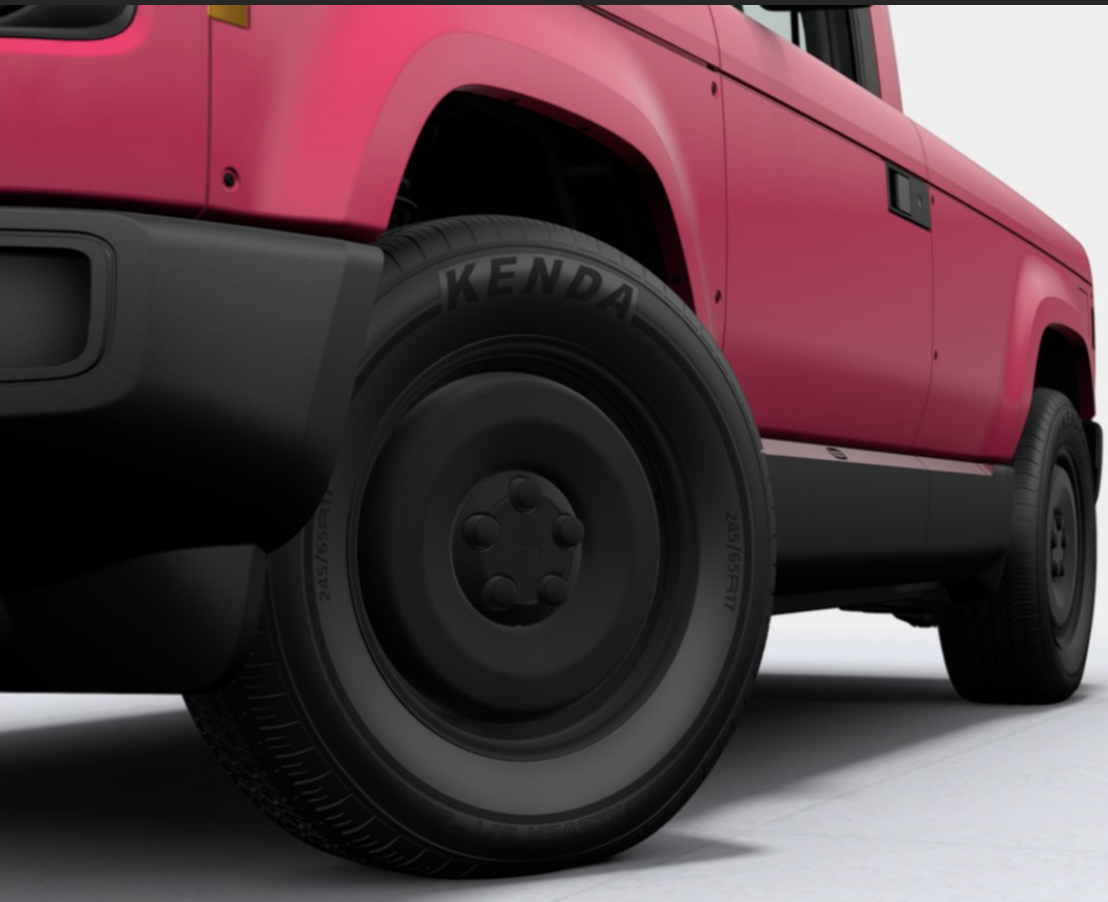
The company, financially backed by Jeff Bezos, has introduced an unconventional business model centered on a minimalist electric pickup. Instead of offering multiple factory trims with complex configurations, Slate starts with an affordable unpainted gray electric truck priced at $24,950, offering an estimated driving range of 205 miles. Customers can then transform the vehicle using wraps, decals, lighting packages, and a growing catalog of accessories.
That strategy has now expanded through a partnership with Crayola, a globally recognized consumer brand best known for its colorful creative products. Under the collaboration, Slate will introduce five exclusive vehicle wraps inspired by Crayola's signature colors: Cerulean, Fern, Jersey Tomato, Razzmatazz, and Dandelion.
Each wrap is priced at $1,549.99 and includes matching branded accessories, including a themed key fob and decorative dashboard inserts known as Slatelets. While these additions may appear cosmetic, they represent a broader commercial strategy aimed at increasing accessory sales while allowing customers to express individuality through their vehicles.
The collaboration illustrates how automotive manufacturers are increasingly borrowing branding techniques from lifestyle and consumer goods industries. Rather than marketing a vehicle solely as a transportation product, Slate is building an ecosystem where design, identity, and ownership experience become important purchasing factors.
For Crayola, the agreement marks an entirely new business category. According to the company, this is its first partnership within the automotive industry, extending one of the world's most recognizable color brands into mobility products. The move also introduces Crayola to new consumer segments while reinforcing its reputation for creativity and self-expression.
Slate has already demonstrated interest in design collaborations through its work with New York artist Max Kolo, suggesting that partnerships may become a recurring pillar of its commercialization strategy. Although the company has not confirmed additional licensing agreements, executives indicated they intend to welcome more creators and commercial partners over time, leaving the door open for future branded collections.
From a market perspective, personalization could become an important competitive advantage. As electric vehicle technology gradually becomes more standardized across manufacturers, differentiation increasingly depends on customer experience, software, design, and brand engagement. Slate appears to be betting that buyers—particularly younger consumers—will value the ability to continuously customize their vehicles after purchase.
The strategy also creates recurring revenue opportunities beyond the initial vehicle sale. Accessories, wraps, limited-edition collaborations, and licensed products can generate higher margins while strengthening customer loyalty throughout the ownership lifecycle.
Slate remains in the early stages of its commercial journey. After emerging publicly in April 2025, the company has begun accepting preorders but has not yet delivered its first production vehicles. Its platform is designed to evolve with customer needs, beginning as a two-seat pickup before offering conversion options that allow owners to upgrade into a five-seat SUV priced from $29,950.
Looking ahead, the success of Slate's approach will depend not only on manufacturing execution but also on its ability to cultivate a vibrant ecosystem of creative partnerships. If the company succeeds, it could demonstrate that branding, customization, and consumer engagement are becoming as influential as engineering specifications in shaping the next generation of electric vehicle companies.
News You Should See
2026 Nobel Medicine Prize Honors Scientists Behind Optogenetics Breakthrough
Oil Prices Edge Lower as Stronger Middle East Exports and G7 Reserves Ease Supply Concerns
Trump Offers U.S. Assistance to Russia After Death at Siberian Plague Research Institute
Trump Takes Economic Message to Nebraska as GOP Faces Rising Cost-of-Living Pressure
U.S. Appeals Court Weighs Trump Administration’s $2.6 Billion Harvard Funding Fight
U.S. Midterm Elections Begin With Resilient Jobs Market and Persistent Cost Pressures
Latest News
The 2026 Nobel Prize in Physiology or Medicine honors Karl Deisseroth, Peter Hegemann and Georg Nagel for pioneering research behind optogenetics and its impact on neuroscience.
Oil prices edged lower as stronger Middle Eastern exports and a planned G7 release of 100 million barrels eased immediate supply concerns, while Gulf security risks and the Strait of Hormuz kept markets alert.
President Donald Trump said the United States would help Russia if needed after a laboratory worker died at a Siberian plague research institute, as Russian authorities imposed precautionary quarantine measures.
Trump’s Nebraska campaign stop highlights rising fuel and grocery costs, beef prices and growing economic pressure on Republicans ahead of the November midterm elections.
A U.S. appeals court is reviewing the Trump administration’s effort to cut Harvard’s federal research funding, with more than $2.6 billion at stake.
The U.S. enters the 2026 midterm elections with unemployment at 4.2%, while higher living and energy costs create economic pressure for households and businesses.
US services growth eased in September as input prices climbed to their highest level since July 2022, with fuel costs, supply-chain disruptions and strong demand increasing pressure on businesses.
Rising Treasury yields are increasing U.S. borrowing costs as Washington manages record debt, persistent inflation and strong economic demand, narrowing its policy options.
A EGP 16 million corporate partnership will establish and equip a bone marrow transplant unit at Cairo’s Coptic Hospital, supporting access to specialized treatment for patients.