Singapore’s Urban Nature Grid: How National Parks Shape a City in a Garden Identity
From rainforest reserves to engineered green corridors, Singapore redefines what urban nature means in a high-density global city

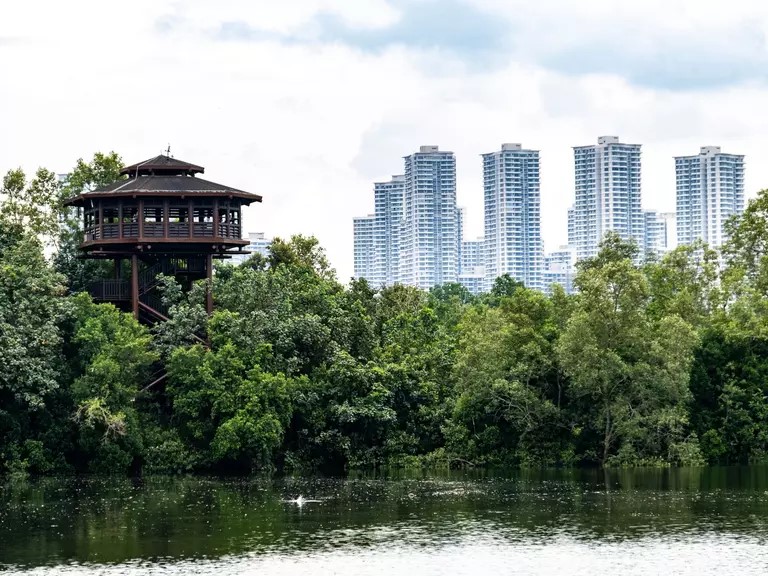
Singapore represents one of the most distinctive global experiments in urban ecological design, where natural landscapes are not preserved at the city’s edge but integrated directly into its structural identity. The country’s network of parks, reserves, and green corridors forms a continuous spatial system that reshapes how residents and visitors experience dense urban living.
Rather than treating nature as an external escape, Singapore embeds it into everyday movement through interconnected spaces such as rainforest reserves, coastal wetlands, elevated walkways, and engineered gardens. This approach reflects a long-term planning philosophy that positions biodiversity, accessibility, and aesthetic design as equal pillars of urban development.
Key examples include large ecological zones such as rainforest reserves and wetland ecosystems that preserve native biodiversity while functioning as public recreational infrastructure. At the same time, highly curated environments like urban gardens and waterfront parks demonstrate how landscape architecture can be used to reinforce national identity and global branding.
The system also emphasizes connectivity. Pedestrian bridges, canopy walks, and cycling routes link fragmented green areas into a unified ecological grid. This transforms the city into a continuous navigable landscape rather than isolated recreational pockets.
From an economic and branding perspective, Singapore’s green infrastructure contributes significantly to tourism appeal, quality of life metrics, and international perception. It strengthens the city-state’s positioning as a livable, innovation-driven hub where environmental design supports economic competitiveness.
Ultimately, Singapore’s parks are not merely recreational assets; they are strategic instruments of urban identity formation, blending ecology, design, and governance into a single coherent model of sustainable city-making.
News You Should See
P&G Raises Fiscal 2027 Cost Warning as Oil and Freight Expenses Threaten Profits
Chemical Tank Leak in Toledo Triggers Evacuations and Industrial Disruptions
Judge Sets December 11 Deadline for Trump Deposition in BBC Defamation Case
Iowa Senate Race Tests How Far Republicans Can Separate Themselves From Trump
California State Workers Strike Over Pay, Healthcare and Return-to-Office Rules
Streaming’s October Showdown: How Disney, Netflix and Major Entertainment Brands Compete for Audiences
Latest News
Procter & Gamble expects commodity, energy and transportation costs to reduce fiscal 2027 profit by $1.4 billion. Quarterly sales rose 4% to $23.28 billion, beating analyst expectations.
A ruptured chemical tank in Toledo, Ohio, prompted evacuations, school closures and an industrial shutdown. Authorities have reduced the restricted zone as the release slows and cleanup preparations continue.
A federal judge has ordered Donald Trump to give a deposition by December 11, 2026, in his $10 billion lawsuit against the BBC, with possible sanctions for noncompliance as the discovery deadline approaches.
Iowa’s 2026 Senate race pits Republican Ashley Hinson, balancing Trump support with economic concerns, against Democrat Josh Turek, who emphasizes bipartisanship amid rising campaign spending.
Thousands of California state workers struck on October 21 over a proposed three-year pay increase, healthcare costs and a four-day office attendance requirement as contract negotiations continued.
October 2026 brings major entertainment releases across Disney+, Netflix, HBO Max, Hulu, Prime Video and Peacock. Explore how familiar franchises, exclusive programming, new music and video games shape competition for streaming audiences.
Saudia advises travelers to book flights through Al Qassim Airport for Riyadh connections, offering free hourly shuttle buses in both directions until further notice.
An AP-NORC poll shows Democratic confidence in accurate vote counting falling to 55%, while Republican confidence rises to 38%, highlighting election integrity concerns ahead of the 2026 US midterms.
Donald Trump campaigns in North Carolina ahead of the November 2026 midterms as low approval ratings, rising fuel costs, Democratic early-voting gains and funding disparities challenge Republican efforts to retain control of Congress.