Senate Panel Advances Bill to Shield Media Companies From Government Pressure
The bipartisan measure would create a legal avenue for challenges to government efforts that pressure private companies over protected speech, raising broader questions about the relationship between regulators, broadcasters and media independence.
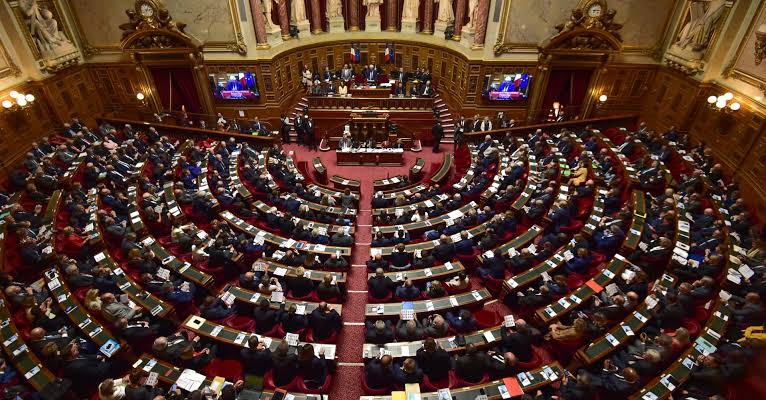
The U.S. Senate Commerce Committee’s approval of legislation aimed at restricting government pressure on private companies over speech places the relationship between Washington and the media industry at the center of a wider institutional debate. The measure, advanced on September 16, 2026, seeks to establish clearer legal protections against government officials attempting to influence private companies’ decisions over protected expression.
The immediate backdrop is a series of disputes involving broadcasters and the Trump administration. Senator Maria Cantwell, the committee’s senior Democrat, pointed to the case involving ABC late-night host Jimmy Kimmel, arguing that the proposed framework could have provided a legal route for him to challenge government pressure. Reuters reported that Federal Communications Commission Chair Brendan Carr had pressured station owners to stop airing Kimmel’s program after comments concerning the assassination of conservative activist Charlie Kirk.
For media companies, the issue extends beyond an individual television program. Broadcast networks operate within a regulatory structure in which federal agencies have authority over licenses and other aspects of the industry. That creates a distinctive commercial relationship: companies must simultaneously make editorial decisions, protect their brands and audiences, and manage exposure to regulatory intervention.
The proposed legislation is therefore significant because it seeks to change the legal consequences surrounding what lawmakers describe as government “jawboning” — pressure from public officials on private companies to restrict speech. Earlier bipartisan legislation introduced by Senators Ted Cruz and Ron Wyden defined the issue as government pressure on private companies to censor protected speech and proposed a private cause of action, including the possibility of monetary damages.
From a corporate strategy perspective, clearer legal remedies could affect how media companies assess regulatory risk. If companies believe that government pressure can result in litigation, they may have greater incentive to document interactions with officials and separate ordinary regulatory compliance from editorial decision-making. The commercial value of such protections would extend beyond television networks to other private platforms whose businesses depend on decisions about what content to distribute.
The debate also has implications for corporate identity. Media brands compete partly on audience trust and editorial credibility, but they also depend on licenses, distribution agreements, advertisers and relationships with regulators. Any perception that programming decisions are being shaped by political pressure can become a reputational issue, regardless of the legal outcome of an individual dispute.
At the same time, the proposed legislation does not eliminate the underlying tension between government oversight and private-sector control. Regulators retain legitimate responsibilities in areas such as broadcasting standards and licensing, while media companies remain private businesses with their own editorial and commercial interests. The central legal question is where permissible government oversight ends and unconstitutional pressure begins.
That distinction is particularly important for the economics of the media sector. Broadcasters invest in programming, talent and distribution on the expectation that their editorial decisions can be made within a relatively predictable regulatory environment. Uncertainty around potential government intervention can complicate long-term planning, especially when high-profile personalities or politically sensitive programming are involved.
The legislation’s development also demonstrates that the issue has moved beyond an isolated dispute involving late-night television. The June introduction of the JAWBONE Act by Cruz and Wyden showed bipartisan congressional interest in creating a mechanism to challenge government pressure on private companies, with the proposed framework applying regardless of whether the government effort ultimately succeeded in changing the company’s conduct.
For the media industry, the longer-term significance will depend on how the measure progresses through Congress and how any eventual law is interpreted by courts. A statute that establishes a clear cause of action could influence future disputes between federal officials and media companies, while judicial interpretation would determine the practical boundaries of the new protections.
The debate also comes at a time when major media groups are already navigating an increasingly complex regulatory environment. ABC and its parent company Disney have separately accused the FCC of using regulatory actions to pressure the network over programming decisions, allegations the FCC has disputed. That dispute illustrates how regulatory authority, corporate decision-making and political conflict can intersect in ways that create both legal and commercial uncertainty for media companies.
The Senate committee’s action consequently represents more than a dispute over one television host. It reflects an effort by lawmakers to define clearer boundaries between government authority and private control over speech. For media companies, those boundaries have direct implications for regulatory risk, editorial independence, brand credibility and the investment decisions that underpin the modern broadcasting business.
News You Should See
2026 Nobel Medicine Prize Honors Scientists Behind Optogenetics Breakthrough
Oil Prices Edge Lower as Stronger Middle East Exports and G7 Reserves Ease Supply Concerns
Trump Offers U.S. Assistance to Russia After Death at Siberian Plague Research Institute
Trump Takes Economic Message to Nebraska as GOP Faces Rising Cost-of-Living Pressure
U.S. Appeals Court Weighs Trump Administration’s $2.6 Billion Harvard Funding Fight
U.S. Midterm Elections Begin With Resilient Jobs Market and Persistent Cost Pressures
Latest News
The 2026 Nobel Prize in Physiology or Medicine honors Karl Deisseroth, Peter Hegemann and Georg Nagel for pioneering research behind optogenetics and its impact on neuroscience.
Oil prices edged lower as stronger Middle Eastern exports and a planned G7 release of 100 million barrels eased immediate supply concerns, while Gulf security risks and the Strait of Hormuz kept markets alert.
President Donald Trump said the United States would help Russia if needed after a laboratory worker died at a Siberian plague research institute, as Russian authorities imposed precautionary quarantine measures.
Trump’s Nebraska campaign stop highlights rising fuel and grocery costs, beef prices and growing economic pressure on Republicans ahead of the November midterm elections.
A U.S. appeals court is reviewing the Trump administration’s effort to cut Harvard’s federal research funding, with more than $2.6 billion at stake.
The U.S. enters the 2026 midterm elections with unemployment at 4.2%, while higher living and energy costs create economic pressure for households and businesses.
US services growth eased in September as input prices climbed to their highest level since July 2022, with fuel costs, supply-chain disruptions and strong demand increasing pressure on businesses.
Rising Treasury yields are increasing U.S. borrowing costs as Washington manages record debt, persistent inflation and strong economic demand, narrowing its policy options.
A EGP 16 million corporate partnership will establish and equip a bone marrow transplant unit at Cairo’s Coptic Hospital, supporting access to specialized treatment for patients.