Scotland’s Highlands turn history into a living landscape of castles, battlefields, and ancient civilizations
From Neolithic settlements to medieval fortresses, the Highlands demonstrate how heritage assets drive cultural tourism and destination identity

The Scottish Highlands represent one of Europe’s richest concentrations of historic and archaeological landmarks, where more than five millennia of human history remain embedded within dramatic natural landscapes. Unlike destinations where historical attractions are isolated from their surroundings, the Highlands integrate cultural heritage directly into mountains, coastlines, islands, and remote valleys, creating a tourism model where history and geography reinforce one another.
Among the region’s most influential religious landmarks is the historic abbey on the Isle of Iona, widely associated with the spread of Christianity across Scotland. The site remains one of the country's most significant pilgrimage destinations and symbolizes the transformation of Scottish society from pagan traditions toward Christian institutions. Its cultural importance extends beyond religion, contributing to the broader narrative of Scotland’s national identity.
Military history also plays a defining role in the Highlands’ tourism appeal. Culloden Battlefield, near Inverness, remains one of the most emotionally significant historic sites in Scotland. The battlefield marks the final Jacobite uprising of 1746, an event that fundamentally altered the political and social structure of the Highlands. Today, interpretation centers and preserved landscapes allow visitors to engage directly with one of the most consequential moments in British history.
The Highlands and Islands also contain some of Europe’s most remarkable prehistoric heritage. Skara Brae in Orkney provides an exceptionally preserved example of a Neolithic settlement dating back thousands of years. Together with surrounding archaeological monuments, the site demonstrates how ancient communities adapted to harsh northern environments while developing complex social structures and architectural traditions.
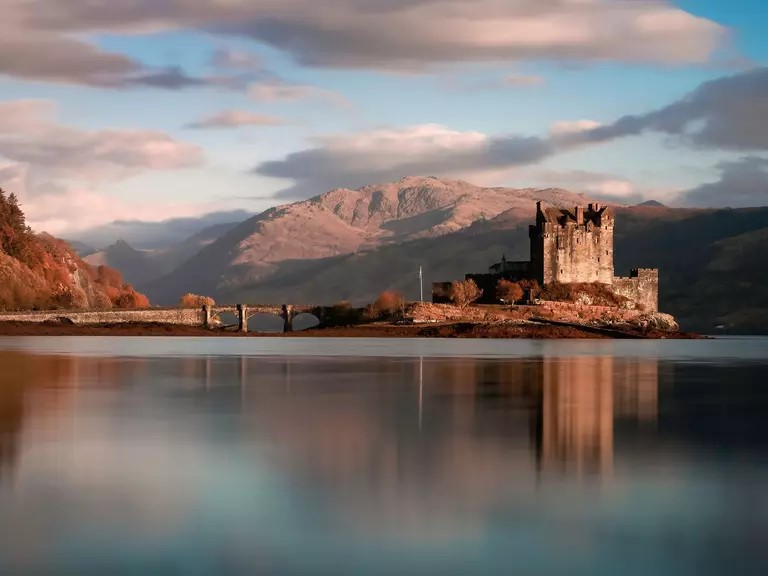
Iconic castles further strengthen the region’s global image. Eilean Donan Castle, positioned beside Loch Duich, has become one of Scotland’s most photographed landmarks and a recognizable symbol of Highland heritage. Its visual appeal, combined with centuries of military and political history, has helped transform the castle into a powerful tourism brand that attracts visitors from around the world.
The Highlands also preserve evidence of Norse influence and maritime history. Sites such as Jarlshof in Shetland reveal successive layers of occupation spanning the Neolithic period, Bronze Age, Iron Age, Viking settlements, and medieval communities. This continuity provides visitors with a rare opportunity to observe multiple civilizations within a single archaeological landscape.
Another major attraction is the Callanish Standing Stones on the Isle of Lewis, a prehistoric ceremonial complex that predates Stonehenge. The monument demonstrates the enduring appeal of ancient ritual landscapes and illustrates how mystery and mythology continue to influence contemporary tourism demand.
From an economic perspective, the Highlands have successfully transformed heritage preservation into a sustainable tourism asset. Historic sites generate visitor traffic that supports accommodation providers, transport networks, local businesses, and regional cultural institutions. Routes such as the North Coast 500 further connect heritage attractions into integrated tourism experiences that encourage longer visitor stays and wider economic distribution across remote communities.
Strategically, the Highlands demonstrate how historical assets can evolve into destination-defining brands. Rather than relying solely on natural scenery, Scotland has positioned castles, abbeys, archaeological sites, and battlefields as core components of its tourism identity. This approach creates a multidimensional visitor experience where heritage, storytelling, and landscape combine to strengthen both cultural preservation and economic development.
News You Should See
P&G Raises Fiscal 2027 Cost Warning as Oil and Freight Expenses Threaten Profits
Chemical Tank Leak in Toledo Triggers Evacuations and Industrial Disruptions
Judge Sets December 11 Deadline for Trump Deposition in BBC Defamation Case
Iowa Senate Race Tests How Far Republicans Can Separate Themselves From Trump
California State Workers Strike Over Pay, Healthcare and Return-to-Office Rules
Streaming’s October Showdown: How Disney, Netflix and Major Entertainment Brands Compete for Audiences
Latest News
Procter & Gamble expects commodity, energy and transportation costs to reduce fiscal 2027 profit by $1.4 billion. Quarterly sales rose 4% to $23.28 billion, beating analyst expectations.
A ruptured chemical tank in Toledo, Ohio, prompted evacuations, school closures and an industrial shutdown. Authorities have reduced the restricted zone as the release slows and cleanup preparations continue.
A federal judge has ordered Donald Trump to give a deposition by December 11, 2026, in his $10 billion lawsuit against the BBC, with possible sanctions for noncompliance as the discovery deadline approaches.
Iowa’s 2026 Senate race pits Republican Ashley Hinson, balancing Trump support with economic concerns, against Democrat Josh Turek, who emphasizes bipartisanship amid rising campaign spending.
Thousands of California state workers struck on October 21 over a proposed three-year pay increase, healthcare costs and a four-day office attendance requirement as contract negotiations continued.
October 2026 brings major entertainment releases across Disney+, Netflix, HBO Max, Hulu, Prime Video and Peacock. Explore how familiar franchises, exclusive programming, new music and video games shape competition for streaming audiences.
Saudia advises travelers to book flights through Al Qassim Airport for Riyadh connections, offering free hourly shuttle buses in both directions until further notice.
An AP-NORC poll shows Democratic confidence in accurate vote counting falling to 55%, while Republican confidence rises to 38%, highlighting election integrity concerns ahead of the 2026 US midterms.
Donald Trump campaigns in North Carolina ahead of the November 2026 midterms as low approval ratings, rising fuel costs, Democratic early-voting gains and funding disparities challenge Republican efforts to retain control of Congress.