Science Corporation Reaches European Milestone with Vision-Restoring Retinal Implant
EU approval positions the PRIMA retinal implant for commercial rollout, highlighting the growing convergence of neurotechnology, medical innovation, and healthcare investment.

The European regulatory approval granted to Science Corporation for its PRIMA retinal implant represents more than a medical achievement—it marks an important step in the commercialization of next-generation neurotechnology. As healthcare innovation increasingly combines semiconductor engineering, artificial intelligence, and neuroscience, companies are moving beyond experimental research toward products capable of reaching real-world patients.
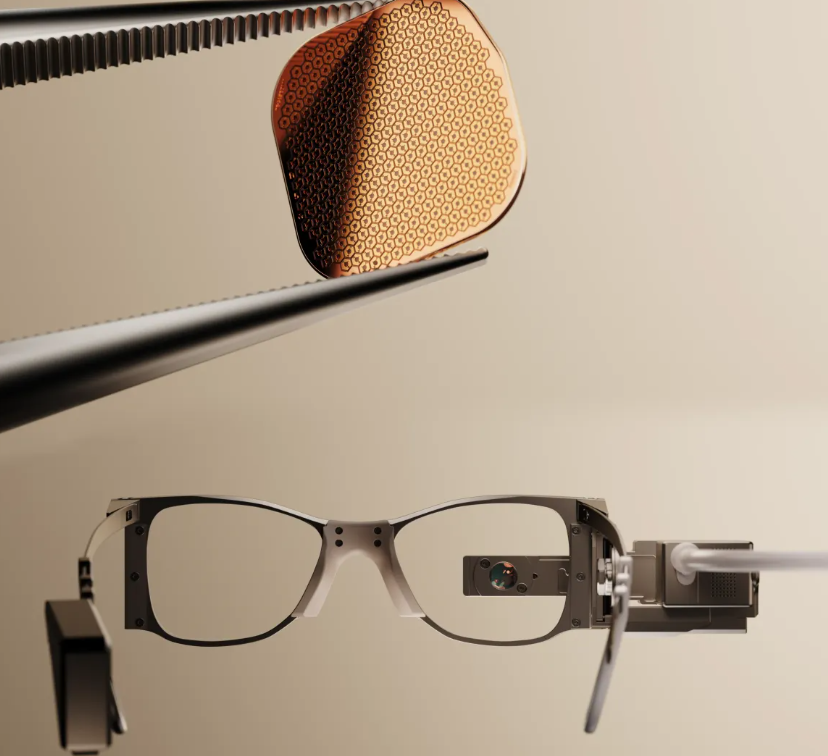
PRIMA has been developed to assist individuals living with advanced vision loss caused by geographic atrophy, one of the late-stage forms of age-related macular degeneration. Instead of attempting to restore damaged retinal tissue directly, the system introduces a new technological pathway that enables visual information to bypass damaged photoreceptors through an implanted wireless microchip working alongside external imaging hardware.
From a product design perspective, the solution demonstrates how engineering constraints can be transformed into patient-centered innovation. The implant itself is intentionally miniature to minimize surgical complexity while maintaining long-term compatibility inside the eye. External smart glasses capture images from the surrounding environment before transmitting processed visual signals to the retinal implant, creating a coordinated hardware ecosystem rather than relying on a single medical device.
This systems-based design philosophy illustrates a growing trend in medical technology where connected components collectively deliver therapeutic outcomes. Instead of viewing the implant as an isolated product, Science Corporation has designed an integrated platform that combines optics, wireless communication, microelectronics, and clinical software into a unified patient experience.
Receiving CE Mark approval significantly strengthens the company's commercial position within Europe. Beyond regulatory validation, the certification provides access to multiple healthcare markets where hospitals and ophthalmology specialists can begin evaluating adoption pathways. The approval also reduces commercialization uncertainty for investors, strategic healthcare partners, and medical institutions considering future deployment.
The timing is particularly significant as Europe's aging population continues to increase demand for treatments addressing degenerative eye diseases. Healthcare systems across developed economies are experiencing growing pressure to improve quality of life for elderly patients while reducing long-term disability. Technologies capable of restoring even partial visual function may generate meaningful economic value by improving patient independence and reducing long-term care requirements.
From an investment perspective, regulatory approval represents a major value inflection point. Medical technology companies often spend years navigating research, engineering validation, clinical studies, and regulatory review before reaching commercialization. Successfully completing this process substantially improves business credibility while opening opportunities for manufacturing expansion, reimbursement discussions, strategic partnerships, and additional fundraising.
The announcement also reinforces Science Corporation's broader brand identity. Rather than positioning itself solely as a medical device manufacturer, the company is building a reputation around translating advanced neuroscience into scalable healthcare solutions. Its portfolio reflects a long-term strategy focused on neural interfaces capable of addressing major sensory disorders through engineering innovation.
Brand differentiation within the medical technology sector increasingly depends not only on clinical performance but also on trust, scientific credibility, and regulatory excellence. By securing European approval, Science Corporation strengthens all three dimensions simultaneously, enhancing confidence among physicians, healthcare providers, investors, and future patients.
The broader industry implications extend well beyond ophthalmology. Advances in retinal implants continue to demonstrate how semiconductor miniaturization, precision manufacturing, wireless power delivery, and computational imaging are reshaping medical devices. Similar technological foundations are expected to influence future developments across hearing restoration, neurological rehabilitation, and brain-computer interface applications.
Ultimately, the European approval of PRIMA reflects the continued convergence of medicine and advanced engineering. It signals that neurotechnology is gradually transitioning from laboratory research into commercially deployable healthcare products capable of addressing some of the world's most challenging sensory disorders. As regulatory milestones continue to accumulate, companies operating at the intersection of neuroscience and technology are likely to play an increasingly influential role in shaping the future of precision medicine.
News You Should See
P&G Raises Fiscal 2027 Cost Warning as Oil and Freight Expenses Threaten Profits
Chemical Tank Leak in Toledo Triggers Evacuations and Industrial Disruptions
Judge Sets December 11 Deadline for Trump Deposition in BBC Defamation Case
Iowa Senate Race Tests How Far Republicans Can Separate Themselves From Trump
California State Workers Strike Over Pay, Healthcare and Return-to-Office Rules
Streaming’s October Showdown: How Disney, Netflix and Major Entertainment Brands Compete for Audiences
Latest News
Procter & Gamble expects commodity, energy and transportation costs to reduce fiscal 2027 profit by $1.4 billion. Quarterly sales rose 4% to $23.28 billion, beating analyst expectations.
A ruptured chemical tank in Toledo, Ohio, prompted evacuations, school closures and an industrial shutdown. Authorities have reduced the restricted zone as the release slows and cleanup preparations continue.
A federal judge has ordered Donald Trump to give a deposition by December 11, 2026, in his $10 billion lawsuit against the BBC, with possible sanctions for noncompliance as the discovery deadline approaches.
Iowa’s 2026 Senate race pits Republican Ashley Hinson, balancing Trump support with economic concerns, against Democrat Josh Turek, who emphasizes bipartisanship amid rising campaign spending.
Thousands of California state workers struck on October 21 over a proposed three-year pay increase, healthcare costs and a four-day office attendance requirement as contract negotiations continued.
October 2026 brings major entertainment releases across Disney+, Netflix, HBO Max, Hulu, Prime Video and Peacock. Explore how familiar franchises, exclusive programming, new music and video games shape competition for streaming audiences.
Saudia advises travelers to book flights through Al Qassim Airport for Riyadh connections, offering free hourly shuttle buses in both directions until further notice.
An AP-NORC poll shows Democratic confidence in accurate vote counting falling to 55%, while Republican confidence rises to 38%, highlighting election integrity concerns ahead of the 2026 US midterms.
Donald Trump campaigns in North Carolina ahead of the November 2026 midterms as low approval ratings, rising fuel costs, Democratic early-voting gains and funding disparities challenge Republican efforts to retain control of Congress.