San Francisco Pushes for Stricter Robotaxi Rules Following Major Waymo Traffic Breakdown
City leaders seek stronger regulatory standards for autonomous vehicles after a holiday traffic collapse raised new questions about operational resilience, public safety, and the future of urban mobility.

San Francisco's latest push for tighter autonomous vehicle regulations reflects a growing shift in how major cities are approaching the future of intelligent transportation. Rather than treating self-driving technology solely as an innovation milestone, policymakers are increasingly evaluating its ability to operate reliably under complex urban conditions where public safety, traffic management, and emergency response intersect.
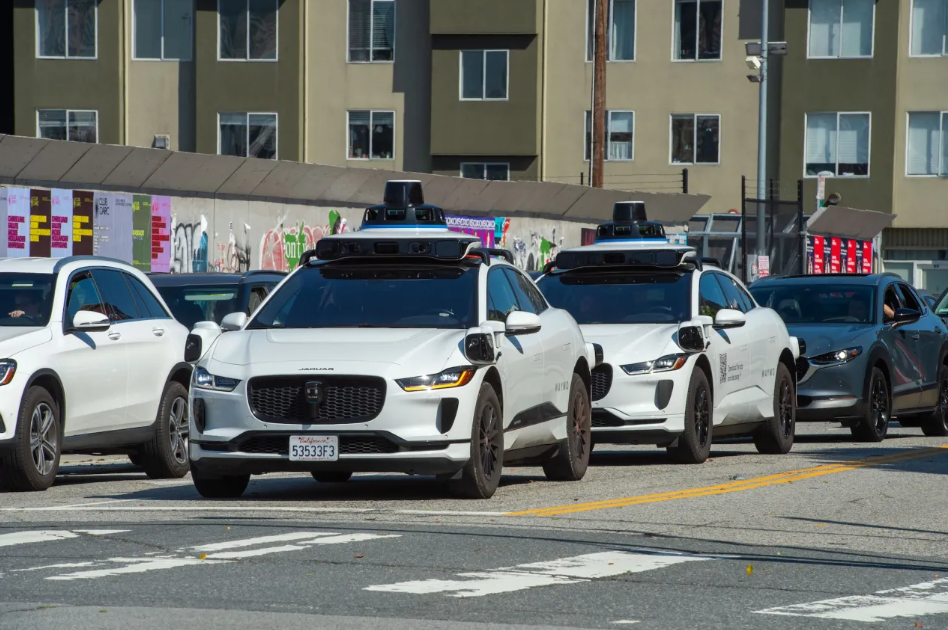
The renewed debate follows a significant traffic disruption involving Waymo's autonomous fleet during Fourth of July celebrations in San Francisco. According to city officials, dozens of self-driving vehicles became immobilized within a congested area after cellular network connectivity deteriorated, creating a large concentration of stationary robotaxis that complicated traffic movement and emergency operations. While no injuries were reported, the incident demonstrated how digital infrastructure failures can rapidly translate into citywide transportation challenges.
Mayor Daniel Lurie responded by urging California's Department of Motor Vehicles (DMV) to strengthen operational standards governing autonomous vehicle deployment. His proposal focuses on ensuring that companies demonstrate greater resilience during unexpected technical failures and high-density public events before expanding commercial operations across urban environments.
From a technology strategy perspective, the incident illustrates that autonomous driving is no longer evaluated exclusively by vehicle intelligence or driving accuracy. Equal importance is now being placed on communications reliability, cloud connectivity, remote fleet management, cybersecurity, redundancy systems, and coordinated emergency protocols. Modern autonomous mobility depends on an ecosystem of interconnected digital services, meaning that weaknesses outside the vehicle itself can significantly affect overall operational performance.
City officials argue that regulatory frameworks should evolve alongside technological progress. Existing approval processes largely examine whether autonomous vehicles can navigate public roads safely under ordinary circumstances. However, recent events suggest that regulators must also assess how these systems behave during communication outages, natural disasters, public celebrations, infrastructure failures, and other high-pressure scenarios that place additional stress on transportation networks.
The proposal also reflects broader economic considerations. Autonomous mobility has attracted billions of dollars in investment and represents one of the fastest-growing segments within artificial intelligence and smart city technologies. Stable regulatory environments encourage innovation, yet insufficient oversight can expose municipalities to operational risks that may ultimately reduce public confidence and slow long-term market adoption.
For Waymo, maintaining public trust remains a strategic priority. The company acknowledged that reduced cellular connectivity contributed to the disruption and emphasized that the affected vehicles remained safe throughout the event. Company representatives also stated that engineering teams continue improving network resilience and fleet management systems to minimize similar incidents in the future. These improvements are expected to include enhanced fail-safe capabilities, stronger communication redundancy, and more adaptive operational responses during network degradation.
The situation further highlights the evolving relationship between public institutions and private technology companies. As autonomous vehicles become integrated into everyday transportation systems, cities increasingly expect developers to share responsibility for maintaining mobility during exceptional circumstances rather than focusing solely on vehicle performance.
Industry observers note that San Francisco has become one of the world's most influential testing grounds for autonomous transportation. Decisions made by California regulators often influence policy discussions across the United States and internationally, making this regulatory review significant beyond the local market.
From a branding perspective, Waymo's reputation is now shaped not only by technological leadership but also by operational transparency, responsiveness, and reliability under real-world pressure. As competition intensifies across the autonomous mobility sector, companies will increasingly be evaluated on their ability to demonstrate resilience, collaborate with public authorities, and maintain uninterrupted transportation services even when supporting infrastructure experiences unexpected failures.
Ultimately, the incident reinforces a central lesson for the future of autonomous transportation: technological innovation alone is insufficient. Sustainable deployment will depend on combining advanced artificial intelligence with resilient digital infrastructure, comprehensive regulatory oversight, effective crisis management, and continuous collaboration between governments, technology providers, and urban planners. Together, these elements will determine whether autonomous mobility can scale into a trusted component of next-generation smart cities.
News You Should See
2026 Nobel Medicine Prize Honors Scientists Behind Optogenetics Breakthrough
Oil Prices Edge Lower as Stronger Middle East Exports and G7 Reserves Ease Supply Concerns
Trump Offers U.S. Assistance to Russia After Death at Siberian Plague Research Institute
Trump Takes Economic Message to Nebraska as GOP Faces Rising Cost-of-Living Pressure
U.S. Appeals Court Weighs Trump Administration’s $2.6 Billion Harvard Funding Fight
U.S. Midterm Elections Begin With Resilient Jobs Market and Persistent Cost Pressures
Latest News
The 2026 Nobel Prize in Physiology or Medicine honors Karl Deisseroth, Peter Hegemann and Georg Nagel for pioneering research behind optogenetics and its impact on neuroscience.
Oil prices edged lower as stronger Middle Eastern exports and a planned G7 release of 100 million barrels eased immediate supply concerns, while Gulf security risks and the Strait of Hormuz kept markets alert.
President Donald Trump said the United States would help Russia if needed after a laboratory worker died at a Siberian plague research institute, as Russian authorities imposed precautionary quarantine measures.
Trump’s Nebraska campaign stop highlights rising fuel and grocery costs, beef prices and growing economic pressure on Republicans ahead of the November midterm elections.
A U.S. appeals court is reviewing the Trump administration’s effort to cut Harvard’s federal research funding, with more than $2.6 billion at stake.
The U.S. enters the 2026 midterm elections with unemployment at 4.2%, while higher living and energy costs create economic pressure for households and businesses.
US services growth eased in September as input prices climbed to their highest level since July 2022, with fuel costs, supply-chain disruptions and strong demand increasing pressure on businesses.
Rising Treasury yields are increasing U.S. borrowing costs as Washington manages record debt, persistent inflation and strong economic demand, narrowing its policy options.
A EGP 16 million corporate partnership will establish and equip a bone marrow transplant unit at Cairo’s Coptic Hospital, supporting access to specialized treatment for patients.