Salah’s Trabzonspor Move Turns a Failed Besiktas Deal Into a Market Strategy Story
The dispute over agent fees highlights how Mohamed Salah’s commercial value became a central factor in his move to Trabzonspor after Besiktas talks collapsed.

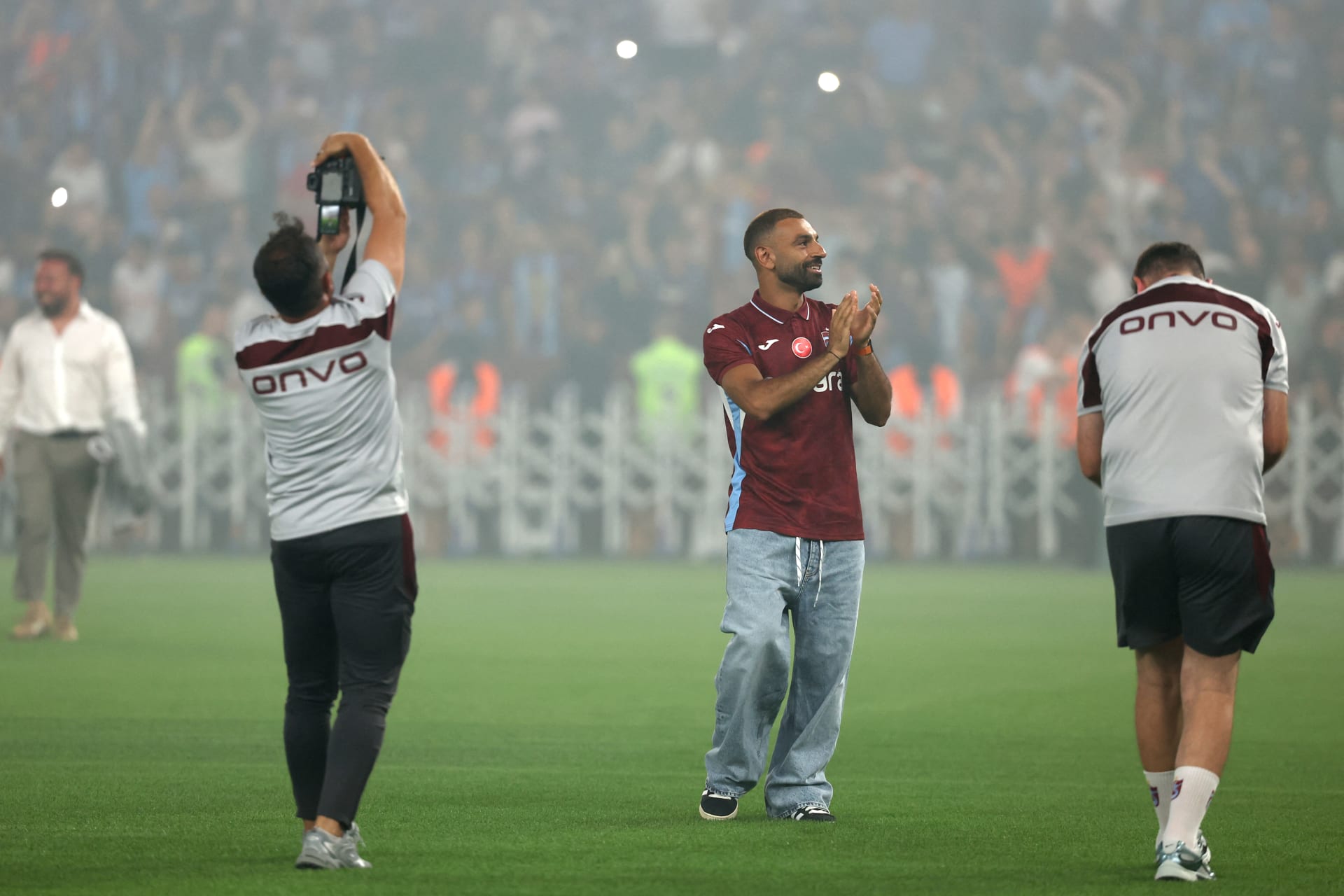
Mohamed Salah’s move to Trabzonspor has given the Turkish transfer market one of its most closely watched stories of the summer, but the significance of the deal extends beyond the player’s destination. The collapse of negotiations with Besiktas has highlighted the growing importance of commercial value, negotiation structure and brand positioning when elite footballers enter the market as free agents.
The latest episode began with comments from Besiktas president Serdal Adali, who previously attributed the breakdown of negotiations to demands from Salah’s representative, Ramy Abbas, including a reported commission equivalent to 35% of the player’s contract. Besiktas maintained that the figure became a major obstacle during discussions and ultimately contributed to the club stepping away from the deal.
Salah and Abbas later responded publicly through a light-hearted exchange on social media. Salah posted a photograph of himself dining with his agent and asked who had eaten the two plates. Abbas replied with a reference to the reported 35% figure, turning a contentious negotiation issue into a highly visible piece of football-related social media content.
From a business perspective, the episode illustrates how negotiations involving globally recognized players are no longer confined to salary and transfer fees. Agent compensation, commercial rights, image value, bonuses and other contractual elements can materially influence whether a club considers a deal financially viable.
For Besiktas, the decision to withdraw from the negotiations can be interpreted as an attempt to protect its financial framework. Adali later insisted that the club had not lost Salah to Trabzonspor, but had chosen to abandon the negotiations after deciding that the terms and negotiating approach did not fit the club’s structure. He also said Salah was not initially part of the club’s recruitment plan and had emerged as a market opportunity rather than a primary target.
That distinction matters. A club that pursues a player because he becomes available may evaluate the opportunity differently from a club that has designed its entire sporting strategy around acquiring him. Besiktas appears to have treated Salah as an attractive market opportunity, but not one worth compromising its preferred financial or organizational limits.
Trabzonspor approached the opportunity from a different position. Securing Salah gave the club access to an international football figure whose value extends well beyond his contribution on the pitch. At 34, Salah brings years of elite European experience, an enormous international following and a personal brand capable of generating attention for the club in markets far outside Turkey.
For Trabzonspor, this creates a potential commercial multiplier. Salah can increase global visibility, stimulate demand for merchandise, attract international media coverage and strengthen the club’s appeal to sponsors. Those benefits are difficult to measure through conventional football statistics alone, but they can significantly influence the economics of a major signing.
The timing of the move is also important. Salah officially began his Trabzonspor career on August 15, when he played 32 minutes in the club’s 1-1 draw against Kasimpasa in the opening round of the Turkish league. He is scheduled to face Hungarian side Ferencvaros in the Europa League qualifying rounds, giving the club an immediate opportunity to place its new star on a continental stage.
The European competition dimension could be particularly valuable for Trabzonspor’s brand strategy. Regular exposure against international opposition provides a platform for Salah to reinforce the club’s visibility across European and Middle Eastern markets, while potentially increasing the value of future commercial partnerships.
The deal also demonstrates the difference between acquiring a player and acquiring an audience. Salah represents both. His sporting performance remains the core asset, but his global recognition can generate attention independently of results. That makes the transfer a potentially important marketing investment for a club that does not possess the same international commercial scale as Europe’s largest teams.
For Turkish football, the arrival of Salah is similarly significant. The league gains a player whose name is immediately recognizable across several major football markets. His presence can increase international interest in Turkish league matches and contribute to the competition’s broader positioning as a destination for established global stars.
However, the commercial upside carries expectations. A signing of Salah’s stature raises the performance threshold for both player and club. Supporters will expect meaningful contributions on the pitch, while commercial partners may anticipate increased exposure. The club must therefore ensure that the sporting project surrounding Salah is strong enough to sustain the attention generated by his arrival.
The Besiktas episode also highlights the increasing power of negotiation management in football. Public statements about financial demands can affect perceptions of clubs, players and representatives, particularly when negotiations involve internationally famous figures. Once negotiations become public, maintaining control over the narrative becomes almost as important as the financial terms themselves.
For Salah and Abbas, the public response demonstrated another form of brand management. Rather than allowing the 35% allegation to remain solely a dispute framed by club officials, their social media exchange presented a humorous counter-narrative that attracted attention without directly reproducing the full negotiation process.
That episode illustrates the changing relationship between football business and social media. A contractual dispute can become part of a player's public identity within hours, while a short social media interaction can generate significant international engagement.
Ultimately, Salah’s move to Trabzonspor should be viewed as more than a transfer between two Turkish clubs competing for his signature. It represents a collision between sporting ambition, financial discipline, agent economics and personal brand power.
Besiktas chose to protect its negotiating boundaries and walk away. Trabzonspor saw an opportunity to turn one of the world's most recognizable Egyptian footballers into a major sporting and commercial asset. Salah, meanwhile, entered a new chapter in his career with a club capable of offering both competitive football and a platform for maintaining his international profile.
The long-term success of the move will depend on whether Trabzonspor can convert the attention surrounding Salah into sustainable sporting and commercial value. If the club can combine his presence with competitive performances, European exposure and stronger commercial partnerships, the transfer could become one of the most consequential brand-building decisions in its recent history.
News You Should See
2026 Nobel Medicine Prize Honors Scientists Behind Optogenetics Breakthrough
Oil Prices Edge Lower as Stronger Middle East Exports and G7 Reserves Ease Supply Concerns
Trump Offers U.S. Assistance to Russia After Death at Siberian Plague Research Institute
Trump Takes Economic Message to Nebraska as GOP Faces Rising Cost-of-Living Pressure
U.S. Appeals Court Weighs Trump Administration’s $2.6 Billion Harvard Funding Fight
U.S. Midterm Elections Begin With Resilient Jobs Market and Persistent Cost Pressures
Latest News
The 2026 Nobel Prize in Physiology or Medicine honors Karl Deisseroth, Peter Hegemann and Georg Nagel for pioneering research behind optogenetics and its impact on neuroscience.
Oil prices edged lower as stronger Middle Eastern exports and a planned G7 release of 100 million barrels eased immediate supply concerns, while Gulf security risks and the Strait of Hormuz kept markets alert.
President Donald Trump said the United States would help Russia if needed after a laboratory worker died at a Siberian plague research institute, as Russian authorities imposed precautionary quarantine measures.
Trump’s Nebraska campaign stop highlights rising fuel and grocery costs, beef prices and growing economic pressure on Republicans ahead of the November midterm elections.
A U.S. appeals court is reviewing the Trump administration’s effort to cut Harvard’s federal research funding, with more than $2.6 billion at stake.
The U.S. enters the 2026 midterm elections with unemployment at 4.2%, while higher living and energy costs create economic pressure for households and businesses.
US services growth eased in September as input prices climbed to their highest level since July 2022, with fuel costs, supply-chain disruptions and strong demand increasing pressure on businesses.
Rising Treasury yields are increasing U.S. borrowing costs as Washington manages record debt, persistent inflation and strong economic demand, narrowing its policy options.
A EGP 16 million corporate partnership will establish and equip a bone marrow transplant unit at Cairo’s Coptic Hospital, supporting access to specialized treatment for patients.