Ruto Faces Mounting Unrest as Kenya’s Economic Crisis Deepens Ahead of 2027 Election
Worsening public discontent, deadly crackdowns, and IMF pressure complicate President Ruto’s path to fiscal reform and reelection.

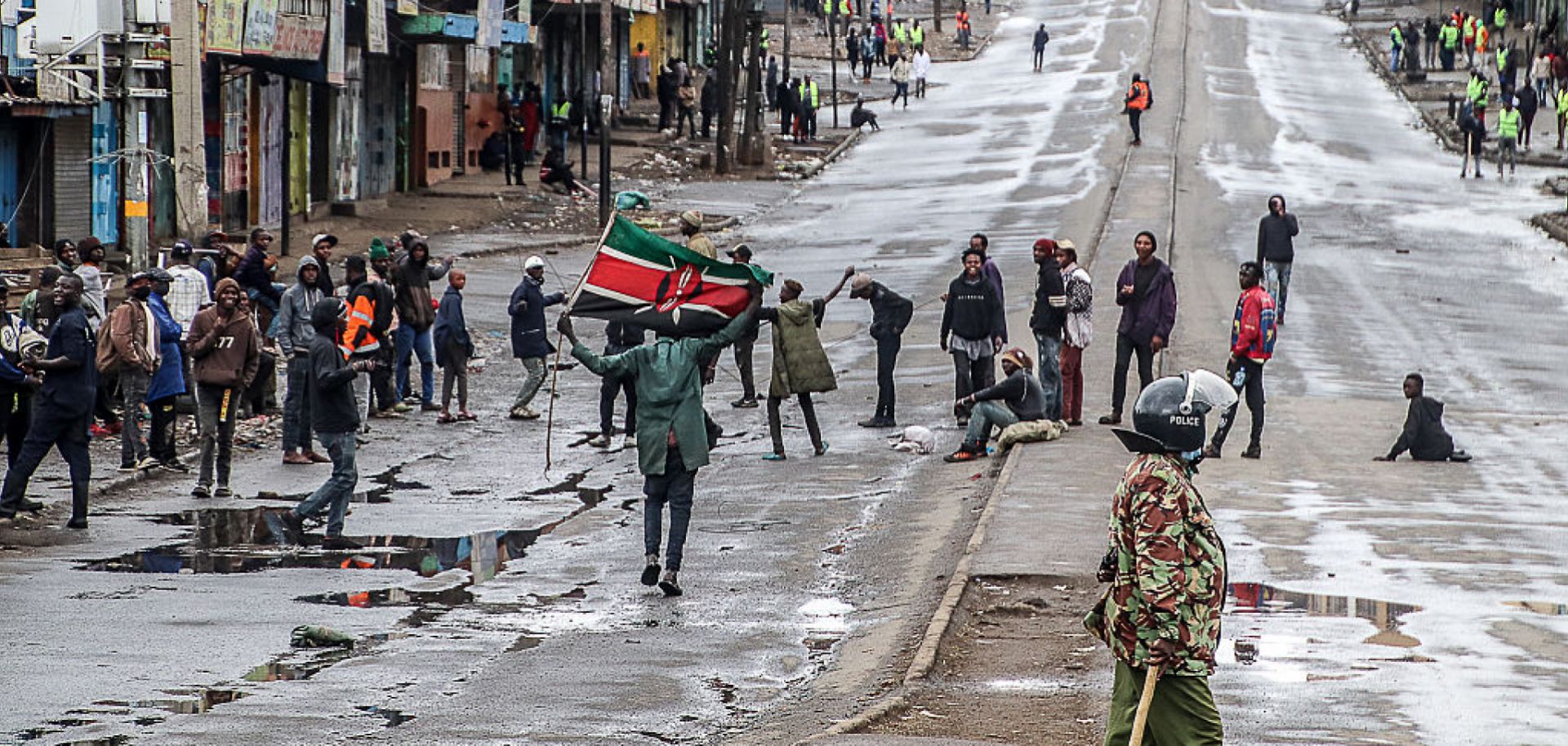
NAIROBI – Kenya is facing a volatile mix of public unrest, economic strain, and political repression that threatens President William Ruto’s ability to enact key fiscal reforms and risks destabilizing his 2027 reelection bid.
Recent months have seen a sharp escalation in anti-government protests, with demonstrators outraged over economic hardship, police brutality, and shrinking civic freedoms. The situation reached a boiling point on July 7, during nationwide commemorations of the historic Saba Saba protests, where at least 31 people were killed and over 100 injured in clashes with police, according to Kenya’s National Commission on Human Rights.
This came just weeks after the death of activist Albert Ojwang in police custody, which catalyzed Gen Z-led protests across Kenya. While President Ruto ordered an investigation into Ojwang’s murder, he simultaneously adopted a harsher stance on protests. On July 9, he publicly ordered police to shoot protesters in the leg if they vandalized property or attacked officers.
🇰🇪 Socioeconomic Pressure and the Fiscal Crisis
Elected in 2022 on promises to improve living standards, Ruto inherited a debt crisis: public debt stood at 67.8% of GDP, and the fiscal deficit was 6.2%. Despite enacting tax hikes and spending cuts, the president was forced to roll back further tax increases in June 2024 due to widespread protests, resulting in a revised fiscal deficit of 5.7% for FY 2024/2025.
With limited revenue and increasing public backlash, Ruto’s economic strategy is stalling. The IMF, which had extended a $3.6 billion program to Kenya since 2021, suspended its final review after Nairobi missed key targets. Now, the government is negotiating a new IMF support program, but it will likely come with tougher fiscal and anti-corruption conditions.
🧨 Repressive Turn Sparks Warnings of Future Unrest
To control dissent, the Ruto administration has increasingly relied on authoritarian tactics:
Arresting journalists
Banning live protest broadcasts
Abducting and intimidating activists
This approach has inflamed anti-government sentiment, particularly among younger Kenyans disillusioned with ethnic-based politics. The Gen Z protest movement, largely decentralized and apolitical, marks a new era of civic activism that the government has struggled to suppress.
Even if large-scale demonstrations remain sporadic — occurring only a few times a month — analysts warn that any major crackdown or new economic pain point (like deep spending cuts or aggressive taxation) could spark a wider protest movement, possibly leading to early political upheaval, although that remains a low-likelihood, high-impact scenario.
⚖️ Political Repercussions and 2027 Outlook
Ruto's prospects for reelection in 2027 are becoming increasingly uncertain. His support base in the Mount Kenya region has eroded following his political fallout with former Deputy President Rigathi Gachagua and his October 2024 impeachment. In a strategic shift, Ruto is now courting opposition leader Raila Odinga, even appointing ministers from Odinga’s Orange Democratic Movement (ODM) in July 2024.
Still, if protests escalate or fiscal conditions worsen, Ruto could face a challenge within his own United Democratic Alliance (UDA) or lose Odinga’s backing — opening the door for a new opposition coalition in 2027.
📊 What’s Next?
Kenya has requested an IMF Governance Diagnostic to address corruption and public finance transparency, with results expected by end of 2025. Any new IMF deal will likely demand stricter fiscal discipline, yet public anger may leave Ruto with little room to maneuver.
In the meantime, disruptions to transport and supply chains, fueled by recurring protests, will continue to weigh on investor confidence and economic recovery.
News You Should See
Queens Celebrates Arts, Music and Family Activities with Diverse Weekend Events
Hollywood Faces New AI Debate as Startup Explores Selling Digital Versions of Human Faces
Arsenal Face Goalkeeping Concerns After David Raya Injury
European Leaders Urge New Iran Policy, Back Democratic Opposition and Reject Monarchy
Bayonne Mayor Sharon Ashe-Nadrowski Joins Thanksgiving Turkey Drive, Praises Community Organizations and Invites Residents to Attend
Seattle Communities Celebrate Holiday Season with Local Markets and Cultural Activities
Latest News
Queens hosts a weekend of cultural events featuring artisan markets, children's classical music activities, documentary screenings, gardening workshops and theater.
A microdrama startup explores selling AI-generated digital faces, raising concerns about consent, ownership, compensation, and the future of Hollywood performers.
Arsenal draw 2-2 with Newcastle as goalkeeper David Raya suffers an injury, raising concerns for Mikel Arteta ahead of upcoming Premier League fixtures.
Former European leaders and parliamentarians call for a new Western policy toward Iran, supporting an Iranian-led democratic transition and stronger human rights measures while rejecting a return to monarchy.
Bayonne Mayor Sharon Ashe-Nadrowski joins a Thanksgiving turkey drive with local organizations, police officers, and volunteers to support families.
Explore holiday markets, handmade gifts, live music, and cultural events in Shoreline and Lake Forest Park, Washington, on November 22.
Nvidia faces contrasting industry expectations as AI demand grows, with its financial performance and leadership shaping the future of computing.
Signal introduces mobile screenshot restrictions on Android and iOS as concerns grow over AI-powered surveillance and digital privacy.
AI agents are transforming messaging platforms by helping users organize daily activities, plan travel, manage work, and complete everyday tasks.