Robotic Surgery Advances in Latin America as Colombian Hospital Expands Its Medical Capabilities
International Hospital of Colombia details its expansion from robotic joint replacements to cardiovascular surgery and long-distance procedures using advanced technology.

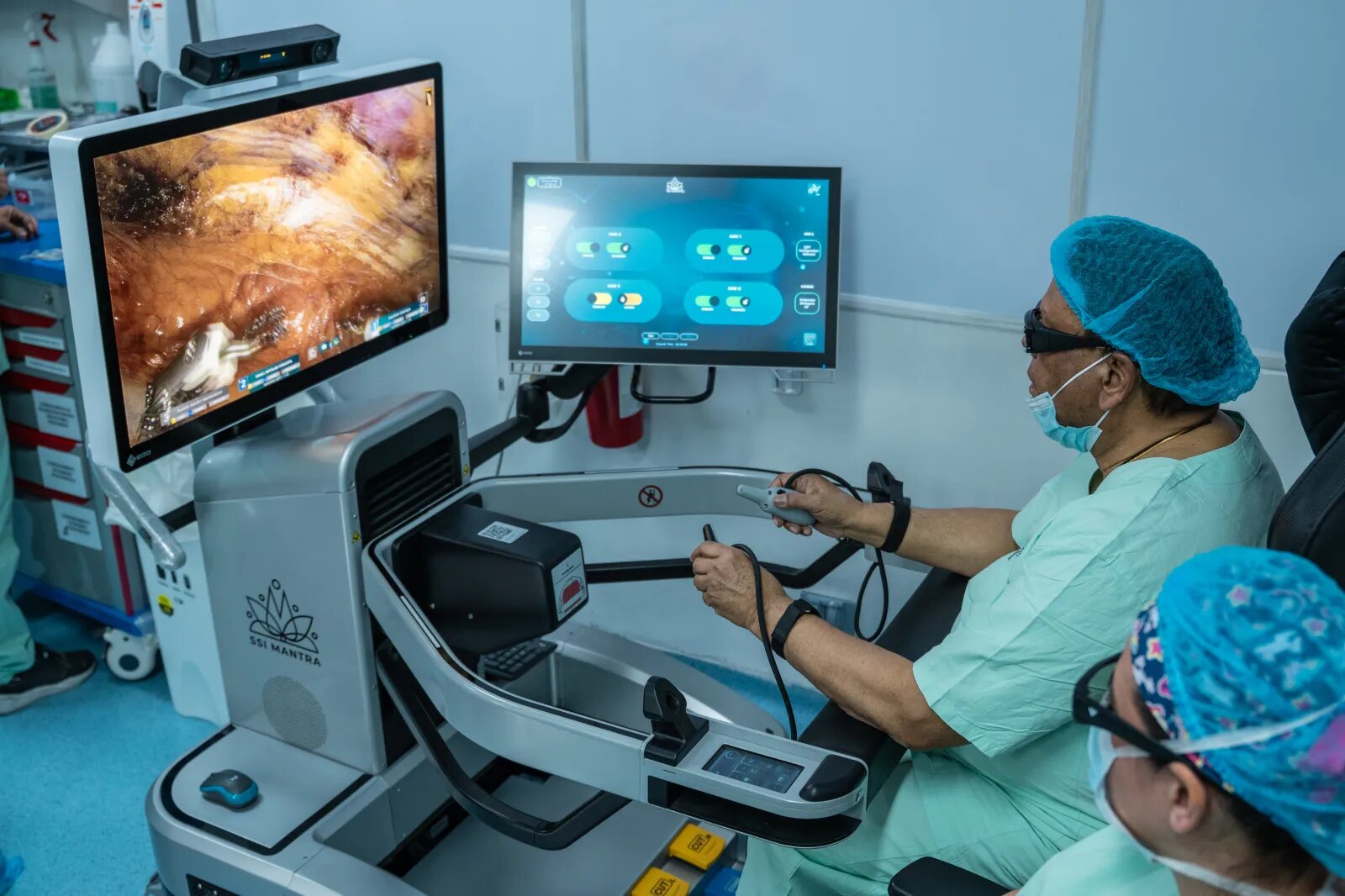
Robotic surgery is moving beyond its traditional role in selected procedures, opening new possibilities for complex medical care. At the International Hospital of Colombia (HIC), this shift has taken shape through an expanding program that now covers orthopedic, multi-specialty and cardiovascular surgery.
The hospital's experience illustrates a central point in the development of surgical robotics: acquiring advanced equipment is only the beginning. Building a sustainable program also requires trained medical teams, careful patient selection, standardized protocols and continuous evaluation of clinical outcomes.
From orthopedic procedures to a broader surgical platform
HIC began its robotic surgery journey in 2023 with the introduction of the Mako system, developed by Stryker, for total and partial knee replacement and total hip replacement.
The technology uses CT scans to create three-dimensional models of patients' anatomy, helping surgeons plan implant positioning and surgical adjustments. During the operation, haptic technology establishes virtual boundaries to guide the robotic arm during bone preparation.
The system does not perform surgery independently. Surgeons retain control over planning, decisions and the procedure itself, while the technology supports precision and helps translate the surgical plan into practice.
By late August 2026, the hospital had completed 690 Mako-assisted hip and knee replacement procedures. Its Centers of Excellence for Hip and Knee Joint Replacement also received international certification from Joint Commission International.
A platform serving multiple specialties
In 2026, HIC expanded its capabilities with SSI Mantra 3, a robotic platform developed by SS Innovations for soft-tissue procedures across several medical specialties. The hospital became the first institution in Colombia to begin performing procedures with this system.
Its initial applications included digestive surgery and urology, with the platform also designed for use in general surgery, gynecology, thoracic surgery, head and neck surgery and cardiovascular procedures.
Unlike the Mako system, which focuses on orthopedic operations, Mantra 3 offers a broader configuration. Its features include an open surgeon console, high-definition three-dimensional visualization and modular robotic arms that can be adapted to different procedures.
Testing the possibilities of telesurgery
One of the program's notable developments took place in July 2026, when Dr. Sudhir Srivastava, founder of SS Innovations, performed a robot-assisted sleeve gastrectomy on a patient in India from a console at HIC in Piedecuesta, Colombia. The surgical signals traveled more than 22,000 kilometers.
The procedure demonstrated the potential of telesurgery to connect medical expertise across long distances. However, remote operations still depend on reliable connectivity, technical support, qualified teams at both locations and strict safety arrangements. A surgical team remained with the patient in India during the procedure as part of the backup protocol.
A milestone in cardiovascular surgery
In August 2026, the hospital reached another milestone by performing Colombia's first robotic cardiovascular procedure using SSI Mantra 3. The operation was a totally endoscopic coronary artery bypass, known as TECAB.
The patient had significant disease affecting two major coronary vessels. The medical team adopted a hybrid treatment plan: a robot-assisted bypass was performed on the left anterior descending artery, while another coronary lesion was subsequently treated with a stent through interventional cardiology.
The approach reflects the growing role of multidisciplinary care, combining cardiovascular surgery, interventional cardiology, imaging, anesthesiology and advanced technology according to each patient's condition.
Robotic instruments and a three-dimensional camera were introduced through small openings in the chest. The surgeon controlled every movement from the console, with the system providing enhanced visualization, tremor filtration and controlled instrument movement.
For appropriately selected patients, minimally invasive techniques may reduce the trauma associated with larger surgical incisions and support recovery. The hospital sees the procedure as a starting point for further development, while emphasizing that any expansion into additional operations must be gradual and supported by training and outcome monitoring.
People, safety and evidence remain essential
Despite the attention often given to the cost of robotic equipment, the hospital's experience points to a different priority: investment in people and clinical systems. Surgeons, anesthesiologists, nurses, surgical technologists and biomedical engineers all need specialized preparation to work effectively with the technology.
Robotic surgery is not automatically the best option for every patient or every procedure. Its value depends on whether it offers a meaningful clinical advantage in a particular case. The hospital's use of a hybrid approach in its first robotic coronary procedure illustrates the importance of selecting techniques according to individual patient needs.
Evaluating the technology also requires more than recording whether an operation was completed successfully. Hospitals need to monitor factors such as complications, operating time, blood loss, pain, length of stay, readmissions, functional recovery and the overall cost of care.
A wider opportunity for Latin America
The development of robotic surgery raises important questions about access to specialized medical services across Latin America. While the region has highly trained physicians and advanced hospitals, access to complex treatment remains uneven.
The technology could widen this gap if it remains concentrated in a limited number of expensive medical centers. Alternatively, training programs, international cooperation, remote mentoring and telesurgery could help distribute expertise more widely.
HIC's participation in the Mayo Clinic Care Network, which began in 2025, forms part of its broader approach to international knowledge exchange and clinical collaboration.
Ultimately, the future of robotic surgery will depend not simply on the sophistication of the machines, but on the medical expertise, infrastructure, safety standards and evidence supporting their use. The hospital's experience suggests that meaningful progress comes when technological innovation is integrated into a patient-centered clinical program.
News You Should See
Man City Faces Calls for Further Premier League Investigation Over Post-2018 Finances
Apple Maps Blurs Satellite Images of Key U.S. Military and NASA Sites
Who Is Delorean Bijon Brandon? The Case of Christina Downer’s Disappearance and Suspected Murder
From Siskel and Ebert to The Beatles: Celebrating Entertainment Legends
Olive Oil Before Carbs: Could Timing Influence Blood Sugar?
Jack Hughes Leads Devils to Shootout Victory, Ending Oilers’ Winning Run
Latest News
Premier League executives are debating a possible new investigation into Manchester City's finances after 2018, while the club appeals a verdict involving 114 financial-rule breaches.
Apple Maps has blurred satellite imagery of several U.S. military and NASA sites, including Cape Canaveral and Area 51. The reason for the changes remains unclear.
Delorean Bijon Brandon, 41, has been charged in connection with Christina Downer’s suspected murder after her disappearance in September 2025.
Chicago will honor film critics Gene Siskel and Roger Ebert with life-sized bronze statues, celebrating a partnership that reshaped popular film criticism.
Researchers are examining whether taking olive oil before glucose can slow stomach emptying and influence blood sugar levels, based on promising findings in mice.
Jack Hughes scores twice and adds an assist as the New Jersey Devils defeat the Edmonton Oilers 4-3 in a shootout, ending their three-game winning streak.
Researchers found that physical contact with dogs after an initial stressful task was associated with lower stress levels during a second challenge.
Researchers analyzed genetic data from 2.8 million people and identified 48 previously unknown genomic regions associated with Alzheimer's disease risk.
Screen-free schools are gaining interest among Silicon Valley tech families, raising questions about children's digital exposure and the role of technology in education.