Robotaxis Enter a Defining Phase as Business Strategy Overtakes Technology Alone
The autonomous mobility sector is increasingly shaped by regulation, operational efficiency, and scalable business models rather than engineering breakthroughs alone.

The robotaxi industry is entering a more mature stage where commercial execution is becoming just as important as technological innovation. While autonomous driving has long been viewed as one of the most ambitious engineering challenges in modern transportation, the market is increasingly demonstrating that sustainable deployment depends on operational discipline, regulatory cooperation, and economic viability rather than software capabilities alone.
Across multiple markets, developers of autonomous ride-hailing platforms continue to expand testing and commercial operations while simultaneously addressing practical challenges that emerge in real-world environments. Weather conditions, temporary road layouts, construction zones, emergency response procedures, and local traffic regulations have become decisive factors influencing deployment schedules and service reliability.
This evolution highlights an important shift in industry priorities. Instead of focusing solely on achieving fully autonomous driving, companies are investing heavily in fleet management, remote operations, predictive maintenance, safety validation, customer experience, and data-driven operational improvements. These capabilities increasingly determine whether autonomous mobility can become a scalable transportation business instead of remaining a technological demonstration.
Regulatory engagement has also become a strategic competitive advantage. Companies capable of working closely with transportation authorities and local governments are better positioned to expand into additional cities. As lawmakers continue refining policies governing autonomous vehicles, compliance and transparency are emerging as essential components of long-term market leadership.
From a business perspective, the robotaxi ecosystem extends far beyond vehicle manufacturers. Cloud infrastructure providers, artificial intelligence developers, semiconductor companies, mapping specialists, telecommunications operators, insurance providers, fleet service companies, and mobility platforms all play interconnected roles in creating a commercially sustainable ecosystem. This interconnected value chain increases investment opportunities while also raising expectations for operational resilience.
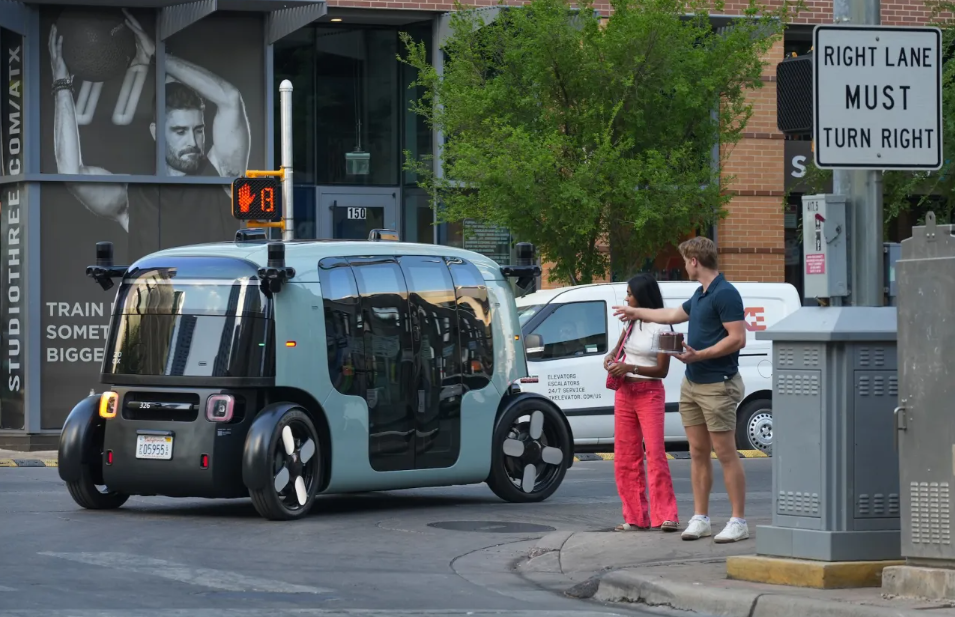
Design strategy is equally important. Modern robotaxi platforms are being developed as integrated mobility services rather than simply autonomous cars. Every design decision—from sensor architecture and software redundancy to passenger interface design and fleet monitoring systems—supports a broader objective of creating consistent, safe, and scalable transportation experiences that can earn long-term public trust.
Brand identity is becoming another differentiating factor. Consumers are increasingly evaluating autonomous mobility providers not only on technological sophistication but also on reliability, safety communication, transparency, and service consistency. Companies capable of building confidence through responsible deployment may achieve stronger customer loyalty even if competitors introduce comparable technical capabilities.
Economically, autonomous ride-hailing has the potential to reshape urban transportation by improving fleet utilization, reducing certain operating costs over time, and supporting new mobility services. However, reaching profitability remains dependent on achieving sufficient scale while maintaining safety standards and managing operational complexity across diverse cities and regulatory environments.
Industry observers increasingly view the current period as a transition from experimentation toward commercialization. Future leadership will likely belong to organizations capable of integrating advanced artificial intelligence with disciplined operations, regulatory alignment, strong branding, and sustainable financial strategies rather than relying exclusively on technological breakthroughs.
News You Should See
2026 Nobel Medicine Prize Honors Scientists Behind Optogenetics Breakthrough
Oil Prices Edge Lower as Stronger Middle East Exports and G7 Reserves Ease Supply Concerns
Trump Offers U.S. Assistance to Russia After Death at Siberian Plague Research Institute
Trump Takes Economic Message to Nebraska as GOP Faces Rising Cost-of-Living Pressure
U.S. Appeals Court Weighs Trump Administration’s $2.6 Billion Harvard Funding Fight
U.S. Midterm Elections Begin With Resilient Jobs Market and Persistent Cost Pressures
Latest News
The 2026 Nobel Prize in Physiology or Medicine honors Karl Deisseroth, Peter Hegemann and Georg Nagel for pioneering research behind optogenetics and its impact on neuroscience.
Oil prices edged lower as stronger Middle Eastern exports and a planned G7 release of 100 million barrels eased immediate supply concerns, while Gulf security risks and the Strait of Hormuz kept markets alert.
President Donald Trump said the United States would help Russia if needed after a laboratory worker died at a Siberian plague research institute, as Russian authorities imposed precautionary quarantine measures.
Trump’s Nebraska campaign stop highlights rising fuel and grocery costs, beef prices and growing economic pressure on Republicans ahead of the November midterm elections.
A U.S. appeals court is reviewing the Trump administration’s effort to cut Harvard’s federal research funding, with more than $2.6 billion at stake.
The U.S. enters the 2026 midterm elections with unemployment at 4.2%, while higher living and energy costs create economic pressure for households and businesses.
US services growth eased in September as input prices climbed to their highest level since July 2022, with fuel costs, supply-chain disruptions and strong demand increasing pressure on businesses.
Rising Treasury yields are increasing U.S. borrowing costs as Washington manages record debt, persistent inflation and strong economic demand, narrowing its policy options.
A EGP 16 million corporate partnership will establish and equip a bone marrow transplant unit at Cairo’s Coptic Hospital, supporting access to specialized treatment for patients.