Rising Treasury Yields Put Washington Under Growing Fiscal Pressure
Higher borrowing costs are pushing the U.S. government toward increasingly difficult choices as debt, inflation and strong AI-driven investment keep long-term Treasury yields elevated.

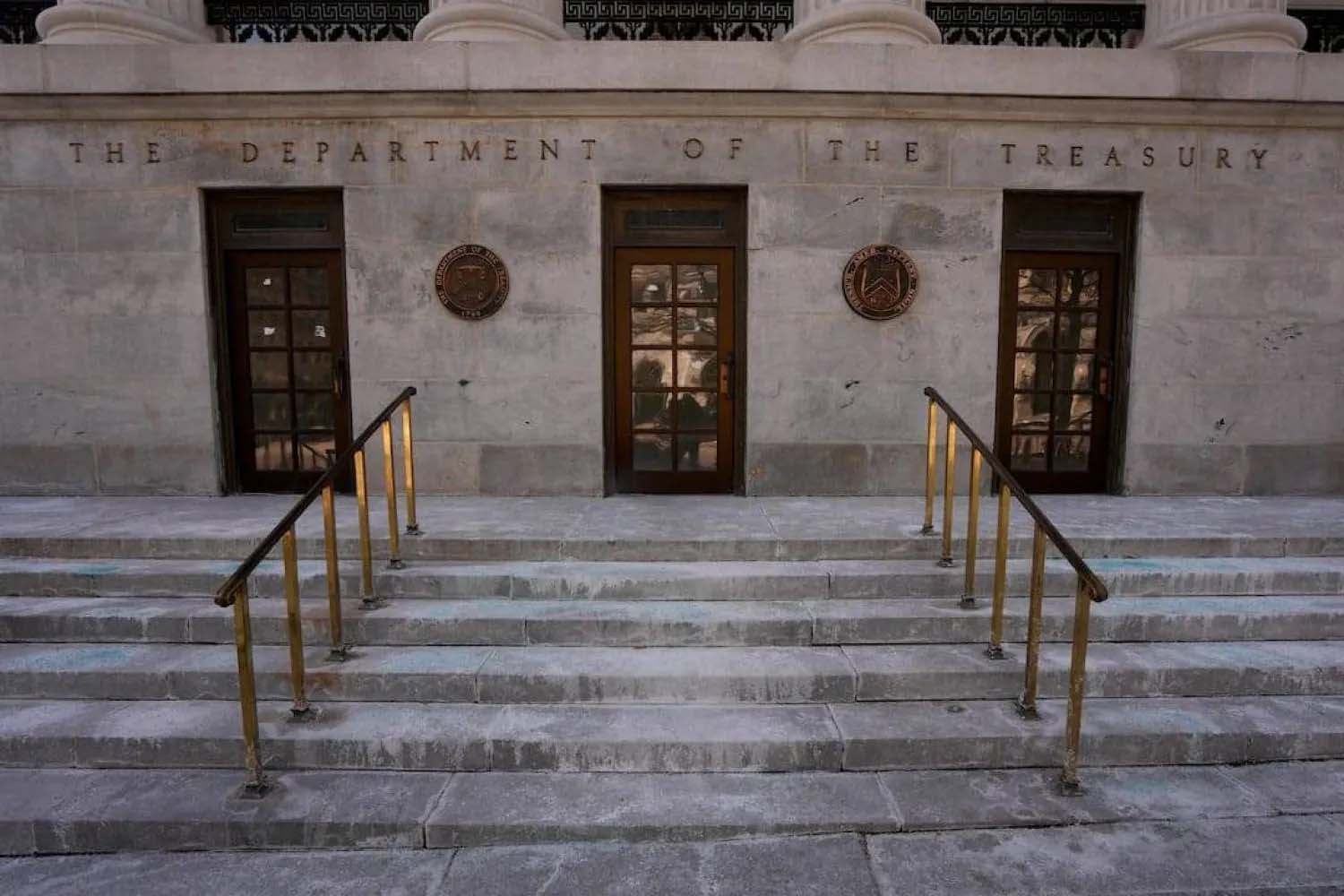
Rising U.S. Treasury yields are becoming a more serious fiscal challenge for Washington, as the government faces a combination of heavy borrowing requirements, persistent inflation and an economy strong enough in key areas to keep interest rates elevated.
Long-term Treasury yields are now close to their highest levels in two decades, creating a difficult environment for a government carrying more than $40 trillion in debt. Annual interest costs have reached roughly $1 trillion, meaning debt servicing is consuming an increasingly significant share of federal resources.
The pressure is not being generated by a single market factor. Washington continues to issue large amounts of debt to finance budget deficits, while inflation has been slower to ease than policymakers would prefer. At the same time, strong investment linked to artificial intelligence is helping sustain economic demand even as interest-sensitive sectors such as housing and automobiles face greater pressure.
That combination complicates the usual policy response. If the economy were weakening sharply, falling inflation and slower demand could give the Federal Reserve more room to reduce interest rates. Instead, stronger areas of the economy and persistent price pressures make lower borrowing costs more difficult to achieve without creating additional inflation risks.
The Treasury has already been adjusting its debt-management strategy. It is relying more heavily on short-term Treasury bills and conducting limited buybacks of older securities in an effort to improve market liquidity. These measures can influence the structure and functioning of the debt market, but they do not eliminate the underlying fiscal burden.
If yields continue to rise, Washington could move toward more aggressive interventions. One possible step would be a broader version of Operation Twist, a strategy used in 1961 that involved selling shorter-term debt while purchasing longer-term bonds to put downward pressure on long-term yields.
A larger intervention would require cooperation from the Federal Reserve. That creates an institutional challenge because large-scale purchases of government bonds can blur the distinction between monetary policy and the Treasury's management of federal borrowing. Fed Chairman Kevin Warsh has criticized the central bank's large securities holdings and has argued for clearer coordination between the Treasury and Federal Reserve over balance-sheet and debt-issuance objectives.
A more extreme option would be yield-curve control, under which the central bank commits to purchasing government bonds in whatever quantities are necessary to keep longer-term yields below a predetermined ceiling. The United States used a similar system during World War Two and the postwar period, while Japan operated a modern version from 2016 through 2024.
Such a policy could temporarily reduce the government's financing costs and ease pressure on the federal budget. Its larger risk would be investor confidence. If markets begin to believe that policymakers are suppressing yields while allowing inflation to erode the real value of government debt, the intervention could ultimately produce the opposite result by accelerating inflation and pushing investors to demand higher compensation for holding Treasuries.
That risk is particularly important for financial markets. Treasury yields influence mortgage rates, corporate borrowing costs, municipal financing and the valuation of equities. A prolonged period of high yields can therefore affect investment decisions well beyond government debt, increasing the cost of capital for companies and changing the relative attractiveness of stocks and bonds.
The pressure is also relevant to businesses pursuing capital-intensive growth strategies. AI investment has been supporting economic activity, but many technology and infrastructure projects require substantial financing. Persistently high Treasury yields can raise the hurdle rate for new projects, increase debt-servicing costs and force companies to become more selective about expansion and capital allocation.
For investors, the challenge is equally structural. Higher Treasury yields can make government bonds more competitive with equities, while inflation expectations determine whether those yields represent attractive real returns. At the same time, rising rates can compress equity valuations and increase financing risks for highly leveraged companies.
The deeper problem, however, remains fiscal rather than purely monetary. Historical experience suggests that the United States has reduced its debt-to-GDP ratio through two very different approaches. After World War Two, relatively high inflation and controlled borrowing costs helped reduce the real weight of debt. During the 1990s, fiscal restraint and stronger revenues played a much larger role while yields moved lower.
Today's political environment makes the second path harder to pursue. Mandatory spending represents a larger portion of the federal budget than it did in the 1990s, while political resistance to significant tax increases or spending reductions limits the scope for conventional fiscal adjustment.
That leaves Washington facing a difficult trade-off. Measures that suppress long-term yields could provide temporary relief but risk higher inflation and weaker confidence in government debt. Fiscal consolidation would address the underlying imbalance more directly but would require politically difficult decisions on spending and revenue.
The trajectory of Treasury yields will therefore remain an important test of U.S. economic policy. If borrowing costs stay elevated, the debate is likely to shift from how Washington can finance its deficits to how much economic and political pressure the government is willing to accept to stabilize the debt burden.
News You Should See
2026 Nobel Medicine Prize Honors Scientists Behind Optogenetics Breakthrough
Oil Prices Edge Lower as Stronger Middle East Exports and G7 Reserves Ease Supply Concerns
Trump Offers U.S. Assistance to Russia After Death at Siberian Plague Research Institute
Trump Takes Economic Message to Nebraska as GOP Faces Rising Cost-of-Living Pressure
U.S. Appeals Court Weighs Trump Administration’s $2.6 Billion Harvard Funding Fight
U.S. Midterm Elections Begin With Resilient Jobs Market and Persistent Cost Pressures
Latest News
The 2026 Nobel Prize in Physiology or Medicine honors Karl Deisseroth, Peter Hegemann and Georg Nagel for pioneering research behind optogenetics and its impact on neuroscience.
Oil prices edged lower as stronger Middle Eastern exports and a planned G7 release of 100 million barrels eased immediate supply concerns, while Gulf security risks and the Strait of Hormuz kept markets alert.
President Donald Trump said the United States would help Russia if needed after a laboratory worker died at a Siberian plague research institute, as Russian authorities imposed precautionary quarantine measures.
Trump’s Nebraska campaign stop highlights rising fuel and grocery costs, beef prices and growing economic pressure on Republicans ahead of the November midterm elections.
A U.S. appeals court is reviewing the Trump administration’s effort to cut Harvard’s federal research funding, with more than $2.6 billion at stake.
The U.S. enters the 2026 midterm elections with unemployment at 4.2%, while higher living and energy costs create economic pressure for households and businesses.
US services growth eased in September as input prices climbed to their highest level since July 2022, with fuel costs, supply-chain disruptions and strong demand increasing pressure on businesses.
Rising Treasury yields are increasing U.S. borrowing costs as Washington manages record debt, persistent inflation and strong economic demand, narrowing its policy options.
A EGP 16 million corporate partnership will establish and equip a bone marrow transplant unit at Cairo’s Coptic Hospital, supporting access to specialized treatment for patients.