Reservoir Raises $8M to Turn Water Heaters Into Smart Energy Assets
The startup is combining heat-pump efficiency, predictive software and grid-responsive heating to transform an overlooked household appliance into a flexible energy-storage platform.

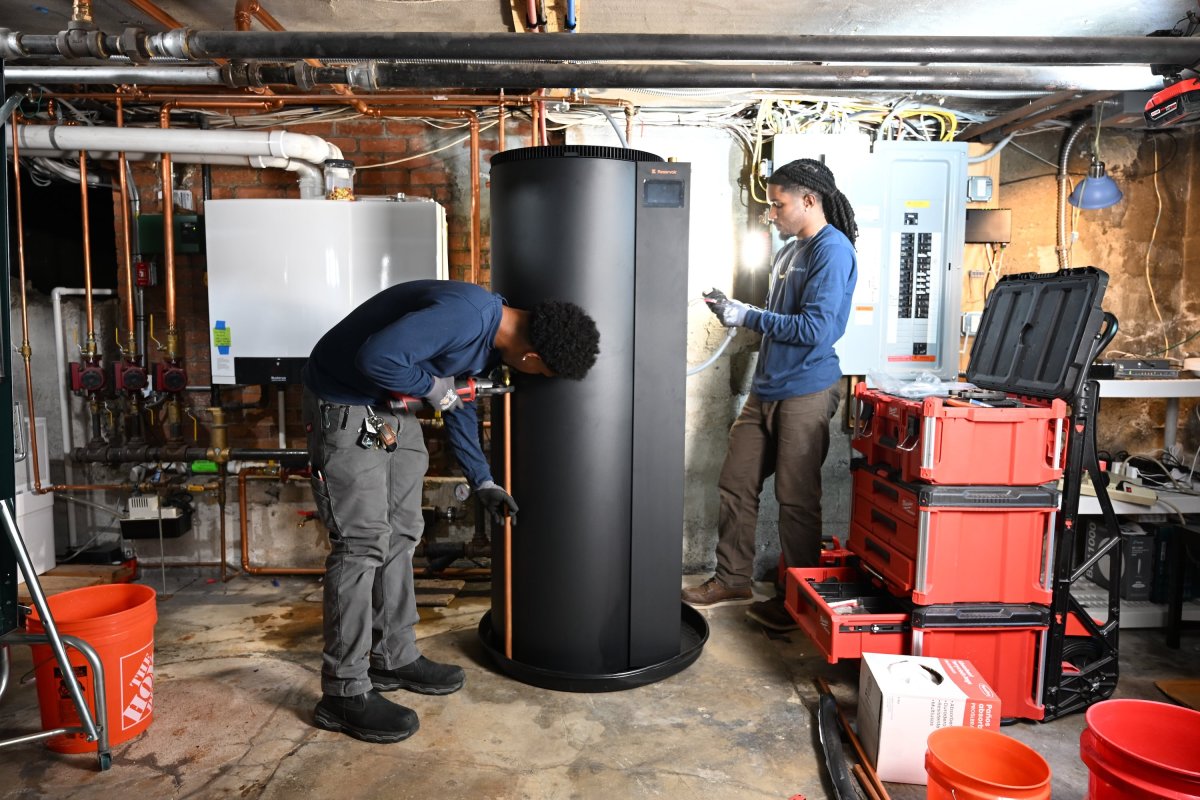
Reservoir is betting that one of the most ordinary appliances in a home could become an important piece of the future energy system. The startup has raised $8 million to develop and scale a new generation of heat-pump water heaters designed not only to provide hot water more efficiently, but also to respond intelligently to electricity prices and grid conditions.
The company’s proposition addresses two markets at the same time. For homeowners, Reservoir wants to make heat-pump water heaters more attractive by reducing energy consumption, improving hot-water availability and adding features that solve practical household problems. For the electricity grid, the same appliance can function as a form of thermal energy storage, shifting when electricity is consumed without necessarily changing when residents receive hot water.
This dual-purpose strategy is important because residential water heating represents a large and relatively predictable source of electricity demand. Unlike batteries, which store electricity directly, a smart water heater can store energy in the form of heated water. Reservoir's system can heat the tank when electricity is cheaper or when renewable power is more abundant, then preserve that thermal energy until households actually need it.
The underlying hardware is also designed to improve efficiency. Reservoir says its heat pump is nearly four times as efficient as a conventional electric water heater and five times as efficient as a natural-gas model. This efficiency gives the company a consumer-facing argument that goes beyond climate benefits: lower energy consumption can translate into lower household operating costs.
But efficiency alone may not be enough to change consumer behavior. Water heaters are typically replaced when they fail, and homeowners often choose whatever equipment a plumber can install quickly. Reservoir therefore designed its product around a broader value proposition, adding features intended to make the appliance visibly better rather than simply more sustainable.
The company's predictive heating system spends roughly the first month learning a household's hot-water consumption patterns. It can then determine when to run the heat pump more efficiently, taking electricity prices and demand conditions into account while maintaining enough hot water for expected usage.
This software layer is what turns the product from an appliance into an energy-management platform. Instead of operating solely according to the temperature inside the tank, the system can make decisions based on household behavior, energy pricing and grid conditions.
Reservoir has also integrated an ultrasonic flow sensor capable of detecting potential plumbing leaks and notifying homeowners through its application. Its higher-end Max model adds a recirculation valve for faster access to hot water and a mixing valve designed to help protect plumbing during freezing conditions. A 50-gallon Max unit can reportedly provide up to 150 gallons of hot water in a temporary "party mode."
These features reflect an important product strategy. The company is not asking consumers to purchase an environmental technology purely because it is environmentally preferable. Instead, it is attempting to create a product whose convenience, protection and performance provide reasons to buy it even without considering its grid benefits.
Reservoir is reinforcing that strategy through its distribution model. Rather than relying entirely on conventional plumbing distribution, the company has begun operating its own plumbing business. The goal is to establish a direct relationship with customers, simplify pricing and reduce friction during installation.
That decision could become a major competitive advantage if Reservoir succeeds in scaling. Home electrification products often face a practical obstacle that has little to do with technology: installation. A sophisticated appliance is difficult to scale if homeowners cannot easily find trained installers, understand the final price or complete the replacement process without significant disruption.
Reservoir's direct-installation model attempts to address that bottleneck by bringing hardware, software and installation under a more unified customer experience. The company currently offers its products in parts of New England, with plans to expand beyond its initial markets. Its current pricing places the Core model at $3,950 installed after a Massachusetts rebate and the Max at $5,450 after the same rebate, according to the company's current pricing information.
The broader market opportunity extends beyond individual household savings. As electricity systems incorporate more solar and wind generation, the timing of electricity consumption becomes increasingly important. Flexible loads can help utilities absorb excess renewable generation and reduce consumption during periods of high demand. Research published in 2026 also found that intelligently managed electric water heaters can materially reduce grid-voltage problems compared with unmanaged electrification.
This makes Reservoir's "thermal battery" concept strategically relevant. A large installed fleet of connected water heaters could potentially operate as a distributed energy-storage resource. No individual household would necessarily notice the difference, but collectively thousands or millions of appliances could shift electricity demand away from expensive or constrained periods.
The economic model is therefore potentially larger than the sale of water heaters. Reservoir could eventually position its hardware as infrastructure for distributed energy management, creating opportunities to work with utilities, energy retailers or other grid-service providers.
That opportunity also creates a challenge. The company has to satisfy two very different customers. Consumers care about comfort, reliability, installation and monthly bills. Energy companies care about predictability, controllability and measurable grid value. A product that optimizes perfectly for one side but frustrates the other will struggle to scale.
Reservoir's approach attempts to solve this by making the consumer experience the primary reason for adoption while allowing the grid benefits to operate in the background. The company has described its software as capable of shifting heating toward periods of abundant renewable generation or away from peak demand, effectively turning household hot water into a flexible grid resource.
The competitive environment will nevertheless be challenging. Reservoir is competing not only with conventional electric and gas water heaters but also with established heat-pump water-heater manufacturers and other smart-home energy technologies. Its advantage will depend on whether it can combine hardware efficiency, intelligent controls, customer experience and installation economics into a package that is substantially easier to adopt.
The company's branding strategy is particularly important here. Traditional water heaters are largely invisible products: consumers care that they work, but rarely consider them part of their home's technology ecosystem. Reservoir is attempting to change that perception by presenting the appliance as a smart, responsive and aesthetically considered product.
That shift mirrors what happened in other categories of home technology, where companies created premium demand by turning infrastructure into something consumers could understand and interact with. The opportunity is to make energy efficiency tangible rather than abstract.
Reservoir's funding arrives at a time when energy infrastructure is attracting increasing attention from investors, particularly as electricity demand rises and grids face pressure from electrification, renewable generation and new large loads such as data centers. The company's approach does not attempt to solve grid constraints by building more generation alone; it seeks to make existing household demand more flexible.
That distinction could become increasingly valuable. Building new grid infrastructure is expensive and slow, while software-controlled demand can sometimes provide flexibility using equipment already located inside homes.
Reservoir's long-term opportunity therefore rests on a simple but powerful idea: the home can become part of the energy system rather than merely a consumer of electricity.
The $8 million financing gives the company additional resources to scale its product, installation capabilities and software platform. The real test, however, will be whether Reservoir can convince enough households to choose its technology during the ordinary replacement cycle and then demonstrate that those appliances can deliver measurable value to the electricity grid.
If it succeeds, the water heater could evolve from an overlooked household appliance into a distributed thermal-storage network. That would give Reservoir a position at the intersection of home electrification, smart appliances, energy management and grid modernization.
News You Should See
2026 Nobel Medicine Prize Honors Scientists Behind Optogenetics Breakthrough
Oil Prices Edge Lower as Stronger Middle East Exports and G7 Reserves Ease Supply Concerns
Trump Offers U.S. Assistance to Russia After Death at Siberian Plague Research Institute
Trump Takes Economic Message to Nebraska as GOP Faces Rising Cost-of-Living Pressure
U.S. Appeals Court Weighs Trump Administration’s $2.6 Billion Harvard Funding Fight
U.S. Midterm Elections Begin With Resilient Jobs Market and Persistent Cost Pressures
Latest News
The 2026 Nobel Prize in Physiology or Medicine honors Karl Deisseroth, Peter Hegemann and Georg Nagel for pioneering research behind optogenetics and its impact on neuroscience.
Oil prices edged lower as stronger Middle Eastern exports and a planned G7 release of 100 million barrels eased immediate supply concerns, while Gulf security risks and the Strait of Hormuz kept markets alert.
President Donald Trump said the United States would help Russia if needed after a laboratory worker died at a Siberian plague research institute, as Russian authorities imposed precautionary quarantine measures.
Trump’s Nebraska campaign stop highlights rising fuel and grocery costs, beef prices and growing economic pressure on Republicans ahead of the November midterm elections.
A U.S. appeals court is reviewing the Trump administration’s effort to cut Harvard’s federal research funding, with more than $2.6 billion at stake.
The U.S. enters the 2026 midterm elections with unemployment at 4.2%, while higher living and energy costs create economic pressure for households and businesses.
US services growth eased in September as input prices climbed to their highest level since July 2022, with fuel costs, supply-chain disruptions and strong demand increasing pressure on businesses.
Rising Treasury yields are increasing U.S. borrowing costs as Washington manages record debt, persistent inflation and strong economic demand, narrowing its policy options.
A EGP 16 million corporate partnership will establish and equip a bone marrow transplant unit at Cairo’s Coptic Hospital, supporting access to specialized treatment for patients.