Rays Blank Yankees as MLB Division Series Opens With Four Different Winners
Tampa Bay opened the American League Division Series with a 1-0 win over New York, while Milwaukee, Los Angeles and Chicago also secured victories in the opening round.

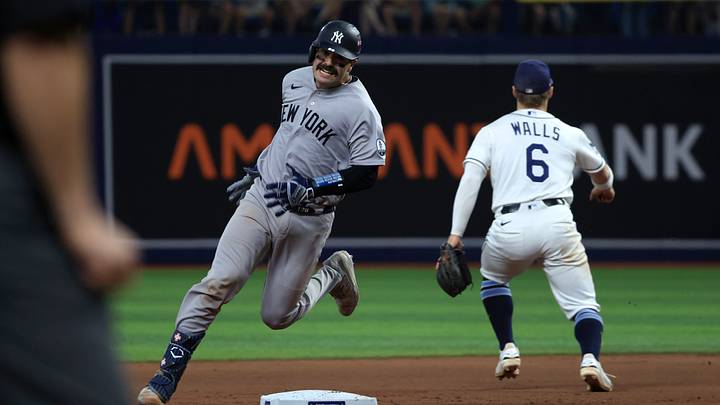
The opening day of Major League Baseball’s Division Series delivered a clear message about the value of pitching, timely power and early control of a best-of-five matchup. Four teams began the postseason round with victories, but Tampa Bay’s 1-0 shutout of the New York Yankees stood out as the most dominant performance of the day.
Drew Rasmussen was the central figure in Tampa Bay’s victory. The right-hander worked eight innings while surrendering just one hit and striking out 10, coming close to completing a no-hitter. His performance placed immediate pressure on the Yankees’ lineup and allowed Tampa Bay to protect a narrow lead throughout the game.
The decisive offensive moment came from Jonathan Aranda, whose solo home run supplied the only run either team would score. That combination of limited opportunities and elite pitching gave the Rays an early advantage in a series where a single mistake can significantly alter the balance.
The result also demonstrated how postseason baseball can be shaped by efficiency rather than offensive volume. Tampa Bay did not need a large number of runs because its pitching staff prevented New York from generating sustained pressure. For the Yankees, the challenge now becomes finding a way to create more consistent opportunities against a pitching approach that proved extremely difficult to break down.
The National League produced a different type of opening-night drama in Milwaukee. The Brewers defeated the San Diego Padres 3-2 after William Contreras delivered the go-ahead home run in the seventh inning. Milwaukee then survived a late San Diego threat, with closer Trevor Megill protecting the narrow lead.
That game highlighted the importance of late-inning execution. Unlike Tampa Bay’s pitching-driven shutout, Milwaukee had to respond to a competitive San Diego lineup and then preserve its advantage under pressure. In a short postseason series, such moments can carry disproportionate importance because every victory brings a team closer to advancing.
The Los Angeles Dodgers also established an early series advantage by defeating the Atlanta Braves 5-3. Teoscar Hernández, Kyle Tucker and Max Muncy each contributed home runs, giving Los Angeles the type of offensive production that can quickly change the dynamics of a playoff series.
The Chicago White Sox completed the opening-day winners with a 3-0 victory over the Cleveland Guardians. Munetaka Murakami provided a two-run home run, while Chicago’s pitching staff combined to restrict Cleveland to only three hits.
The four results created a balanced start to the Division Series, with every winning team taking an early lead in its respective matchup. More importantly, the opening games revealed different paths to postseason success: Tampa Bay relied on near-perfect pitching, Milwaukee won through late-game resilience, Los Angeles combined multiple sources of power, and Chicago used both timely offense and collective pitching.
The next games will place greater pressure on the teams that lost their openers. With the series structured around a limited number of opportunities, falling behind early can force teams to adjust quickly in both pitching strategy and offensive approach.
For the winners, however, the immediate objective is not simply to celebrate an opening victory but to convert that advantage into sustained momentum. The Division Series is often decided by adjustments made from one game to the next, and the opening results have already established different tactical challenges for each losing team.
With the postseason moving forward, the first games have provided an early indication that there is no single formula for advancing. Strong pitching, timely home runs and the ability to manage pressure in decisive innings will remain central as the four series develop.
News You Should See
2026 Nobel Medicine Prize Honors Scientists Behind Optogenetics Breakthrough
Oil Prices Edge Lower as Stronger Middle East Exports and G7 Reserves Ease Supply Concerns
Trump Offers U.S. Assistance to Russia After Death at Siberian Plague Research Institute
Trump Takes Economic Message to Nebraska as GOP Faces Rising Cost-of-Living Pressure
U.S. Appeals Court Weighs Trump Administration’s $2.6 Billion Harvard Funding Fight
U.S. Midterm Elections Begin With Resilient Jobs Market and Persistent Cost Pressures
Latest News
The 2026 Nobel Prize in Physiology or Medicine honors Karl Deisseroth, Peter Hegemann and Georg Nagel for pioneering research behind optogenetics and its impact on neuroscience.
Oil prices edged lower as stronger Middle Eastern exports and a planned G7 release of 100 million barrels eased immediate supply concerns, while Gulf security risks and the Strait of Hormuz kept markets alert.
President Donald Trump said the United States would help Russia if needed after a laboratory worker died at a Siberian plague research institute, as Russian authorities imposed precautionary quarantine measures.
Trump’s Nebraska campaign stop highlights rising fuel and grocery costs, beef prices and growing economic pressure on Republicans ahead of the November midterm elections.
A U.S. appeals court is reviewing the Trump administration’s effort to cut Harvard’s federal research funding, with more than $2.6 billion at stake.
The U.S. enters the 2026 midterm elections with unemployment at 4.2%, while higher living and energy costs create economic pressure for households and businesses.
US services growth eased in September as input prices climbed to their highest level since July 2022, with fuel costs, supply-chain disruptions and strong demand increasing pressure on businesses.
Rising Treasury yields are increasing U.S. borrowing costs as Washington manages record debt, persistent inflation and strong economic demand, narrowing its policy options.
A EGP 16 million corporate partnership will establish and equip a bone marrow transplant unit at Cairo’s Coptic Hospital, supporting access to specialized treatment for patients.