"Preserving the Arctic: How Scientists Minimize Impact at the World’s Northernmost Research Lab"
"Preserving the Arctic: How Scientists Minimize Impact at the World’s Northernmost Research Lab"

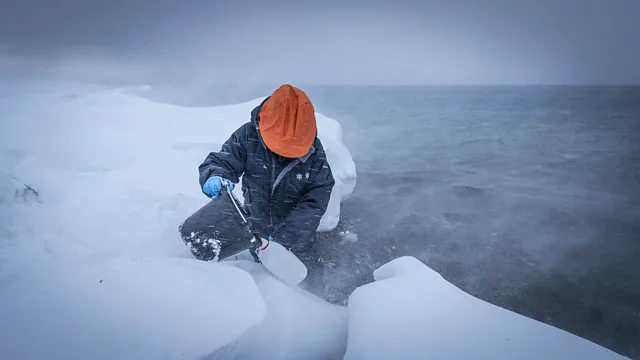
In the high Arctic, scientists are taking extraordinary measures to protect the fragile environment by elevating their laboratories to prevent damage from melting permafrost.
Ny-Ålesund, located in Norway’s Arctic, holds the title of the world's most northern settlement. A dedicated team of scientists lives and works amidst glaciers, polar bears, walruses, and arctic foxes, researching the region’s ice, ecosystems, and atmosphere.
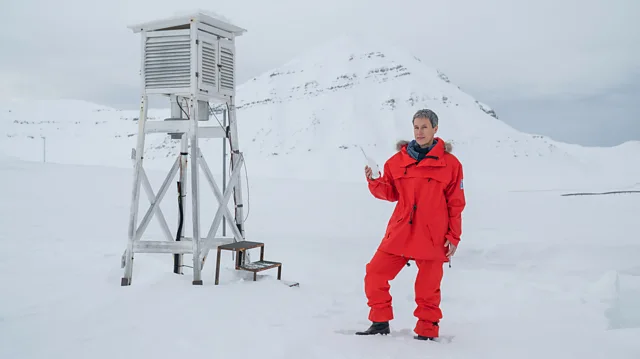
“The polar night is always the hardest,” explains Marion Maturilli, a scientist from the French and German Polar Institutes, stationed at Ny-Ålesund.
For over 50 years, Ny-Ålesund has been home to an international research community, just 1,200 kilometers from the North Pole. The settlement has a rich history of scientific endeavors, from early explorations of longitude to recent collaborations with NASA for satellite lasers and Earth measurements. Today, scientists from ten countries study everything from phytoplankton and walrus behavior to Arctic cyclones and microplastic pollution.
Despite the growing need for scientific research, there is an increasing push to protect the Arctic’s delicate environment. The Svalbard Environmental Protection Act, one of the world’s first international environmental agreements, emphasizes safeguarding this pristine landscape, and scientists strive to minimize their environmental footprint.
Maturilli’s team, for instance, records long-term temperature and solar radiation measurements at the station. For 30 years, they have launched weather balloons to gather atmospheric data, contributing to global weather forecasts and tracking temperature changes in the Arctic. “Though it may not sound spectacular, our daily measurements are a critical part of a reliable climate observation network,” Maturilli says.
Over the years, researchers like Iain Rudkin, Arctic Operations Manager for the British Antarctic Survey, have witnessed alarming changes in the region. “It’s incredibly sad. In just 15 years, I’ve seen the landscape change too much,” he shares.
To reduce their impact, the research station only accommodates around 30 people year-round. "We aim to make as little impact as possible while conducting vital research," says Rudkin.
Efforts to minimize environmental harm extend to collaboration between research teams. Scientists share data, boat rides, and even winter clothing. Plans are also underway to transition to electric snowmobiles, although they face challenges due to the high demands of fieldwork. "Electric snowmobiles aren’t quite ready for the task," says Geir Gotaas, leader of the Norwegian Polar Institute.
While protecting the Arctic ecosystem is fundamental under the Svalbard Treaty, it’s also critical to limit the carbon footprint to ensure that scientific findings remain accurate. "Limiting our carbon footprint in such a unique environment is essential," says Maturilli. For instance, data collected during periods when vehicles or engine snowmobiles are used can be skewed due to carbon emissions.
The scientists also collaborate internationally to maximize resources. The Korean Polar Institute, for example, has worked with German-Nordic teams to publish research on Arctic ecosystems. Yoo Kyung Lee, from the Korean team, minimizes her carbon footprint by freeze-drying plant samples, which she then transports back to South Korea for further study.
Additionally, the Norwegian and Italian research bases are collaborating on the Ice Memory project, collecting ice cores for future research. One set of cores is used for immediate analysis, while the other is preserved for future generations of scientists to study the environmental conditions of our planet long after glaciers have disappeared due to global warming.
In this harsh and fragile environment, these scientists are taking every step to tread lightly, ensuring that their research can continue while minimizing their impact on the Arctic's unique ecosystem.
News You Should See
P&G Raises Fiscal 2027 Cost Warning as Oil and Freight Expenses Threaten Profits
Chemical Tank Leak in Toledo Triggers Evacuations and Industrial Disruptions
Judge Sets December 11 Deadline for Trump Deposition in BBC Defamation Case
Iowa Senate Race Tests How Far Republicans Can Separate Themselves From Trump
California State Workers Strike Over Pay, Healthcare and Return-to-Office Rules
Streaming’s October Showdown: How Disney, Netflix and Major Entertainment Brands Compete for Audiences
Latest News
Procter & Gamble expects commodity, energy and transportation costs to reduce fiscal 2027 profit by $1.4 billion. Quarterly sales rose 4% to $23.28 billion, beating analyst expectations.
A ruptured chemical tank in Toledo, Ohio, prompted evacuations, school closures and an industrial shutdown. Authorities have reduced the restricted zone as the release slows and cleanup preparations continue.
A federal judge has ordered Donald Trump to give a deposition by December 11, 2026, in his $10 billion lawsuit against the BBC, with possible sanctions for noncompliance as the discovery deadline approaches.
Iowa’s 2026 Senate race pits Republican Ashley Hinson, balancing Trump support with economic concerns, against Democrat Josh Turek, who emphasizes bipartisanship amid rising campaign spending.
Thousands of California state workers struck on October 21 over a proposed three-year pay increase, healthcare costs and a four-day office attendance requirement as contract negotiations continued.
October 2026 brings major entertainment releases across Disney+, Netflix, HBO Max, Hulu, Prime Video and Peacock. Explore how familiar franchises, exclusive programming, new music and video games shape competition for streaming audiences.
Saudia advises travelers to book flights through Al Qassim Airport for Riyadh connections, offering free hourly shuttle buses in both directions until further notice.
An AP-NORC poll shows Democratic confidence in accurate vote counting falling to 55%, while Republican confidence rises to 38%, highlighting election integrity concerns ahead of the 2026 US midterms.
Donald Trump campaigns in North Carolina ahead of the November 2026 midterms as low approval ratings, rising fuel costs, Democratic early-voting gains and funding disparities challenge Republican efforts to retain control of Congress.