Posture as a Daily Health Strategy: How Muscle Balance Shapes Alignment and Movement
Healthy alignment depends on more than simply keeping the spine straight; coordinated agonist and antagonist muscles, deliberate stretching, and targeted strengthening can help restore balance and make better posture an automatic daily habit.

Good posture is often treated as a matter of appearance: shoulders back, head upright and spine seemingly straight. From a physiological perspective, however, posture is better understood as a dynamic relationship between opposing muscle groups that continuously coordinate movement, stability and alignment.
One useful way to assess your own posture is to remove the conscious effort normally used to “stand correctly.” Stand in front of a full-length mirror with your feet approximately shoulder-width apart. Close your eyes, gently shake your arms and legs, roll your shoulders, and then allow your body to settle into a comfortable, natural standing position. Open your eyes without deliberately correcting anything and observe what you see.
From above, examine whether your knuckles are visible when you look down at your hands. From the side, imagine an X positioned at the center of your shoulder. If a vertical plumb line were dropped from your ear, it should pass through the center of that shoulder reference point and continue toward the knee. Having another person observe the alignment can make this assessment easier. A noticeable deviation does not necessarily mean that a medical problem exists, but it can indicate that your habitual alignment deserves greater attention.
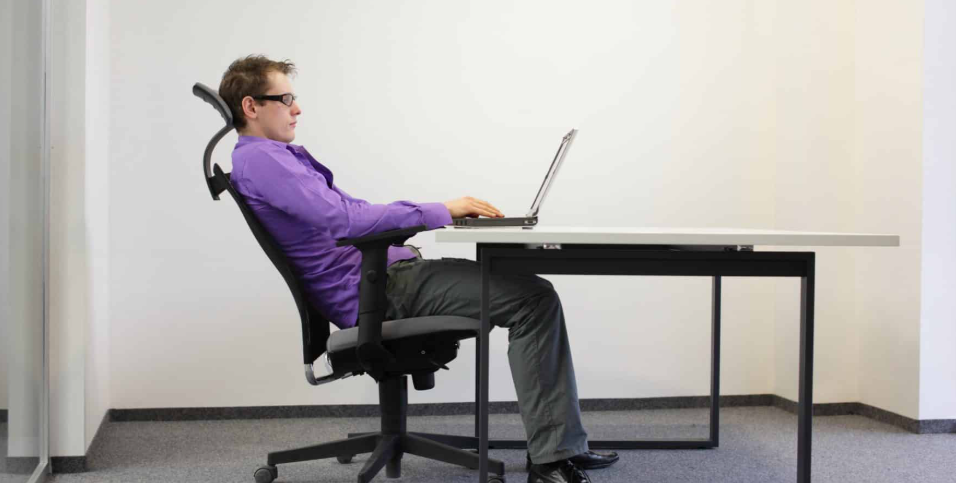
Truly balanced posture is relatively uncommon. When someone naturally carries their body with exceptional alignment, observers may associate that appearance with disciplines such as dance or military training. For most people, everyday routines gradually influence body position. Long periods spent working at computers, reading, standing at sinks, performing physical tasks, or carrying and lifting objects can repeatedly place the body in positions that differ from its most efficient alignment.
The underlying issue is not that the body lacks an ability to stabilize itself. Human movement is designed around cooperation between muscles that perform an action and muscles that provide controlled opposition. The body relies on these relationships to create tension, regulate movement and keep joints supported.
Problems can arise when the same movement patterns are repeated for long periods or when some muscle groups are developed extensively while their opposing counterparts receive insufficient attention. Strength by itself does not guarantee balanced movement. A person may develop highly visible back and shoulder muscles in the gym and still demonstrate an inefficient posture if other muscle groups are comparatively weak, inactive or shortened.
For example, excessive development of certain muscles can contribute to internal rotation of the arms, producing a rounded or “gorilla-like” appearance of the upper limbs. Such an imbalance can reduce freedom of movement and provide less effective support for joints that should ideally remain in a neutral position.
A similar principle can be seen when the head consistently moves forward relative to the shoulders. If the ear sits several inches in front of the shoulder rather than approximately over it, the body has to reorganize muscular activity to keep the head supported. The original article notes that each inch of forward head displacement can substantially increase the effective muscular demand associated with supporting the head. The practical lesson is that even a seemingly small positional change can require compensatory work elsewhere in the body.
This is where the distinction between agonist and antagonist muscles becomes important. Agonists are the primary muscles responsible for producing a particular movement. Synergist muscles assist them and contribute to the same action. Antagonists perform an opposing role, helping regulate the movement by providing controlled resistance.
Antagonistic activity is not a sign that one group is working against the body. It is part of the body's normal design. By applying a degree of opposing tension, antagonist muscles help prevent excessive movement, improve stability and make motion more controlled and precise. Healthy posture therefore depends not on eliminating opposing forces, but on maintaining an appropriate relationship between them.
When that relationship becomes unbalanced, a range of problems may appear. The symptoms described in the source include discomfort in the back, shoulders and neck, muscular tightness, possible problems involving discs and joints, fatigue, headaches, altered breathing patterns, slouching and general misalignment. The body can also respond to an existing postural problem by creating additional compensations, allowing the original imbalance to reinforce itself.
Improving posture consequently requires more than mentally imagining a perfectly straight spine. A useful focus is the relationship between the chest, rib cage, diaphragm, head and shoulders. Lifting the chest appropriately can help position the upper body in a more favorable relationship with the spine instead of relying solely on the conscious instruction to “stand straight.”
Chiropractor and professor Dr. Joan Young-Cheney developed a short daily approach intended to help people establish and maintain better posture, with a commitment of approximately four minutes per day. The routine described in the source combines stretching with exercises intended to strengthen and activate muscles that contribute to balanced alignment.
The first phase involves stretching.
For the first movement, lie on your back and interlace your fingers behind your head. Using the arms rather than actively pulling with the neck, raise the head from the floor or bed while slowly exhaling. Maintain the lifted position until the exhalation is completed, then lower the head gradually. The movement is repeated 10 to 12 times.
The second stretch is performed while seated. Keep the head slightly retracted rather than allowing it to project forward. Using one hand, gently guide the top of the head toward one side until a tolerable stretch is felt through the muscles. Hold the position for approximately one second and release. Repeat the movement 10 to 12 times.
The third stretch uses a doorway. While standing in the doorway, place the palms against the door molding at approximately waist height. Take a small step forward while maintaining an elevated chest position. Slowly move forward into the stretch while exhaling, and hold the position for 10 seconds while continuing to breathe. Step back and rest for another 10 seconds. Repeat the sequence three to four times.
Stretching is followed by strengthening and activation exercises.
For the first strengthening movement, interlace the fingers behind the back. If the hands cannot comfortably meet, a towel can be used to connect them. Lift the chest rather than elevating the shoulders, draw the shoulders directly backward, and keep the wrists together if possible. Then bring the elbows toward one another and lift them. Hold the position for 10 seconds, relax for 10 seconds, and repeat three times.
The next exercise is performed lying on the back with the knees bent. Tighten the abdominal muscles and press the back firmly against the floor. At the same time, contract the outer buttock muscles so that both the abdominal and gluteal groups remain engaged. Slowly raise the pelvis approximately one inch from the floor, making the movement from the pelvis rather than lifting through the lower back. Hold for 10 to 20 seconds, rest for five to 10 seconds, and repeat three times.
The final component is performed while standing. Raise the chest upward from the breastbone toward the ceiling and practice breathing from the upper abdominal region. The purpose is to encourage the shoulders and head to remain positioned closer to the body's center of gravity while reducing the tendency for the upper body to collapse forward. According to the source, this positioning may also reduce pressure over the diaphragm and support more effective oxygenation of tissues and joints.
The broader principle behind the routine is repetition. Postural control should not depend exclusively on consciously monitoring the body every second of the day. The goal of strengthening and stretching opposing muscle groups is to encourage them to participate more effectively in maintaining alignment without constant conscious correction.
This approach also highlights an important distinction between muscular strength and postural organization. A stronger muscle is not automatically a better postural muscle if the surrounding system remains imbalanced. The objective is coordinated function: agonists need to perform their primary actions, synergists need to assist appropriately, and antagonists need to provide the resistance and stability required for controlled movement.
In practical terms, posture can therefore be viewed as a daily movement strategy rather than a fixed visual position. Work habits, exercise patterns and repetitive activities continuously influence how the body organizes itself. Developing awareness, maintaining balanced muscle activity and incorporating short periods of targeted stretching and strengthening can help make healthier alignment easier to sustain.
The source's central message is consequently less about achieving a rigidly “perfect” posture and more about restoring cooperation between the body's opposing systems. When these systems are balanced, the body has a better foundation for controlled movement and stable joint positioning. With consistent practice, the muscles involved in maintaining alignment can increasingly perform their role without requiring constant conscious attention.
News You Should See
2026 Nobel Medicine Prize Honors Scientists Behind Optogenetics Breakthrough
Oil Prices Edge Lower as Stronger Middle East Exports and G7 Reserves Ease Supply Concerns
Trump Offers U.S. Assistance to Russia After Death at Siberian Plague Research Institute
Trump Takes Economic Message to Nebraska as GOP Faces Rising Cost-of-Living Pressure
U.S. Appeals Court Weighs Trump Administration’s $2.6 Billion Harvard Funding Fight
U.S. Midterm Elections Begin With Resilient Jobs Market and Persistent Cost Pressures
Latest News
The 2026 Nobel Prize in Physiology or Medicine honors Karl Deisseroth, Peter Hegemann and Georg Nagel for pioneering research behind optogenetics and its impact on neuroscience.
Oil prices edged lower as stronger Middle Eastern exports and a planned G7 release of 100 million barrels eased immediate supply concerns, while Gulf security risks and the Strait of Hormuz kept markets alert.
President Donald Trump said the United States would help Russia if needed after a laboratory worker died at a Siberian plague research institute, as Russian authorities imposed precautionary quarantine measures.
Trump’s Nebraska campaign stop highlights rising fuel and grocery costs, beef prices and growing economic pressure on Republicans ahead of the November midterm elections.
A U.S. appeals court is reviewing the Trump administration’s effort to cut Harvard’s federal research funding, with more than $2.6 billion at stake.
The U.S. enters the 2026 midterm elections with unemployment at 4.2%, while higher living and energy costs create economic pressure for households and businesses.
US services growth eased in September as input prices climbed to their highest level since July 2022, with fuel costs, supply-chain disruptions and strong demand increasing pressure on businesses.
Rising Treasury yields are increasing U.S. borrowing costs as Washington manages record debt, persistent inflation and strong economic demand, narrowing its policy options.
A EGP 16 million corporate partnership will establish and equip a bone marrow transplant unit at Cairo’s Coptic Hospital, supporting access to specialized treatment for patients.