PBS and NPR Face Federal Funding Cuts: What It Means for Public Media
After the Senate's approval to eliminate federal support for PBS and NPR, public broadcasters brace for layoffs, programming cuts, and a challenging road ahead.

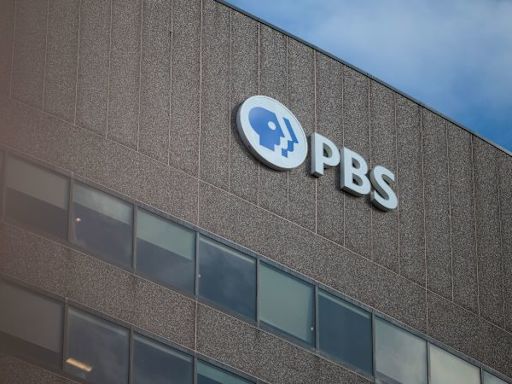
Public television and radio stations are facing an uncertain future after the Senate voted to completely eliminate federal funding for PBS and NPR. PBS CEO Paula Kerger warned that stations will be “forced to make hard decisions in the weeks and months ahead,” including possible staff layoffs and cuts to popular programs.
Shows like “Daniel Tiger’s Neighborhood” may reach fewer viewers, and while Big Bird from “Sesame Street” will remain, the financial support that sustained him for decades is disappearing. Once the House passes the bill, expected soon, the Corporation for Public Broadcasting will see its budget drop to zero for the first time since its creation in 1967—when TVs were still black and white.
This move fulfills a key goal of former President Trump, who repeatedly accused PBS and NPR of biased reporting. For local public media stations that rely heavily on federal funds—especially those in smaller towns and rural areas—the impact could be devastating.
While larger market stations often supplement federal funding with donations and foundation grants, smaller broadcasters may struggle to stay on air. Public media advocates warn this could lead to fewer original programs and diminished local news coverage nationwide.
Kerger emphasized the critical role public media plays, providing “free unique local programming and emergency alerts,” especially to rural communities. Two Republican senators, Lisa Murkowski and Susan Collins, voted against the funding cut, citing these important services despite concerns about bias in NPR content.
However, many Republicans framed public media as outdated in the streaming age and focused on claims of political bias. David Bozell, president of the conservative Media Research Center, celebrated the funding rollback as a “historic” victory, criticizing PBS and NPR for alleged liberal bias and content he deemed inappropriate.
Public media officials push back against these claims, pointing out NPR’s neutral coverage of the funding cuts itself. NPR CEO Katherine Maher called the network a “lifeline,” highlighting that nearly three-quarters of Americans depend on public radio for news and safety alerts.
The advocacy group America’s Public Television Stations condemned the Senate’s decision, saying it “defies the will of the American people,” citing polls and recent Congressional funding approvals.
Since its establishment in 1967, the Corporation for Public Broadcasting has enjoyed bipartisan support, nurturing iconic shows like “Sesame Street” and “Antiques Roadshow.” Previous Republican administrations had proposed cuts but never fully eliminated funding—until now.
With nearly $1.1 billion allocated for the next two years now at risk, local stations are already responding. New York’s WNYC has created a new executive role to explore alternative funding sources, while San Francisco’s KQED has announced layoffs of about 15 percent of its staff due to financial uncertainties.
Despite these challenges, Kerger vowed that public media will continue fighting to preserve their essential services to the American public.
News You Should See
The Hunger Games: Sunrise on the Reaping Delivers $225 Million Global Box Office Debut
US Data Centers Consume as Much Electricity as Michigan, Harvard Study Reveals
AI Enables a 12,000-Pound John Deere Loader to Perform Two-Wheel Stunts
Kodak Launches SlideTag, a Digital Photo Frame with Built-In Bluetooth Tracking
Samsung May Shift Galaxy Watch to a Two-Year Launch Cycle Amid Sales Challenges
Barcelona Stage Stunning Comeback to Defeat Villarreal 3-2 and Extend LaLiga Lead
Latest News
The Hunger Games: Sunrise on the Reaping earns $225 million worldwide in its opening weekend, strengthening the franchise's box-office position.
Harvard research estimates that 403 US hyperscale data centers consume up to 99 terawatt-hours annually, raising concerns about AI's environmental impact.
Researchers train a 12,000-pound John Deere 332G loader using AI and reinforcement learning to balance on two wheels and perform controlled movements.
Kodak introduces SlideTag, a $34.99 digital photo accessory featuring a 1.54-inch E Ink screen, photo storage, and Bluetooth tracking support.
Samsung may skip next year's Galaxy Watch launch after disappointing sales expectations, potentially shifting to a two-year release cycle while prioritizing software improvements.
Barcelona come from two goals down to beat Villarreal 3-2 at Camp Nou, with Gerard Martín, Fermín López, and Pau Navarro's own goal securing victory.
Liverpool defeat Manchester United 4-0 at Anfield after Leny Yoro's early red card marks a difficult Premier League debut for Mauricio Pochettino.
Five Aberdeen Township police officers receive New Jersey PBA Valor Awards for their bravery during an alleged kerosene attack.
NYC hate crimes prevention director Vijah Ramjattan meets Muslim community members to discuss public safety, trust, inclusion, and hate crime prevention.