Paul Pogba and Monaco End Short-Lived Comeback Project as Saudi Arabia and MLS Emerge as Possible Next Stops
Monaco has formally terminated Pogba’s contract after only one season, with recurring fitness problems limiting the former World Cup winner to six appearances and 115 minutes.

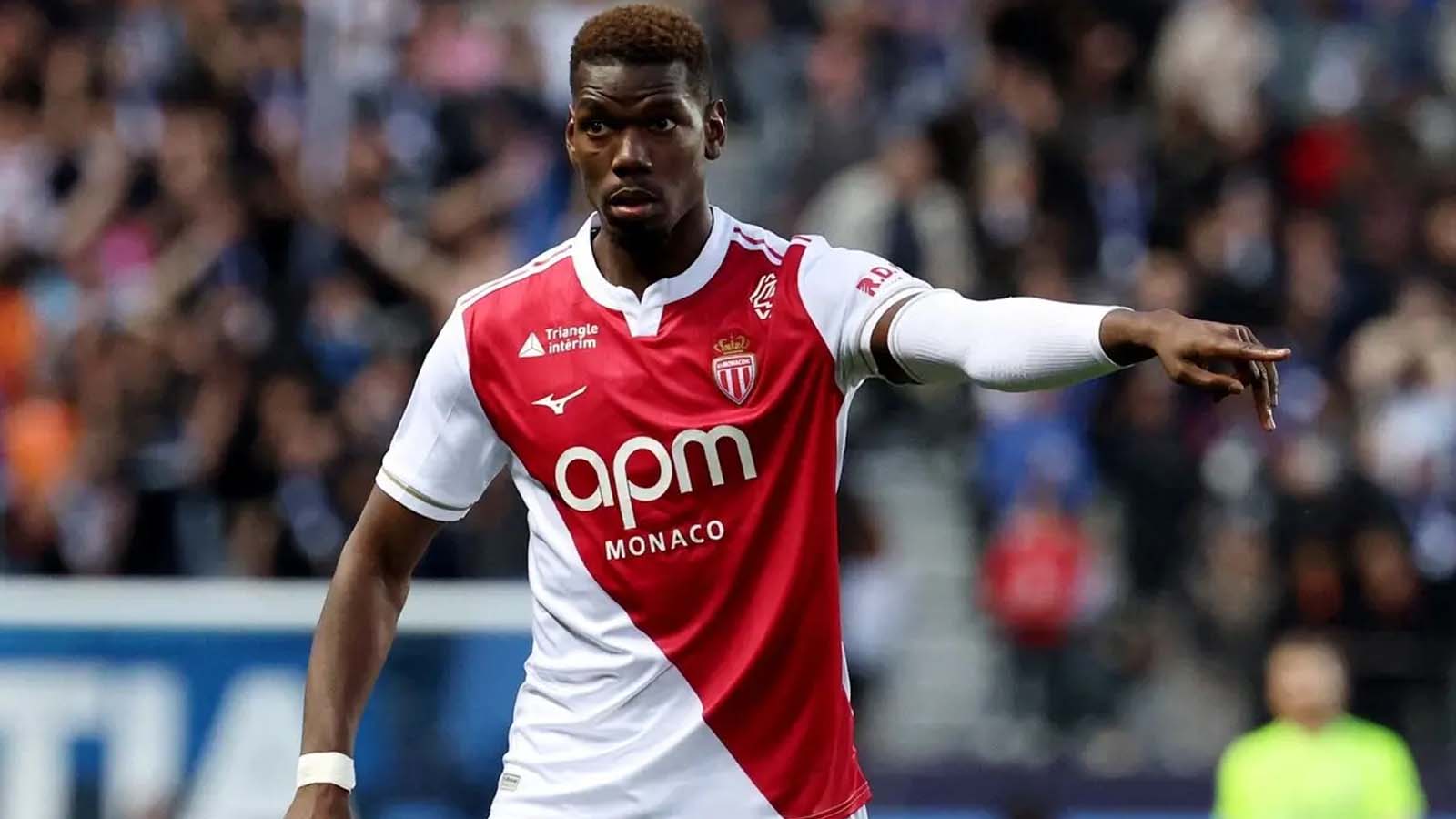
Paul Pogba’s brief chapter with Monaco has come to an official end, closing a comeback project that was built around the possibility of restoring one of football’s most recognizable midfielders to the highest level.
Monaco confirmed on August 19, 2026 that it had reached an agreement with Pogba to terminate his contract, which had originally been scheduled to run until June 30, 2027. The club expressed its appreciation for the 2018 World Cup winner and wished him well for the next stage of his career.
The decision represents more than the departure of a high-profile player. It also illustrates the financial and sporting risks involved when clubs attempt to rebuild the value of an established star whose career has been disrupted by disciplinary issues, injuries and prolonged periods without competitive football.
Pogba arrived at Monaco in June 2025 after a difficult period that had dramatically changed the trajectory of his career. His doping case, which began after a positive test following Juventus’ match against Udinese in 2023, initially resulted in a four-year suspension. The sanction was later reduced to 18 months after the Court of Arbitration for Sport accepted that the substance had been taken unintentionally.
The consequences, however, extended beyond the suspension itself. Juventus terminated his contract in November 2024, and Pogba subsequently remained without a club until Monaco offered him an opportunity to restart his career in June 2025.
That move was strategically attractive for both sides. For Pogba, Monaco provided a European platform from which he could attempt to rebuild his sporting reputation without immediately returning to the intense pressure surrounding the biggest clubs in Europe. For Monaco, the signing represented a calculated bet: if the midfielder could recover his physical condition and previous level, the club could benefit from his experience, profile and commercial appeal without taking the same level of financial risk associated with signing a fully established star at his previous market value.
The strategy ultimately failed to deliver the expected sporting return.
During the 2025-26 season, Pogba made only six appearances for Monaco, totaling 115 minutes, without scoring or providing an assist. His limited availability prevented him from establishing a consistent rhythm and made it difficult for the club to integrate him into its competitive plans.
The numbers are particularly significant because the project depended on continuity. A player attempting to recover from a prolonged absence needs regular competitive exposure, while the club needs dependable availability to justify the sporting and commercial logic behind the signing. Instead, recurring physical problems kept Pogba on the margins and reduced the opportunity for Monaco to convert his global reputation into sustained on-field value.
Monaco nevertheless waited until the summer of 2026 before making a final decision, assessing Pogba’s physical condition during preseason. Further fitness concerns ultimately convinced the club that continuing the partnership represented too much uncertainty.
From Monaco’s perspective, the termination can be viewed as a risk-management decision. Extending a recovery project indefinitely would have required the club to continue allocating resources to a player whose availability remained uncertain. Ending the agreement allows Monaco to redirect squad planning, salary resources and midfield investment toward players who can provide greater continuity.
For Pogba, the situation is more complicated. At 33, he remains a globally recognizable football brand, but his sporting value is now closely tied to a difficult question: can he remain healthy enough to make his reputation commercially relevant on the pitch?
That distinction could shape his next move.
The Saudi Pro League is one possible destination, particularly because Pogba has previously been associated with Saudi clubs including Al Ahli and Al Ittihad. However, his current physical condition could make Saudi clubs more cautious about committing to a major contract unless the player accepts significant financial or contractual concessions.
Major Saudi clubs have demonstrated an ability to attract internationally recognized names, but the market is also becoming more selective. A famous player alone does not necessarily justify a large investment; clubs increasingly need a combination of sporting contribution, commercial reach, availability and long-term value.
That makes Pogba a more complex proposition than he was several years ago. His name still carries substantial international recognition, but the commercial argument would have to be balanced against the risk that injuries could limit his contribution.
Major League Soccer could represent a different type of opportunity. Several clubs in the United States are reportedly interested in Pogba, and the league could offer an environment with less immediate sporting pressure than Europe’s major competitions.
From a brand perspective, MLS could be particularly relevant. The league has increasingly positioned itself as an entertainment and global-marketing product, where the international profile of established players can contribute to audience growth, sponsorship exposure and international visibility. For Pogba, such a move could provide an opportunity to preserve his global identity while operating in a less demanding competitive environment.
England and Italy remain possible options because of Pogba’s previous experience in both leagues. Yet returning to one of Europe’s major competitions would expose the same central problem: elite clubs require consistent physical availability, and Pogba’s recent history makes that the biggest uncertainty surrounding any potential transfer.
There is also the possibility of remaining in France with a mid-table club, although that would represent a very different career trajectory from the one Pogba once occupied at Juventus, Manchester United and the French national team. Retirement is another possibility if a suitable sporting project cannot be found.
The broader lesson from the Monaco experiment is that football’s transfer market is increasingly evaluating veteran stars through a combination of performance, availability and commercial value rather than reputation alone.
Pogba’s case demonstrates how quickly the economics of a player can change. A global profile can create opportunities, but it cannot eliminate the financial consequences of prolonged inactivity. For clubs, the key question is no longer simply whether a player can still perform at his historical level. It is whether the expected contribution justifies the cost and risk of acquiring him.
For Monaco, ending the partnership signals a shift away from a high-risk rehabilitation project and toward greater certainty in squad construction. For Pogba, the next decision will determine whether his career enters a final competitive chapter or moves gradually toward life beyond elite football.
Saudi Arabia and MLS therefore represent more than potential destinations. They could offer two different strategic routes for a player attempting to extend the commercial and sporting life of one of football’s most recognizable brands.
News You Should See
2026 Nobel Medicine Prize Honors Scientists Behind Optogenetics Breakthrough
Oil Prices Edge Lower as Stronger Middle East Exports and G7 Reserves Ease Supply Concerns
Trump Offers U.S. Assistance to Russia After Death at Siberian Plague Research Institute
Trump Takes Economic Message to Nebraska as GOP Faces Rising Cost-of-Living Pressure
U.S. Appeals Court Weighs Trump Administration’s $2.6 Billion Harvard Funding Fight
U.S. Midterm Elections Begin With Resilient Jobs Market and Persistent Cost Pressures
Latest News
The 2026 Nobel Prize in Physiology or Medicine honors Karl Deisseroth, Peter Hegemann and Georg Nagel for pioneering research behind optogenetics and its impact on neuroscience.
Oil prices edged lower as stronger Middle Eastern exports and a planned G7 release of 100 million barrels eased immediate supply concerns, while Gulf security risks and the Strait of Hormuz kept markets alert.
President Donald Trump said the United States would help Russia if needed after a laboratory worker died at a Siberian plague research institute, as Russian authorities imposed precautionary quarantine measures.
Trump’s Nebraska campaign stop highlights rising fuel and grocery costs, beef prices and growing economic pressure on Republicans ahead of the November midterm elections.
A U.S. appeals court is reviewing the Trump administration’s effort to cut Harvard’s federal research funding, with more than $2.6 billion at stake.
The U.S. enters the 2026 midterm elections with unemployment at 4.2%, while higher living and energy costs create economic pressure for households and businesses.
US services growth eased in September as input prices climbed to their highest level since July 2022, with fuel costs, supply-chain disruptions and strong demand increasing pressure on businesses.
Rising Treasury yields are increasing U.S. borrowing costs as Washington manages record debt, persistent inflation and strong economic demand, narrowing its policy options.
A EGP 16 million corporate partnership will establish and equip a bone marrow transplant unit at Cairo’s Coptic Hospital, supporting access to specialized treatment for patients.