OpenAI Ends Atlas Browser as It Expands ChatGPT Into an AI-Powered Web Platform
The company is shifting from building a standalone browser to embedding AI browsing capabilities across ChatGPT, Chrome, and desktop experiences.

OpenAI has decided to discontinue Atlas, its experimental AI-powered browser, marking a strategic shift in how the company intends to compete in the rapidly evolving market for intelligent web experiences. Rather than pursuing a standalone browser, the company is integrating Atlas' most advanced capabilities directly into ChatGPT and the platforms users already rely on every day.
The decision reflects a broader change in OpenAI's product strategy. Instead of expanding into multiple independent consumer applications, the company appears to be concentrating its resources on strengthening ChatGPT as the central gateway to its artificial intelligence ecosystem.
Atlas was introduced as an AI-first browser built around ChatGPT, aiming to redefine how people interact with online information. However, after months of testing and user feedback, OpenAI concluded that intelligent browsing works better as a capability embedded within existing workflows than as a completely separate destination.
The company is now transferring many of Atlas' agentic browsing functions into both the ChatGPT desktop application and a newly introduced extension for Google Chrome. This approach enables users to access AI assistance without changing the browser or applications they already use.
The Chrome extension allows ChatGPT to understand the context of the webpage currently being viewed, answer questions about its contents, summarize information, and initiate more advanced tasks directly from within the browser. The functionality places OpenAI in direct competition with similar AI assistants that browser developers are rapidly integrating into their own products.
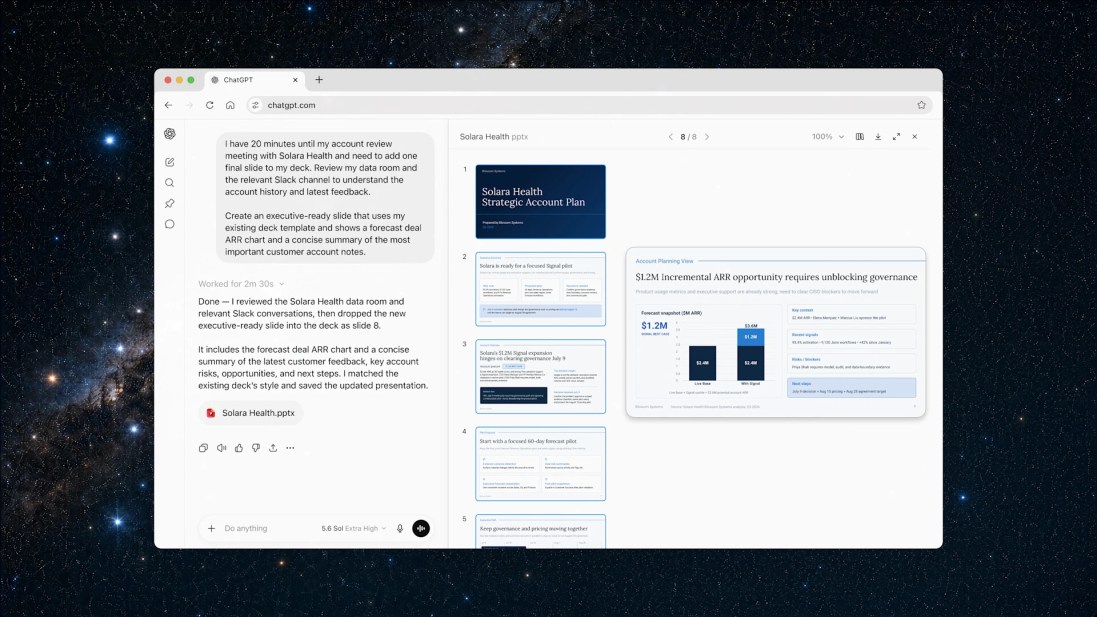
Meanwhile, the desktop version of ChatGPT is evolving beyond a traditional chatbot. OpenAI is expanding it into a more comprehensive workspace capable of browsing websites, signing into online accounts, downloading files, and interacting with web applications without requiring users to switch between multiple software environments.
A significant element of this strategy is the introduction of a cloud-based browser operating remotely on OpenAI's infrastructure. Instead of simply responding to prompts, AI agents will be able to perform tasks independently on behalf of users while interacting with websites through this remote browsing environment. This represents another step toward agentic AI systems capable of executing complete digital workflows rather than providing isolated answers.
The transition also reflects changing priorities inside OpenAI. Company leadership has increasingly emphasized focusing engineering resources on products with the greatest long-term strategic value. Streamlining experimental initiatives while strengthening flagship platforms enables the organization to concentrate investment on technologies capable of reaching a broader user base.
From a market perspective, the decision illustrates how competition in AI-powered browsing has evolved. Technology companies are no longer competing to build entirely new browsers alone. Instead, they are racing to transform browsers into intelligent productivity environments where AI continuously assists users while they work, research, communicate, and manage digital tasks.
This shift has attracted virtually every major AI developer and browser vendor. Rather than replacing established browsers outright, companies are embedding conversational assistants, autonomous agents, contextual understanding, and workflow automation into familiar user experiences, reducing the barriers to adoption.
For OpenAI, integrating Atlas into ChatGPT strengthens its ambition of making the chatbot the primary interface between users and the internet. Instead of launching separate AI products for different activities, the company is gradually consolidating browsing, research, productivity, automation, and intelligent assistance into a unified platform.
Looking ahead, this strategy could fundamentally reshape how people interact with online services. If AI agents become capable of navigating websites, completing transactions, organizing information, and executing complex tasks autonomously, traditional web browsers may evolve from navigation tools into intelligent operating environments where artificial intelligence becomes the user's primary digital assistant.
News You Should See
2026 Nobel Medicine Prize Honors Scientists Behind Optogenetics Breakthrough
Oil Prices Edge Lower as Stronger Middle East Exports and G7 Reserves Ease Supply Concerns
Trump Offers U.S. Assistance to Russia After Death at Siberian Plague Research Institute
Trump Takes Economic Message to Nebraska as GOP Faces Rising Cost-of-Living Pressure
U.S. Appeals Court Weighs Trump Administration’s $2.6 Billion Harvard Funding Fight
U.S. Midterm Elections Begin With Resilient Jobs Market and Persistent Cost Pressures
Latest News
The 2026 Nobel Prize in Physiology or Medicine honors Karl Deisseroth, Peter Hegemann and Georg Nagel for pioneering research behind optogenetics and its impact on neuroscience.
Oil prices edged lower as stronger Middle Eastern exports and a planned G7 release of 100 million barrels eased immediate supply concerns, while Gulf security risks and the Strait of Hormuz kept markets alert.
President Donald Trump said the United States would help Russia if needed after a laboratory worker died at a Siberian plague research institute, as Russian authorities imposed precautionary quarantine measures.
Trump’s Nebraska campaign stop highlights rising fuel and grocery costs, beef prices and growing economic pressure on Republicans ahead of the November midterm elections.
A U.S. appeals court is reviewing the Trump administration’s effort to cut Harvard’s federal research funding, with more than $2.6 billion at stake.
The U.S. enters the 2026 midterm elections with unemployment at 4.2%, while higher living and energy costs create economic pressure for households and businesses.
US services growth eased in September as input prices climbed to their highest level since July 2022, with fuel costs, supply-chain disruptions and strong demand increasing pressure on businesses.
Rising Treasury yields are increasing U.S. borrowing costs as Washington manages record debt, persistent inflation and strong economic demand, narrowing its policy options.
A EGP 16 million corporate partnership will establish and equip a bone marrow transplant unit at Cairo’s Coptic Hospital, supporting access to specialized treatment for patients.