Oil Prices Rebound as Tanker Attacks Renew Fears of Middle East Supply Disruptions
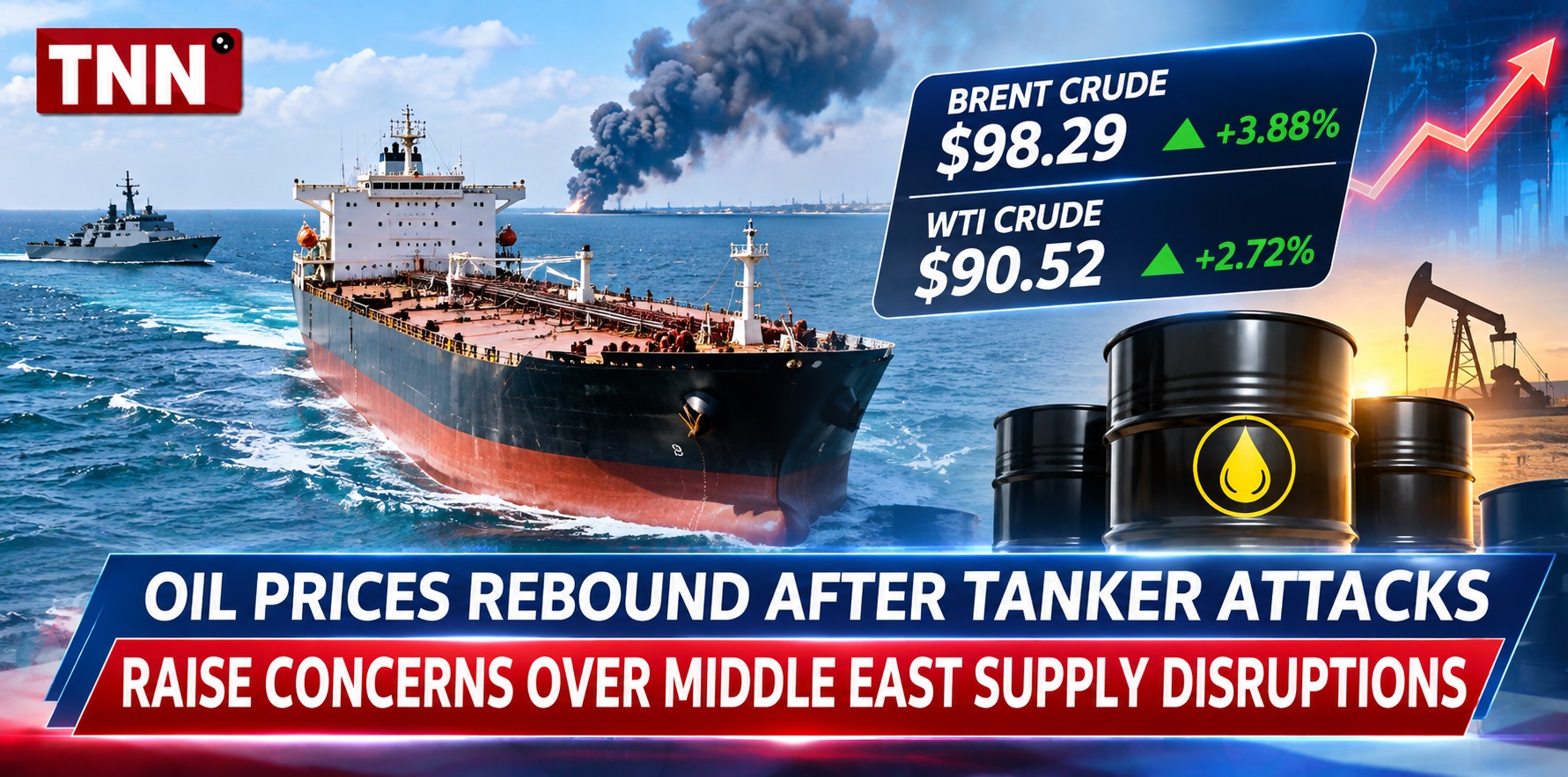
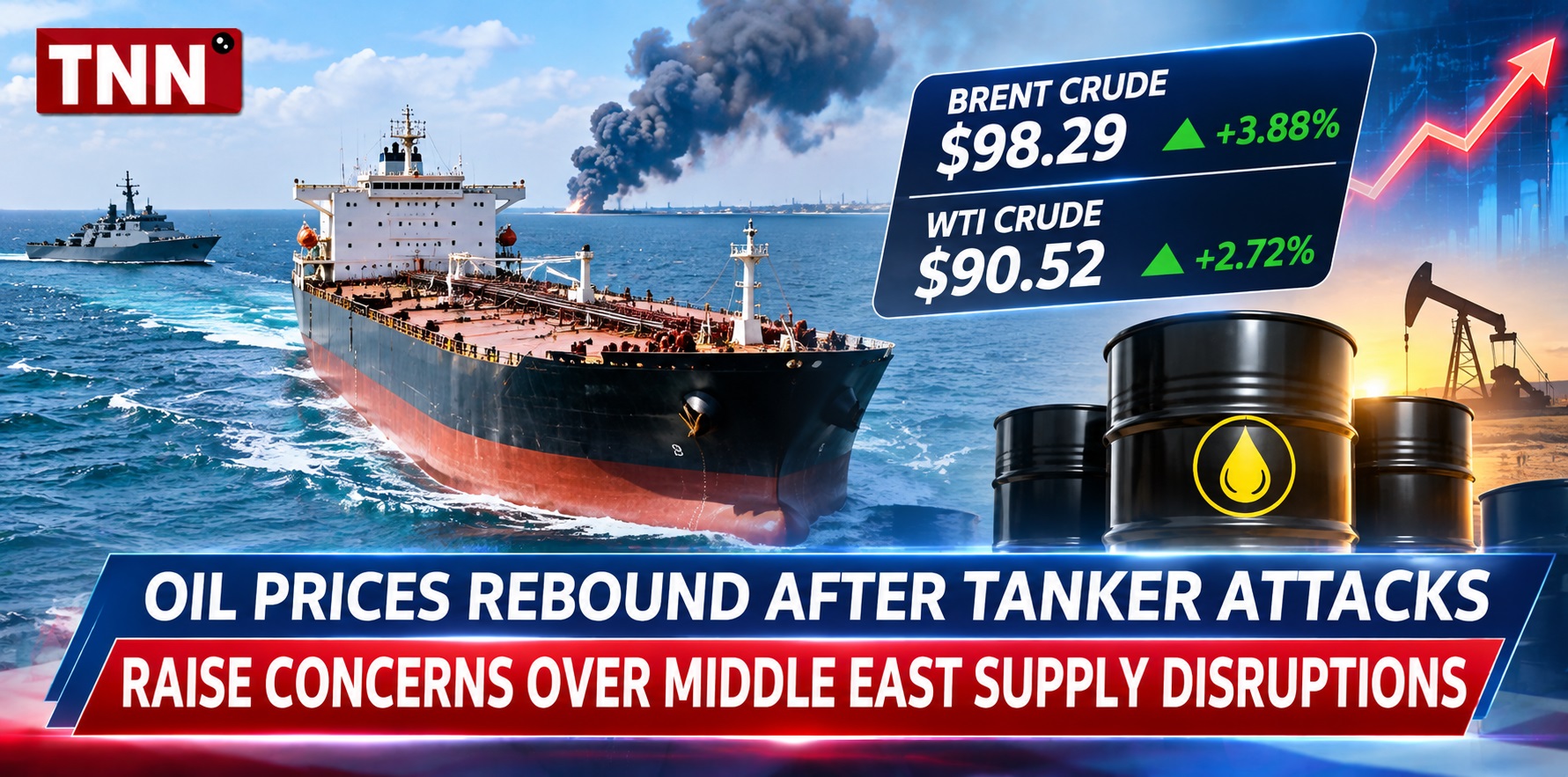
Oil prices recover after tanker incidents in the Gulf raise concerns over Middle East supply routes, pushing Brent crude to $98.29 and WTI to $90.52 per barrel.

Gulf Shipping Risks Push Oil Prices Higher as Markets Reassess Middle East Supply Security
Global energy markets are once again pricing in the risks associated with instability in the Middle East, as incidents involving commercial vessels in the Gulf triggered a sharp recovery in crude oil prices. The latest movement highlights how quickly geopolitical developments can influence energy valuations, particularly when concerns involve maritime routes responsible for transporting a substantial share of internationally traded oil.
Brent crude futures settled at $98.29 per barrel on Thursday, gaining $3.67, equivalent to 3.88%. U.S. West Texas Intermediate (WTI) advanced by $2.40, or 2.72%, to finish at $90.52 per barrel.
The rebound followed a substantial decline during the previous trading session, when both benchmarks lost more than 8% and reached their lowest settlement levels since August 31. The reversal demonstrates the sensitivity of oil markets to changing expectations about regional security and the continuity of international shipments.
Maritime Security Returns to the Center of Oil Market Concerns
The immediate catalyst for the recovery was a series of reported incidents involving commercial shipping in the Gulf. The United Kingdom Maritime Trade Operations agency indicated that at least five vessels had experienced incidents in the region since Sunday.
Reports involving tankers striking mines or being targeted by drones have intensified concerns about the safety of commercial shipping and the possibility of interruptions to energy transportation.
For oil traders, the significance of these developments extends beyond the vessels directly affected. Even without a confirmed interruption to production, rising maritime risks can increase uncertainty over delivery schedules, insurance expenses and the reliability of supply chains.
This uncertainty creates an additional risk premium in oil prices, as market participants adjust their expectations to account for the possibility of further escalation.
The situation is particularly sensitive because the Gulf is central to international energy trade. Any prolonged deterioration in maritime security could affect shipping operations, increase transportation costs and complicate the movement of crude oil and petroleum products to major consuming markets.
The Strait of Hormuz Remains a Strategic Energy Chokepoint
The Strait of Hormuz is one of the most important components of the global oil transportation network. It connects Gulf oil-producing countries with international maritime markets, making its security essential to the uninterrupted movement of energy supplies.
Its strategic importance means that developments surrounding the waterway can have consequences far beyond the Middle East.
Oil markets are particularly vulnerable to uncertainty over the route because alternative transportation arrangements may not fully compensate for a prolonged disruption. Any deterioration in shipping conditions could therefore affect the availability and delivery costs of crude oil across several regions.
The broader conflict involving the United States, Israel and Iran has already contributed to volatility in energy markets and increased fuel costs.
The latest maritime incidents have added another layer of uncertainty, shifting attention from the immediate direction of crude prices toward the resilience of the infrastructure and transportation networks supporting global energy trade.
Geopolitical Risk Complicates the Oil Price Outlook
Despite Thursday's recovery, the future direction of oil prices remains difficult to predict. The market is responding to competing possibilities, including further military escalation, diplomatic engagement and a prolonged period of uncertainty without a comprehensive agreement.
Eurasia Group adjusted its assessment of the geopolitical outlook, lowering the estimated probability of renewed U.S. strikes against Iran to 60%, from 65%. At the same time, it reduced the likelihood of a diplomatic agreement to 10% and increased its assessment of the possibility of an extended standoff.
The group's analysis also highlighted the potential for a more severe market reaction if tensions intensify. Under an escalation scenario, Brent crude could rise into a range of $110 to $125 per barrel.
Such a development would represent a significant increase from Thursday's settlement and could place additional pressure on businesses and consumers already exposed to elevated energy expenses.
Meanwhile, Iran's foreign ministry reported diplomatic discussions with Saudi and Qatari officials concerning regional stability.
These contacts indicate that diplomatic channels remain active, although their existence does not necessarily mean that a broader settlement is approaching.
For energy markets, the central question is whether diplomatic efforts can reduce security risks before further incidents affect the reliability of commercial shipping.
Higher Oil Prices Create Wider Economic Pressures
The implications of rising crude prices extend well beyond the energy industry. Oil is a major input into transportation, manufacturing, logistics and numerous other economic activities.
When crude prices increase, fuel suppliers and transportation companies may face higher operating expenses. Depending on market conditions and the duration of the increase, part of these costs can eventually be passed on to businesses and consumers.
Airlines, shipping operators, road transportation companies and manufacturers are particularly exposed to changes in fuel and energy expenses.
Higher transportation costs can also influence the prices of imported goods and industrial inputs, adding pressure to supply chains and potentially complicating efforts to contain inflation.
In the United States, fuel affordability has also become a political concern. Higher gasoline prices were among the issues raised by voters during the November midterm elections, illustrating how developments in international energy markets can influence domestic economic debates.
For companies, sustained volatility creates additional difficulties in financial planning. Businesses that depend heavily on fuel may need to reassess operating budgets, pricing strategies and procurement arrangements if energy costs remain elevated.
The impact on households is similarly important, as increases in gasoline and transportation expenses can reduce disposable income and affect consumer spending in other sectors.
Energy Companies and Traders Face a More Uncertain Environment
For oil producers, refiners, trading companies and shipping operators, the current environment requires closer attention to geopolitical exposure and supply continuity.
Price increases may benefit some producers through stronger revenue per barrel, but the overall commercial impact is more complex. Security risks can increase insurance premiums, complicate logistics and make delivery commitments more difficult to manage.
Refiners and energy importers may also face greater uncertainty when estimating future procurement costs. Sudden movements in crude prices can affect refining margins, inventory valuations and the economics of supply contracts.
Meanwhile, traders must balance the possibility of additional price gains against the risk that diplomatic progress or reduced military tensions could trigger another correction.
This creates a market environment in which geopolitical developments can become as important as traditional supply-and-demand indicators.
The Next Market Direction Depends on Security and Diplomacy
Thursday's rebound demonstrates that the oil market remains highly sensitive to developments affecting Gulf shipping. However, one session of higher prices does not establish a sustained upward trend.
The coming period will depend heavily on the frequency of maritime incidents, the security of the Strait of Hormuz, diplomatic discussions and the broader trajectory of the conflict involving the United States, Israel and Iran.
If shipping risks intensify or transportation routes become less reliable, oil prices could face further upward pressure, with the $110-$125 range identified by Eurasia Group representing a potential escalation scenario.
Conversely, meaningful diplomatic progress and improved maritime security could reduce the risk premium currently influencing crude valuations.
For governments, energy companies and consumers, the central challenge is preparing for a market in which supply security and geopolitical developments remain major determinants of energy costs.
The latest price recovery is therefore more than a reaction to isolated shipping incidents. It reflects the continued importance of the Middle East to global energy stability and the economic consequences that could emerge if commercial transportation through the Gulf faces prolonged disruption.
News You Should See
Before Thanksgiving: Tips to Cut Travel Costs and Avoid Traffic and Airport Congestion in the US
Dollar Holds Steady as US Inflation Data and Federal Reserve Decision Approach
US Appeals Court Ends Justice Department Lawsuit Targeting 20,000 California Ballots
Democrats Win Historic House Majority, Reshaping Washington's Political Landscape
Thanksgiving Storm Threatens Major US East Coast Travel Routes With Flooding and 60 MPH Winds
Manchester City Prepare for Tactical Battle Against Napoli in Champions League
Latest News
About 81.5 million Americans are expected to travel for Thanksgiving, facing higher airfare, heavy road traffic and crowded airports. Discover key travel preparations and cost-saving tips.
The dollar index holds near 103.85 as investors await US inflation and GDP figures, with December rate expectations and global monetary policy shaping currency markets.
The 9th Circuit Court of Appeals approved the Justice Department's request to dismiss its lawsuit targeting approximately 20,000 California ballots, ending a dispute over federal election oversight and state authority.
Democrats secure at least 259 House seats and a 56-seat Senate majority, setting the stage for major changes in US healthcare, spending and congressional oversight.
A developing Thanksgiving storm threatens the US East Coast with heavy rain, coastal flooding and wind gusts of up to 60 mph, raising concerns about airport operations, road travel and holiday transportation in major cities.
Manchester City host Napoli in a key Champions League clash, with Haaland, Foden and Cherki expected to lead the English side's attacking efforts.
Arsenal prepare to host Borussia Dortmund in a crucial Champions League clash, with injuries and tactical decisions potentially shaping the outcome.
The Hunger Games: Sunrise on the Reaping earns $225 million worldwide in its opening weekend, strengthening the franchise's box-office position.
Harvard research estimates that 403 US hyperscale data centers consume up to 99 terawatt-hours annually, raising concerns about AI's environmental impact.