NYPD Sergeant Ruben Cespedes Receives Purple Heart Nearly 17 Years After Afghanistan Wounds
Military recognition highlights a long record of public service spanning the U.S. Army and the NYPD

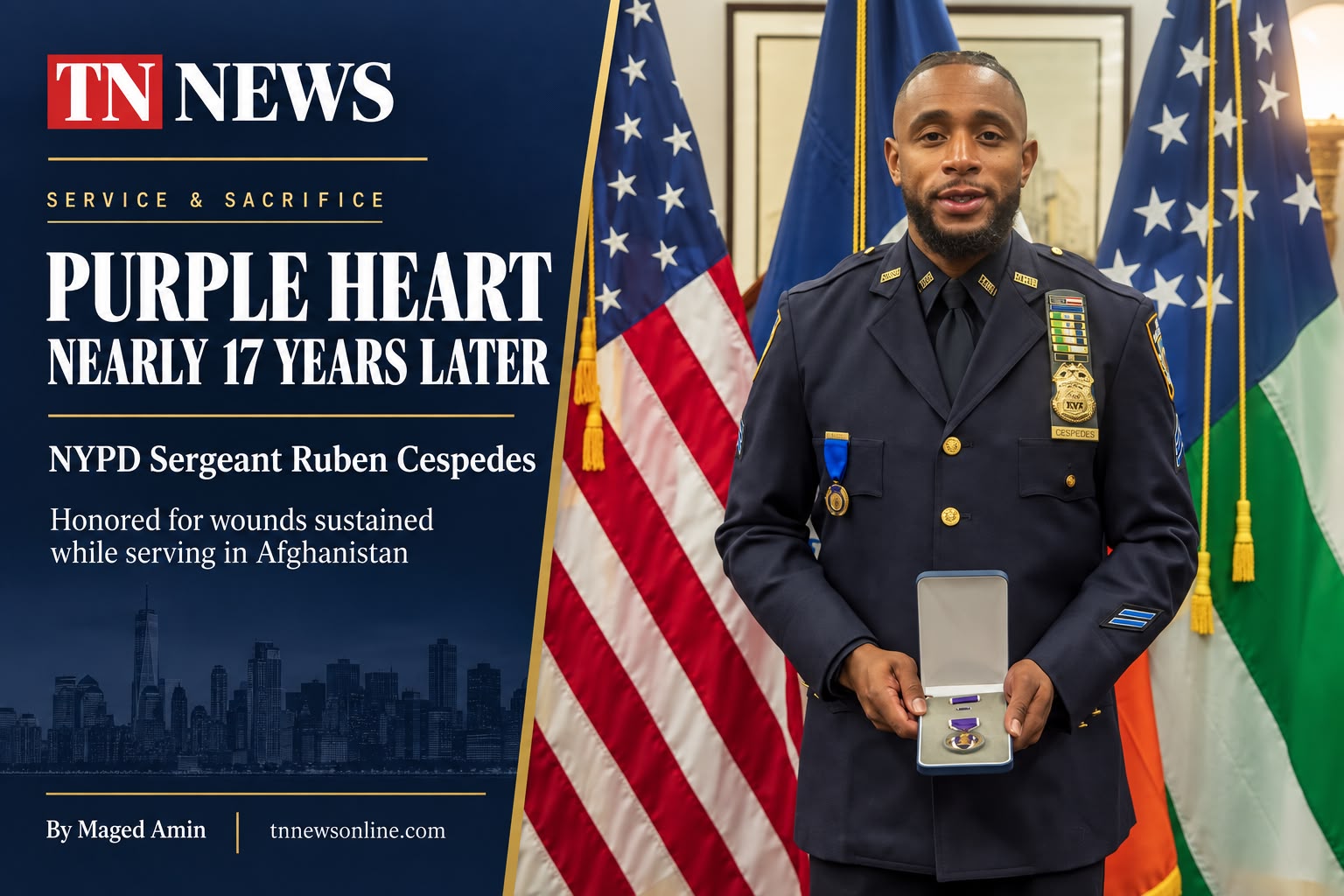
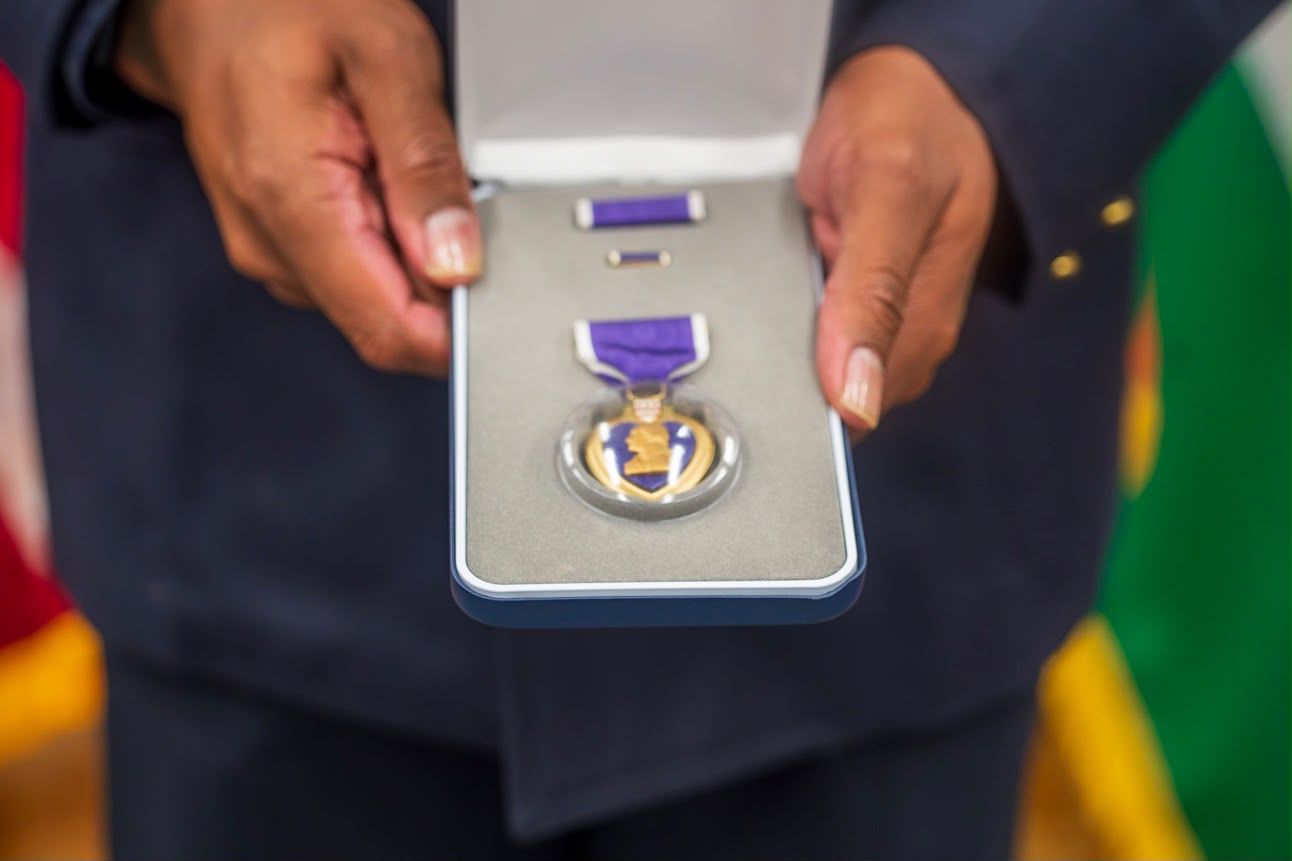

NEW YORK — The recognition of NYPD Sergeant Ruben Cespedes with the Purple Heart nearly 17 years after he was wounded in Afghanistan represents more than a delayed military honor. It connects two distinct chapters of public service and illustrates how an individual record of duty can extend from military operations overseas to frontline policing in New York City.
Cespedes was serving with the U.S. Army in Afghanistan when he sustained serious injuries in an attack involving an improvised explosive device. According to Police Commissioner Jessica S. Tisch, the injury did not end his efforts to protect his fellow soldiers. He continued fighting despite being wounded, an episode that has since become part of the broader record of his service.
The Purple Heart presentation was held during the September 11, 2026 commemoration at Fort Totten in Queens. Official U.S. Army photographic documentation captured the ceremony, placing the military recognition within a public event devoted to remembering lives affected by national service and sacrifice.
The timing of the award is significant. Nearly two decades separated the injury from the formal presentation, turning the ceremony into a retrospective recognition of an event that occurred during an earlier stage of Cespedes’ life. Rather than representing an isolated achievement, the medal forms part of a longer trajectory in which military experience was followed by continued service to the public through the NYPD.
That transition also gives the recognition an institutional dimension. Cespedes later received the NYPD’s Medal for Valor, creating a documented link between his military record and his work in law enforcement. Tisch’s public tribute emphasized that the qualities associated with his military service continued into his role protecting New Yorkers.
For the NYPD, moments such as this reinforce an organizational identity built around public duty, sacrifice and continuity of service. The connection between military and police service can also shape how departments communicate institutional values to their personnel and to the communities they serve. In Cespedes’ case, the two medals provide tangible markers from different stages of the same broader commitment to public protection.
The ceremony also demonstrates the continuing importance of institutional recognition. Awards such as the Purple Heart formally preserve the history of injuries sustained in military service, while public presentations can bring that history into contemporary civic life. The appearance of Cespedes alongside Tisch and other NYPD officials further connected his overseas service with his present responsibilities in New York.
From a broader social perspective, the story reflects the long-term nature of public service careers. Military deployments, injuries and subsequent careers in domestic law enforcement can span decades, while the institutional recognition of those experiences may occur at different points in time. The ceremony at Fort Totten therefore serves both as an acknowledgment of a past sacrifice and as recognition of an ongoing career dedicated to public service.
For Cespedes, the Purple Heart formally recognizes wounds sustained almost 17 years earlier and the circumstances surrounding his continued efforts to protect fellow soldiers. His subsequent service with the NYPD adds another dimension to that record, making the award part of a much longer story of military and civic responsibility.
News You Should See
2026 Nobel Medicine Prize Honors Scientists Behind Optogenetics Breakthrough
Oil Prices Edge Lower as Stronger Middle East Exports and G7 Reserves Ease Supply Concerns
Trump Offers U.S. Assistance to Russia After Death at Siberian Plague Research Institute
Trump Takes Economic Message to Nebraska as GOP Faces Rising Cost-of-Living Pressure
U.S. Appeals Court Weighs Trump Administration’s $2.6 Billion Harvard Funding Fight
U.S. Midterm Elections Begin With Resilient Jobs Market and Persistent Cost Pressures
Latest News
The 2026 Nobel Prize in Physiology or Medicine honors Karl Deisseroth, Peter Hegemann and Georg Nagel for pioneering research behind optogenetics and its impact on neuroscience.
Oil prices edged lower as stronger Middle Eastern exports and a planned G7 release of 100 million barrels eased immediate supply concerns, while Gulf security risks and the Strait of Hormuz kept markets alert.
President Donald Trump said the United States would help Russia if needed after a laboratory worker died at a Siberian plague research institute, as Russian authorities imposed precautionary quarantine measures.
Trump’s Nebraska campaign stop highlights rising fuel and grocery costs, beef prices and growing economic pressure on Republicans ahead of the November midterm elections.
A U.S. appeals court is reviewing the Trump administration’s effort to cut Harvard’s federal research funding, with more than $2.6 billion at stake.
The U.S. enters the 2026 midterm elections with unemployment at 4.2%, while higher living and energy costs create economic pressure for households and businesses.
US services growth eased in September as input prices climbed to their highest level since July 2022, with fuel costs, supply-chain disruptions and strong demand increasing pressure on businesses.
Rising Treasury yields are increasing U.S. borrowing costs as Washington manages record debt, persistent inflation and strong economic demand, narrowing its policy options.
A EGP 16 million corporate partnership will establish and equip a bone marrow transplant unit at Cairo’s Coptic Hospital, supporting access to specialized treatment for patients.