NYC Mayor Mamdani Announces $4.8 Million Expansion of Community Violence Prevention Programs
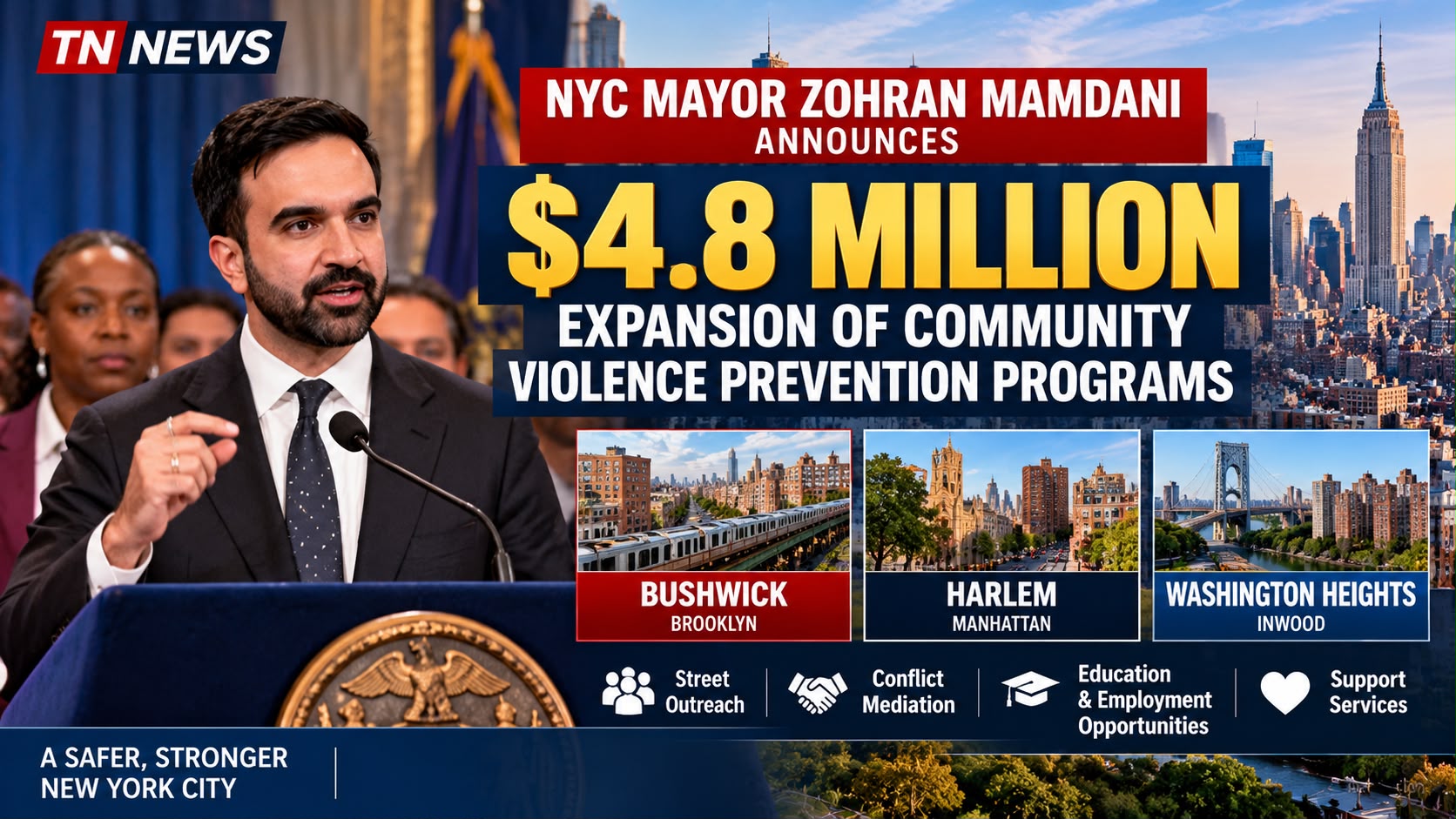
Mayor Zohran Mamdani announced a $4.8 million expansion of New York City's Crisis Management System, extending community-based violence prevention services to Bushwick, Harlem, and Washington Heights/Inwood.

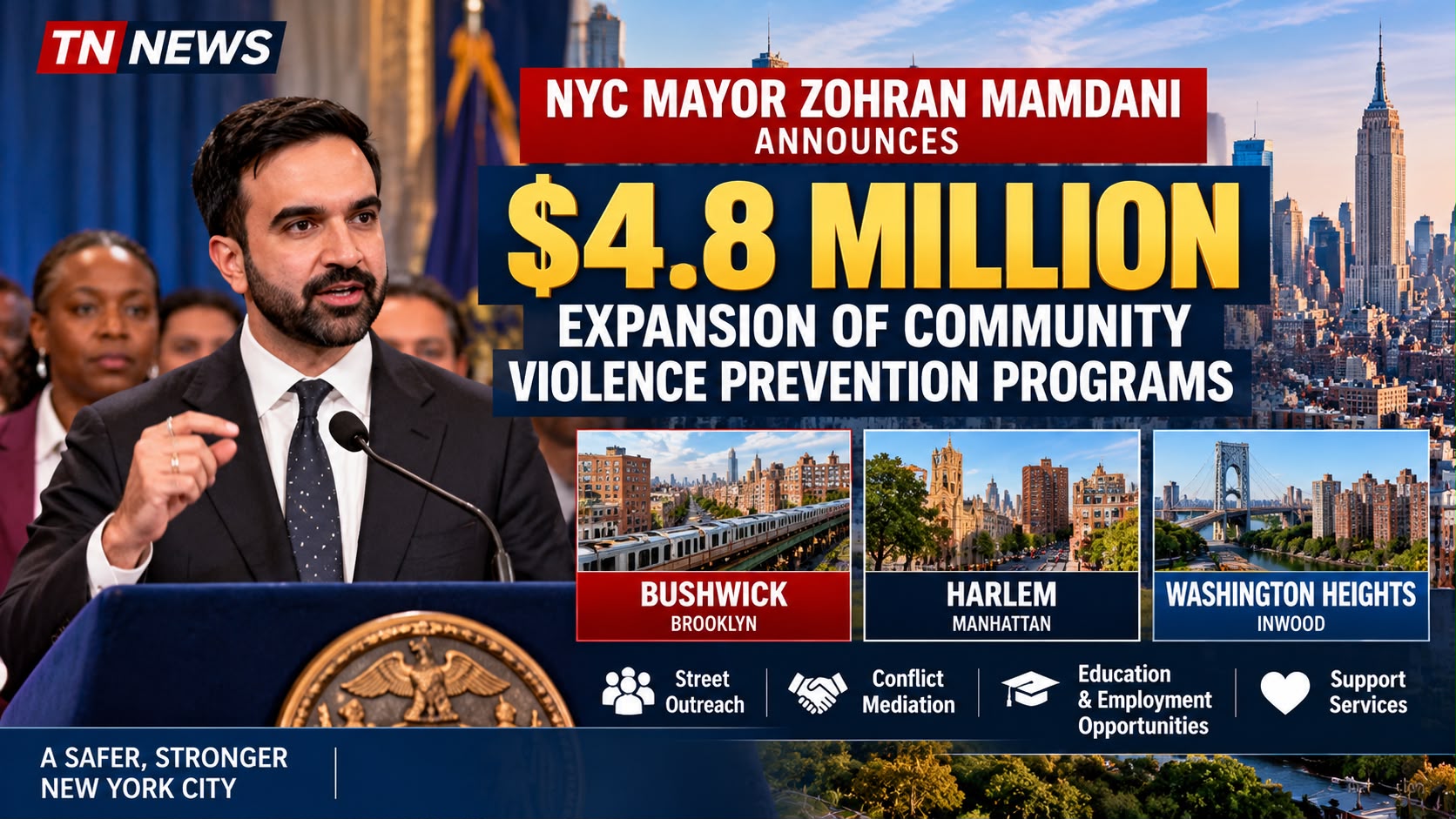
NEW YORK CITY — Mayor Zohran Mamdani announced Tuesday a $4.8 million expansion of New York City's Crisis Management System (CMS), directing additional resources to community-based violence prevention programs in Bushwick, Harlem, and Washington Heights/Inwood.
The initiative is designed to prevent shootings, reduce neighborhood conflicts, and provide vulnerable residents with employment opportunities, educational support, mental health services, and mentorship.
The announcement was made alongside Deputy Mayor for Community Safety Renita Francois and officials from the city's Office of Community Safety. 
Three Communities to Receive $1.6 Million Each
The funding will support local nonprofit organizations already working with residents in communities affected by gun violence.
In Bushwick, Brooklyn, the city will expand The Wick Against Violence, operated by Southside United. The organization works with residents, particularly young people, to resolve conflicts and prevent retaliation after shootings. The funding builds on existing initiatives at Bushwick Houses and Woodhull Hospital.
In Harlem, Manhattan, Living Redemption will receive additional resources to strengthen community outreach, conflict mediation, mentorship, and access to employment and educational programs.
In Washington Heights and Inwood, the city will establish a new street-outreach team through Grow Up Grow Out Jr., operated by United Way. The initiative will extend Crisis Management System services to an area previously outside the network's coverage. 
Preventing Violence Before It Happens
Unlike traditional law-enforcement strategies that primarily respond after crimes occur, the Crisis Management System emphasizes early intervention.
The program employs trained community workers, often described as credible messengers, who have established relationships with residents and understand local challenges.
Their responsibilities include mediating disputes, discouraging retaliation, supporting families affected by violence, and connecting individuals with job training, counseling, education, and other community services.
The system currently operates across 46 neighborhood service areas in New York City.
Mayor Mamdani said the expansion reflects his administration's approach to public safety, emphasizing prevention, community trust, and access to opportunity. 
What This Means for New York Residents
The announcement could have particular significance for families living in neighborhoods where young people face increased exposure to street violence.
By expanding outreach and prevention services, the city aims to intervene before disputes escalate into shootings or other serious incidents.
The $4.8 million comes from funding already included in the city's budget, rather than a newly announced additional appropriation. Officials have not yet announced a firm starting date for the expanded services. 
A Community-Based Approach to Public Safety
Supporters of the Crisis Management System argue that trusted neighborhood organizations can reach individuals who may be reluctant to engage with traditional government agencies.
The expansion also raises important questions about how the city will measure success, including reductions in shootings, participation in outreach programs, and improvements in access to social services.
As the programs expand, their long-term effectiveness will depend on implementation, sustained funding, coordination with local organizations, and measurable results.
For New Yorkers, the announcement represents a continued investment in the idea that public safety can be strengthened not only through policing, but also through prevention, education, and community support.
TN News will continue following the implementation of the expanded programs and their impact on New York City neighborhoods.
News You Should See
P&G Raises Fiscal 2027 Cost Warning as Oil and Freight Expenses Threaten Profits
Chemical Tank Leak in Toledo Triggers Evacuations and Industrial Disruptions
Judge Sets December 11 Deadline for Trump Deposition in BBC Defamation Case
Iowa Senate Race Tests How Far Republicans Can Separate Themselves From Trump
California State Workers Strike Over Pay, Healthcare and Return-to-Office Rules
Streaming’s October Showdown: How Disney, Netflix and Major Entertainment Brands Compete for Audiences
Latest News
Procter & Gamble expects commodity, energy and transportation costs to reduce fiscal 2027 profit by $1.4 billion. Quarterly sales rose 4% to $23.28 billion, beating analyst expectations.
A ruptured chemical tank in Toledo, Ohio, prompted evacuations, school closures and an industrial shutdown. Authorities have reduced the restricted zone as the release slows and cleanup preparations continue.
A federal judge has ordered Donald Trump to give a deposition by December 11, 2026, in his $10 billion lawsuit against the BBC, with possible sanctions for noncompliance as the discovery deadline approaches.
Iowa’s 2026 Senate race pits Republican Ashley Hinson, balancing Trump support with economic concerns, against Democrat Josh Turek, who emphasizes bipartisanship amid rising campaign spending.
Thousands of California state workers struck on October 21 over a proposed three-year pay increase, healthcare costs and a four-day office attendance requirement as contract negotiations continued.
October 2026 brings major entertainment releases across Disney+, Netflix, HBO Max, Hulu, Prime Video and Peacock. Explore how familiar franchises, exclusive programming, new music and video games shape competition for streaming audiences.
Saudia advises travelers to book flights through Al Qassim Airport for Riyadh connections, offering free hourly shuttle buses in both directions until further notice.
An AP-NORC poll shows Democratic confidence in accurate vote counting falling to 55%, while Republican confidence rises to 38%, highlighting election integrity concerns ahead of the 2026 US midterms.
Donald Trump campaigns in North Carolina ahead of the November 2026 midterms as low approval ratings, rising fuel costs, Democratic early-voting gains and funding disparities challenge Republican efforts to retain control of Congress.