NYC Council Opens Investigation Into Prediction Markets Over Consumer Protection Concerns
The Council is examining whether prediction market platforms use deceptive or predatory marketing practices to attract New York consumers.

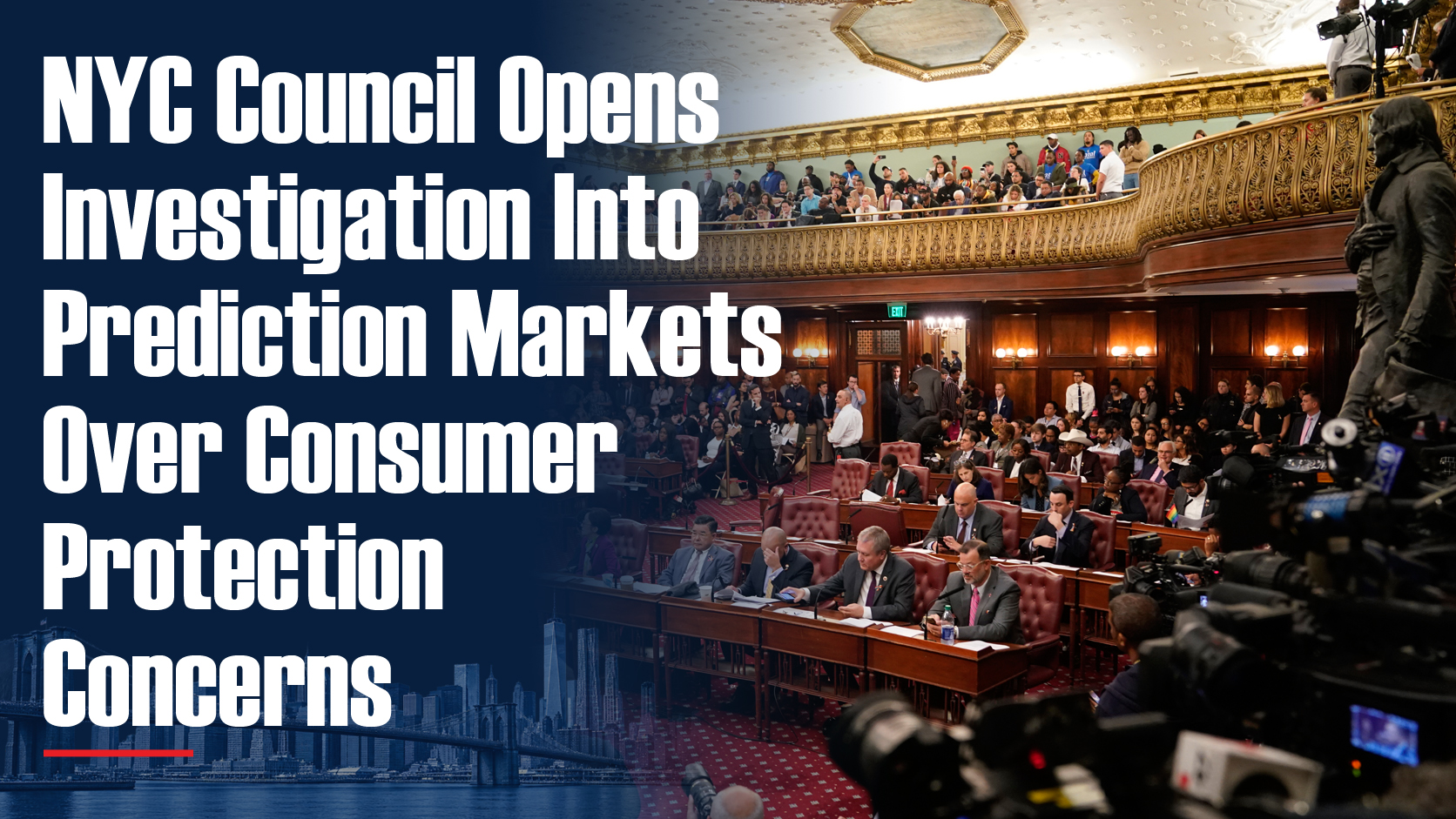
New York City is stepping up scrutiny of the rapidly expanding prediction market industry, with the City Council launching an investigation into the marketing and advertising practices used by major platforms operating in the market.
The inquiry focuses on whether prediction market companies are using potentially false, deceptive or abusive promotional strategies to attract consumers. The Council’s move reflects growing attention to how a financial-style digital product can be presented to the public and how marketing practices may influence consumer behavior.
Prediction markets have gained greater visibility as digital platforms have made it easier for individuals to trade contracts tied to the outcomes of future events. Their growth has created a new commercial category that sits at the intersection of technology, finance, entertainment and regulated markets. That positioning also creates challenges for policymakers seeking to determine how consumers should be protected.
From a business perspective, marketing is central to the industry's expansion. Platforms compete not only through technology and product design, but also through branding, user acquisition and the way potential returns or risks are communicated. Promotional messages can therefore play an important role in shaping how consumers understand these products.
The Council’s investigation puts that commercial model under a closer regulatory lens. If authorities determine that certain promotional practices create misleading impressions or fail to communicate material risks clearly, companies could face increased pressure to change how they advertise and communicate with customers.
The issue also has implications for competition. As prediction market platforms attempt to establish stronger positions in a growing sector, aggressive customer-acquisition strategies can become a competitive advantage. Regulatory intervention could narrow the space for marketing practices that rely on ambiguity while placing greater emphasis on transparency and responsible communication.
The investigation is also significant for the broader technology sector. Digital platforms increasingly operate in areas where traditional distinctions between technology companies, financial services and entertainment businesses are becoming less clear. Prediction markets illustrate this shift particularly well, making them an important test case for how cities respond when new technology-enabled business models challenge existing consumer-protection frameworks.
For consumers, the central question is whether promotional claims provide an accurate understanding of the products being offered. The Council's review could help clarify what information companies should provide when marketing prediction-market contracts and how platforms should distinguish commercial promotion from representations that may influence financial decisions.
The outcome could have consequences beyond New York. If the Council identifies problematic practices or recommends stronger safeguards, the findings could contribute to a wider regulatory debate over prediction markets and similar digital products in other jurisdictions.
The investigation therefore represents more than a review of individual advertisements. It is part of a broader effort to examine whether the rapid commercialization of emerging digital markets is being matched by appropriate standards for transparency, accountability and consumer protection.
News You Should See
2026 Nobel Medicine Prize Honors Scientists Behind Optogenetics Breakthrough
Oil Prices Edge Lower as Stronger Middle East Exports and G7 Reserves Ease Supply Concerns
Trump Offers U.S. Assistance to Russia After Death at Siberian Plague Research Institute
Trump Takes Economic Message to Nebraska as GOP Faces Rising Cost-of-Living Pressure
U.S. Appeals Court Weighs Trump Administration’s $2.6 Billion Harvard Funding Fight
U.S. Midterm Elections Begin With Resilient Jobs Market and Persistent Cost Pressures
Latest News
The 2026 Nobel Prize in Physiology or Medicine honors Karl Deisseroth, Peter Hegemann and Georg Nagel for pioneering research behind optogenetics and its impact on neuroscience.
Oil prices edged lower as stronger Middle Eastern exports and a planned G7 release of 100 million barrels eased immediate supply concerns, while Gulf security risks and the Strait of Hormuz kept markets alert.
President Donald Trump said the United States would help Russia if needed after a laboratory worker died at a Siberian plague research institute, as Russian authorities imposed precautionary quarantine measures.
Trump’s Nebraska campaign stop highlights rising fuel and grocery costs, beef prices and growing economic pressure on Republicans ahead of the November midterm elections.
A U.S. appeals court is reviewing the Trump administration’s effort to cut Harvard’s federal research funding, with more than $2.6 billion at stake.
The U.S. enters the 2026 midterm elections with unemployment at 4.2%, while higher living and energy costs create economic pressure for households and businesses.
US services growth eased in September as input prices climbed to their highest level since July 2022, with fuel costs, supply-chain disruptions and strong demand increasing pressure on businesses.
Rising Treasury yields are increasing U.S. borrowing costs as Washington manages record debt, persistent inflation and strong economic demand, narrowing its policy options.
A EGP 16 million corporate partnership will establish and equip a bone marrow transplant unit at Cairo’s Coptic Hospital, supporting access to specialized treatment for patients.