NYC Council Defends $10,000 Paraprofessional Payments in Legal Challenge
Local Law 129 places a temporary workforce stabilization payment at the center of a broader dispute over labor authority, staffing shortages and education costs.

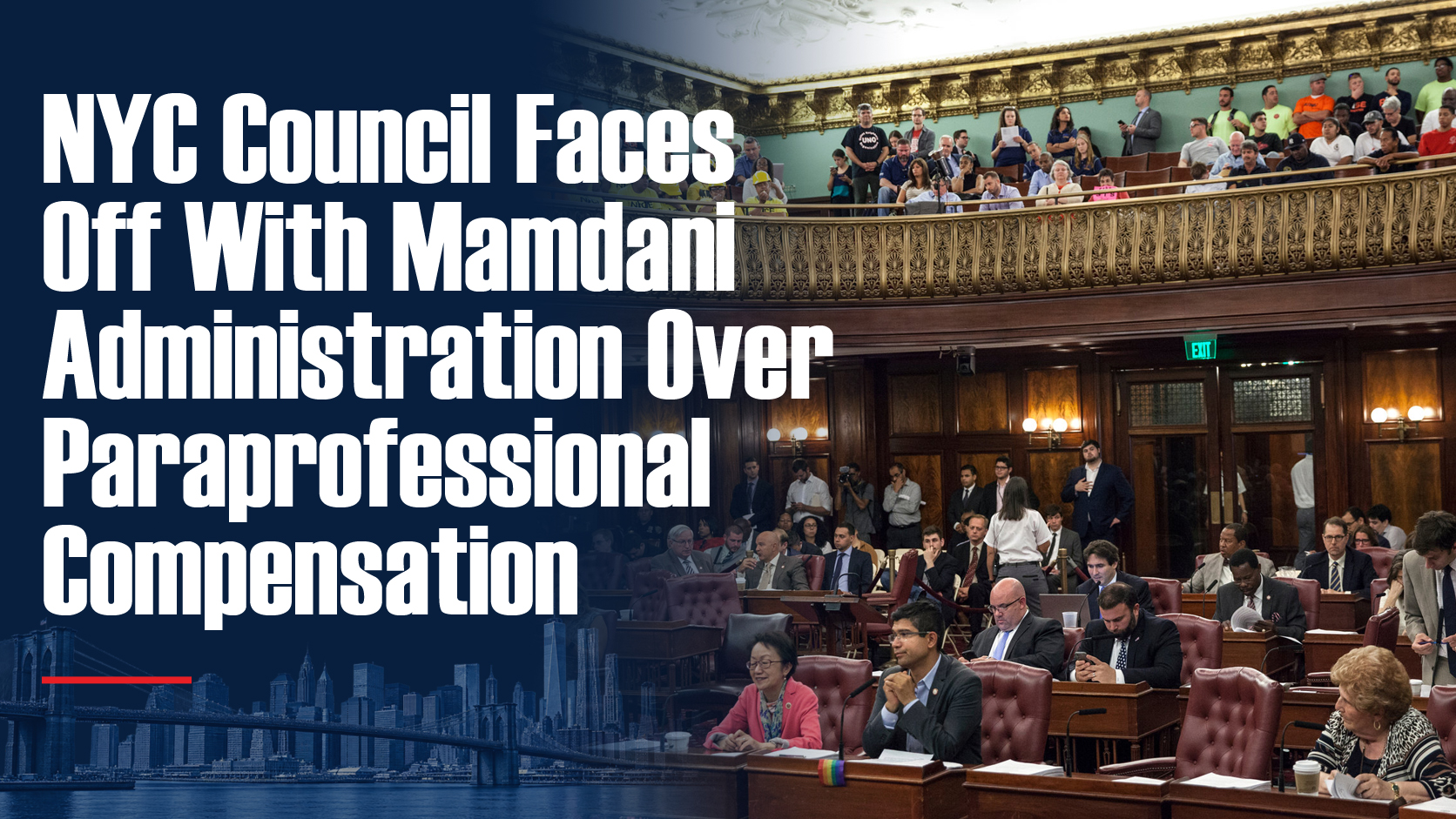
New York City’s dispute over paraprofessional compensation has moved from a workforce policy debate into a broader legal contest over who has the authority to respond to a persistent staffing problem in the public school system.
At the center of the dispute is Local Law 129 of 2026, enacted on August 18 after the City Council unanimously approved legislation requiring the Department of Education to provide eligible school paraprofessionals with workforce stabilization payments totaling up to $10,000 for work performed during the 2026–2027 school year. The payments are structured in four installments and are prorated according to the number of days an eligible employee remains on the payroll during the relevant payment period. The law is designed to expire once the required payments are made or qualifying collective bargaining agreements provide comparable increases in annual compensation.
The Council’s latest court filing, submitted in response to the Mamdani administration’s challenge to the law, frames the legislation as a temporary intervention rather than an alternative to collective bargaining. The Council argues that the measure preserves the bargaining process while using its legislative authority to address an immediate workforce problem.
That distinction is strategically important. The underlying issue is not simply the size of a potential payment. It concerns how New York City can respond when vacancies and turnover begin to affect the delivery of public services, while labor rules reserve significant authority for collective bargaining.
The Council points to more than 1,000 paraprofessional vacancies as of March 2026 and links the staffing shortage to disruptions in services for students with disabilities. The legislation itself identifies recruitment and retention difficulties, low pay, turnover and continuity of student-support services as factors behind the intervention.
The financial dimension adds another layer to the dispute. City officials and Council members have connected unmet educational obligations to substantial costs associated with due-process proceedings. The Council has cited approximately $1.5 billion in city allocations toward such cases, arguing that improving workforce stability could have implications beyond payroll by helping reduce the operational consequences of persistent vacancies.
From a management perspective, the debate illustrates the cost of treating workforce shortages solely as a labor issue. For schools serving students with higher support needs, vacancies can translate into repeated reliance on substitutes, weaker continuity and additional pressure on existing staff. The resulting costs can extend into service disruptions, administrative workload and legal exposure.
Local Law 129 also reflects a deliberate attempt to position the payment as a bridge rather than a permanent compensation system. The statute states that it does not limit the right of the mayor, employee organizations or other parties to bargain, and provides for repeal when the specified compensation objective is achieved through payments or collective bargaining agreements.
The legal challenge therefore has implications for the city’s institutional balance as well as for paraprofessionals. The Council’s memorandum argues that the Taylor Law does not give the executive branch exclusive authority over every action affecting public employees’ compensation and maintains that the local legislation falls within the Council’s permitted jurisdiction. The administration’s lawsuit represents the opposing interpretation, placing the scope of collective bargaining and state-law preemption at the heart of the case.
The controversy also carries an institutional branding dimension. The Council is presenting itself as an actor willing to intervene when a workforce problem persists, while the administration’s legal position emphasizes the importance of preserving the established bargaining framework. Whichever interpretation ultimately prevails, the case is likely to shape how city government approaches future workforce stabilization measures.
For New York City’s education system, the immediate question is whether the temporary payment can proceed while the broader compensation dispute remains unresolved. The longer-term issue is whether the city can establish a sustainable approach to recruiting and retaining paraprofessionals through negotiated wage structures rather than repeated emergency interventions.
The Council’s position is that Local Law 129 provides short-term relief while leaving collective bargaining intact. The legislation’s design supports that temporary framework: it expires when its compensation objective is achieved, rather than creating an open-ended payment obligation.
The legal proceedings will now determine whether that legislative approach can operate alongside New York’s public-sector labor regime. Beyond the courtroom, however, the dispute highlights a larger management challenge for the city: maintaining a stable education workforce while balancing employee compensation, fiscal exposure, legal obligations and the respective powers of elected institutions.
News You Should See
2026 Nobel Medicine Prize Honors Scientists Behind Optogenetics Breakthrough
Oil Prices Edge Lower as Stronger Middle East Exports and G7 Reserves Ease Supply Concerns
Trump Offers U.S. Assistance to Russia After Death at Siberian Plague Research Institute
Trump Takes Economic Message to Nebraska as GOP Faces Rising Cost-of-Living Pressure
U.S. Appeals Court Weighs Trump Administration’s $2.6 Billion Harvard Funding Fight
U.S. Midterm Elections Begin With Resilient Jobs Market and Persistent Cost Pressures
Latest News
The 2026 Nobel Prize in Physiology or Medicine honors Karl Deisseroth, Peter Hegemann and Georg Nagel for pioneering research behind optogenetics and its impact on neuroscience.
Oil prices edged lower as stronger Middle Eastern exports and a planned G7 release of 100 million barrels eased immediate supply concerns, while Gulf security risks and the Strait of Hormuz kept markets alert.
President Donald Trump said the United States would help Russia if needed after a laboratory worker died at a Siberian plague research institute, as Russian authorities imposed precautionary quarantine measures.
Trump’s Nebraska campaign stop highlights rising fuel and grocery costs, beef prices and growing economic pressure on Republicans ahead of the November midterm elections.
A U.S. appeals court is reviewing the Trump administration’s effort to cut Harvard’s federal research funding, with more than $2.6 billion at stake.
The U.S. enters the 2026 midterm elections with unemployment at 4.2%, while higher living and energy costs create economic pressure for households and businesses.
US services growth eased in September as input prices climbed to their highest level since July 2022, with fuel costs, supply-chain disruptions and strong demand increasing pressure on businesses.
Rising Treasury yields are increasing U.S. borrowing costs as Washington manages record debt, persistent inflation and strong economic demand, narrowing its policy options.
A EGP 16 million corporate partnership will establish and equip a bone marrow transplant unit at Cairo’s Coptic Hospital, supporting access to specialized treatment for patients.