New Jersey Declares Emergency in Eight Counties as Nor’easter Approaches
New Jersey activates emergency coordination across eight counties as strong winds, heavy rain and coastal flooding threaten the state.

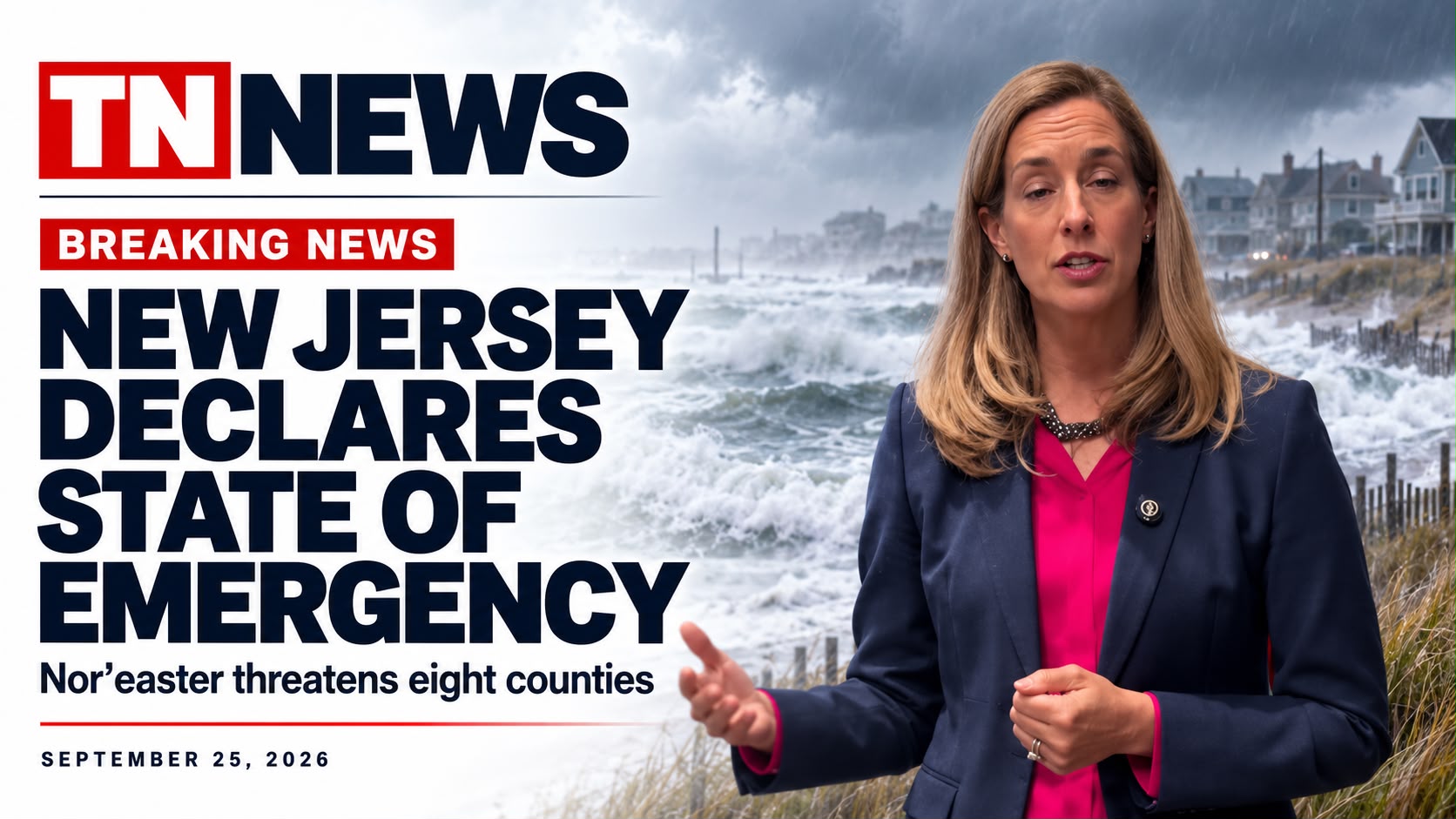
New Jersey is moving into a heightened emergency posture as a developing nor’easter threatens coastal communities and other vulnerable areas across the state. Governor Mikie Sherrill’s declaration covers eight counties expected to face the most significant effects: Atlantic, Burlington, Cape May, Cumberland, Middlesex, Monmouth, Ocean and Salem.
The decision, effective from 5 p.m. Friday, reflects the operational challenge posed by a storm whose risks extend beyond rainfall. Forecasts call for repeated high tides, coastal and bayside flooding, wind gusts reaching as high as 60 mph and statewide rainfall generally ranging from 1 to 3 inches, with heavier totals possible near the coast. The most severe conditions are expected from Friday night through Sunday, although forecasts remain subject to change as the system develops.
From a state-management perspective, the emergency declaration provides a framework for coordinating resources across multiple levels of government. Activation of New Jersey’s Emergency Operations Center is intended to strengthen communication between state and county authorities while allowing emergency agencies to respond to disruptions affecting roads, utilities and communities.
The economic implications of such weather events can extend well beyond the immediate storm period. Coastal flooding can interrupt transportation, restrict access to businesses and damage infrastructure, while strong winds and power failures can create additional costs for households, employers and local governments. For communities dependent on coastal activity, the timing of the storm can also create short-term pressure on tourism, hospitality and other local businesses.
The state’s public messaging therefore places emphasis on preparedness rather than response alone. Residents have been urged to secure outdoor property, charge mobile devices, maintain supplies of food and water, monitor local alerts and avoid driving through flooded roads. These measures are designed to reduce preventable disruptions while emergency agencies concentrate on the areas facing the greatest risks.
The broader significance of the declaration lies in the coordination it enables. By establishing a common emergency framework before conditions peak, New Jersey can align state and local resources around transportation safety, utility response, public communications and potential flooding. The effectiveness of that system will ultimately depend on how quickly conditions evolve and how accurately forecasts translate into impacts on individual communities.
For New Jersey, the immediate priority remains managing the storm’s potential effects through the weekend. Beyond the event itself, the response will also provide another test of the state’s ability to protect critical infrastructure and maintain continuity for residents and businesses as severe coastal weather becomes an increasingly important operational consideration.
News You Should See
2026 Nobel Medicine Prize Honors Scientists Behind Optogenetics Breakthrough
Oil Prices Edge Lower as Stronger Middle East Exports and G7 Reserves Ease Supply Concerns
Trump Offers U.S. Assistance to Russia After Death at Siberian Plague Research Institute
Trump Takes Economic Message to Nebraska as GOP Faces Rising Cost-of-Living Pressure
U.S. Appeals Court Weighs Trump Administration’s $2.6 Billion Harvard Funding Fight
U.S. Midterm Elections Begin With Resilient Jobs Market and Persistent Cost Pressures
Latest News
The 2026 Nobel Prize in Physiology or Medicine honors Karl Deisseroth, Peter Hegemann and Georg Nagel for pioneering research behind optogenetics and its impact on neuroscience.
Oil prices edged lower as stronger Middle Eastern exports and a planned G7 release of 100 million barrels eased immediate supply concerns, while Gulf security risks and the Strait of Hormuz kept markets alert.
President Donald Trump said the United States would help Russia if needed after a laboratory worker died at a Siberian plague research institute, as Russian authorities imposed precautionary quarantine measures.
Trump’s Nebraska campaign stop highlights rising fuel and grocery costs, beef prices and growing economic pressure on Republicans ahead of the November midterm elections.
A U.S. appeals court is reviewing the Trump administration’s effort to cut Harvard’s federal research funding, with more than $2.6 billion at stake.
The U.S. enters the 2026 midterm elections with unemployment at 4.2%, while higher living and energy costs create economic pressure for households and businesses.
US services growth eased in September as input prices climbed to their highest level since July 2022, with fuel costs, supply-chain disruptions and strong demand increasing pressure on businesses.
Rising Treasury yields are increasing U.S. borrowing costs as Washington manages record debt, persistent inflation and strong economic demand, narrowing its policy options.
A EGP 16 million corporate partnership will establish and equip a bone marrow transplant unit at Cairo’s Coptic Hospital, supporting access to specialized treatment for patients.