New ‘Ex-Elon’ ETFs Target Investors Seeking Broad Market Exposure Without Musk Companies
The proposed ETFs exclude companies associated with Elon Musk, reflecting the growing influence of values-based investing and corporate governance on capital allocation.

A new category of exchange-traded funds is preparing to test whether investor values can become a competitive force in modern portfolio management. Two proposed ETFs would give investors exposure to major U.S. equity markets while deliberately excluding companies closely associated with Elon Musk, introducing a new form of thematic investing centered on corporate leadership rather than industry sectors.
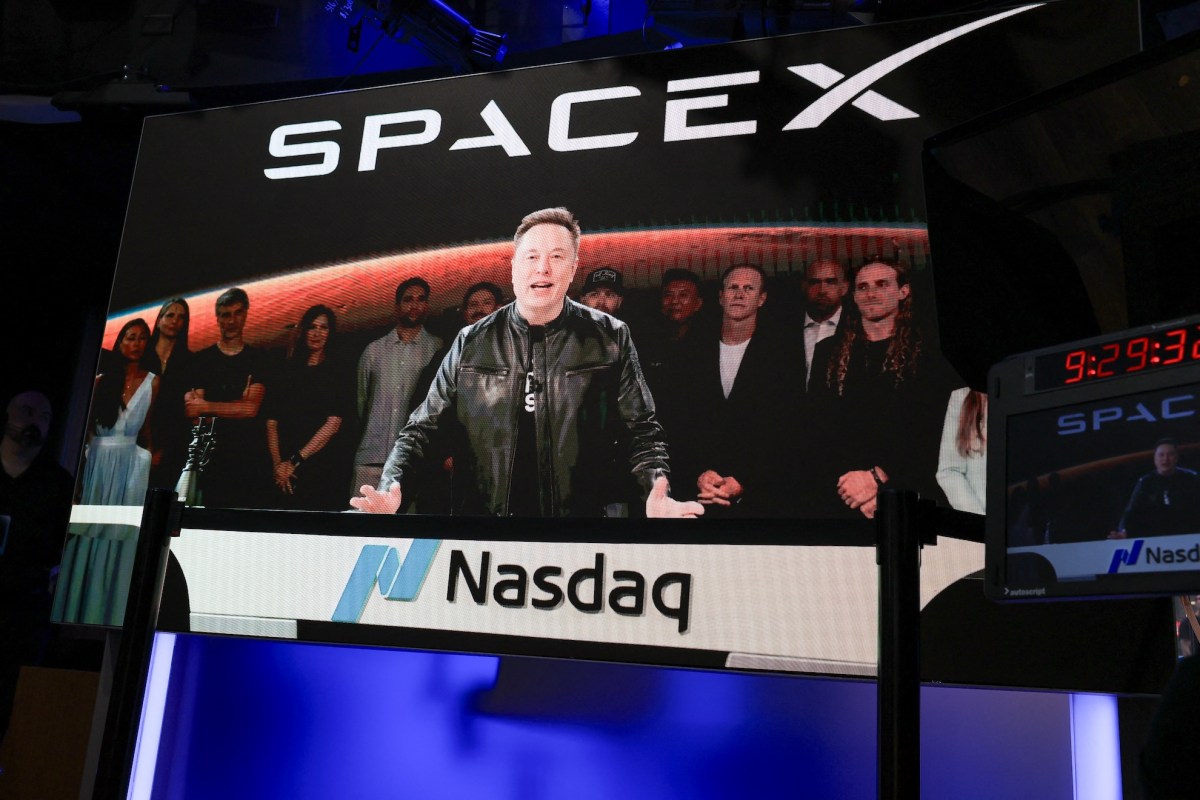
The proposed funds, filed by Subversive ETFs, are designed to mirror the performance of the Nasdaq-100 and the S&P 500 while removing companies founded, controlled, or led by Musk. At launch, that primarily means excluding Tesla and SpaceX, although the prospectus allows additional Musk-related public companies to be removed if they become eligible in the future.
The initiative reflects an important shift in asset management. Traditionally, ETFs have focused on sectors, investment styles, geographic exposure, or financial characteristics. The new products instead introduce executive identity as an investment filter, acknowledging that some investors increasingly evaluate portfolios through governance, leadership reputation, and corporate values alongside financial performance.
This trend has accelerated as high-profile executives become more influential in shaping company brands. Elon Musk's involvement across electric vehicles, aerospace, artificial intelligence, social media, and politics has made his personal profile inseparable from the businesses he leads. For some investors, that concentration of influence represents innovation and entrepreneurial vision. For others, it introduces governance risks, reputational concerns, or political exposure they prefer to avoid.
The proposed ETFs seek to preserve broad market diversification despite excluding Musk-related companies. Rather than replacing traditional index investing entirely, the funds redistribute the weighting of excluded companies across the remaining constituents, attempting to maintain market exposure while aligning portfolios with investor preferences.
From a commercial perspective, the launch illustrates how ETF providers continue searching for differentiated products in an increasingly competitive investment industry. As passive investing matures, asset managers are experimenting with specialized themes capable of attracting investors seeking more personalized portfolio construction without the complexity of managing individual securities.
The concept also highlights the growing influence of values-based investing. Environmental, social, governance, and corporate accountability considerations increasingly affect capital allocation decisions, particularly among retail investors and wealth management clients seeking portfolios that reflect broader personal preferences in addition to financial objectives.
However, the strategy carries meaningful investment trade-offs. Excluding companies with significant market capitalizations can create tracking differences relative to traditional benchmarks. If excluded firms outperform the broader market, investors may sacrifice returns in exchange for aligning portfolios with their investment principles. Conversely, if those companies underperform, the exclusion could benefit overall performance.
The debate ultimately extends beyond Elon Musk himself. It raises broader questions about whether investment products should increasingly reflect investor beliefs, leadership preferences, and governance expectations instead of relying solely on conventional market-capitalization weighting.
Industry analysts also note that this approach could inspire similar products targeting other influential founders or executives as corporate leadership becomes more central to company valuations and investor sentiment. Whether these specialized ETFs gain meaningful assets will depend on investor demand for greater customization within traditionally passive investment strategies.
More broadly, the proposal signals another stage in the evolution of exchange-traded funds. Modern investors are increasingly looking for portfolios that combine diversification with personalization, suggesting that future ETF innovation may focus as much on investor identity and values as on traditional financial metrics.
News You Should See
2026 Nobel Medicine Prize Honors Scientists Behind Optogenetics Breakthrough
Oil Prices Edge Lower as Stronger Middle East Exports and G7 Reserves Ease Supply Concerns
Trump Offers U.S. Assistance to Russia After Death at Siberian Plague Research Institute
Trump Takes Economic Message to Nebraska as GOP Faces Rising Cost-of-Living Pressure
U.S. Appeals Court Weighs Trump Administration’s $2.6 Billion Harvard Funding Fight
U.S. Midterm Elections Begin With Resilient Jobs Market and Persistent Cost Pressures
Latest News
The 2026 Nobel Prize in Physiology or Medicine honors Karl Deisseroth, Peter Hegemann and Georg Nagel for pioneering research behind optogenetics and its impact on neuroscience.
Oil prices edged lower as stronger Middle Eastern exports and a planned G7 release of 100 million barrels eased immediate supply concerns, while Gulf security risks and the Strait of Hormuz kept markets alert.
President Donald Trump said the United States would help Russia if needed after a laboratory worker died at a Siberian plague research institute, as Russian authorities imposed precautionary quarantine measures.
Trump’s Nebraska campaign stop highlights rising fuel and grocery costs, beef prices and growing economic pressure on Republicans ahead of the November midterm elections.
A U.S. appeals court is reviewing the Trump administration’s effort to cut Harvard’s federal research funding, with more than $2.6 billion at stake.
The U.S. enters the 2026 midterm elections with unemployment at 4.2%, while higher living and energy costs create economic pressure for households and businesses.
US services growth eased in September as input prices climbed to their highest level since July 2022, with fuel costs, supply-chain disruptions and strong demand increasing pressure on businesses.
Rising Treasury yields are increasing U.S. borrowing costs as Washington manages record debt, persistent inflation and strong economic demand, narrowing its policy options.
A EGP 16 million corporate partnership will establish and equip a bone marrow transplant unit at Cairo’s Coptic Hospital, supporting access to specialized treatment for patients.