Microsoft and Nvidia Push AI PCs Toward a New Local Computing Era
The Surface Laptop Ultra brings Nvidia-powered AI processing to Windows as Microsoft and Nvidia seek to shift more advanced workloads from cloud infrastructure to personal computers.

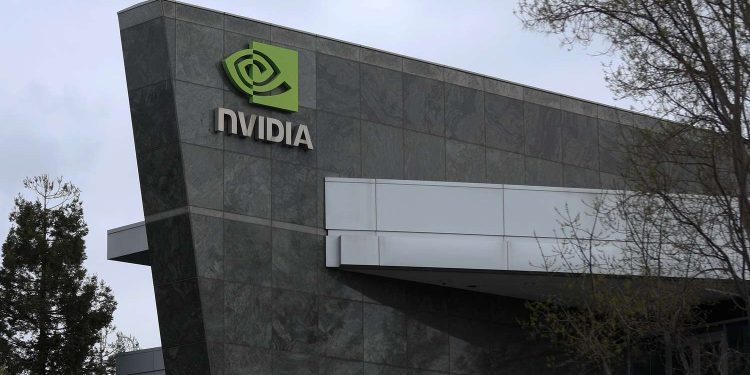
Microsoft and Nvidia are expanding their partnership beyond the data center with a new generation of Windows hardware designed to process demanding artificial intelligence workloads directly on personal computers. The Surface Laptop Ultra, unveiled in San Francisco, represents a strategic attempt to move AI computing closer to users while reshaping the economics of where those workloads are processed.
The device combines Microsoft's Windows and Surface businesses with Nvidia's RTX Spark chips, creating a hardware platform intended to run sophisticated AI agents without requiring constant access to cloud infrastructure. Tasks such as software development and complex business operations are among the workloads the companies are targeting.
For Microsoft, the strategy has an important economic dimension. The company has built a major cloud computing business through Azure, but running increasingly sophisticated AI workloads in data centers requires substantial computing capacity and capital investment. Shifting part of that processing to powerful PCs could reduce the amount of work performed remotely while giving Microsoft another way to extend Windows' role in the AI economy.
The move also builds on Microsoft's existing strength in the PC market. Rather than treating artificial intelligence as a feature that exists primarily inside cloud applications, the company is positioning Windows hardware as part of the computing infrastructure required for the next generation of AI software. That could reinforce the relevance of Windows as AI agents become more capable of performing tasks with limited human intervention.
Nvidia has a different but complementary objective. The company's dominance in AI computing has largely been associated with data centers, while the conventional PC processor market remains heavily influenced by Intel and AMD. Establishing a stronger position inside premium Windows machines would give Nvidia access to a broader hardware market and create another potential source of demand for its AI-focused chips.
The partnership therefore creates a two-sided commercial opportunity. Microsoft can use its established PC ecosystem to promote local AI computing, while Nvidia can use Microsoft's hardware platform to expand beyond its traditional high-performance computing territory. The success of the strategy will depend on whether consumers and businesses see enough value in local AI processing to justify higher hardware costs.
Pricing is emerging as one of the biggest challenges. Memory shortages have pushed up the cost of computers, making powerful AI-capable machines more expensive at precisely the moment when the underlying software is becoming more practical. Nvidia recently increased the price of its DGX Spark AI desktop by roughly 75% to $6,950, reflecting higher costs for its 128GB memory configuration.
That cost pressure creates a potential contradiction in the local-AI strategy. Moving workloads away from cloud computing can reduce some recurring infrastructure expenses, but the computing power required to perform those tasks locally must first be purchased. If advanced AI PCs become accessible mainly to businesses and consumers with substantial budgets, the market could develop more slowly than the technology itself.
Security is another strategic issue. AI agents that can independently perform complex tasks need access to files, applications and other resources on personal computers. Giving such systems greater autonomy increases the importance of controlling what they can access and preventing malicious software or compromised AI systems from exploiting those permissions.
Microsoft and Nvidia are therefore entering a market where performance alone will not determine adoption. The companies must balance processing power, price, security and ease of use while convincing customers that local AI offers meaningful advantages over cloud-based services.
The broader competitive landscape is also becoming more complicated. Apple is pursuing its own strategy for running AI capabilities on Mac computers, while Intel and AMD remain established competitors in PC processors. The emergence of more powerful AI hardware could intensify competition across the entire personal-computing industry as chipmakers and operating-system companies seek to control the interface between AI software and the device.
The Surface Laptop Ultra consequently represents more than a new hardware product. It is a test of whether AI computing is entering a phase in which the personal computer becomes an active processing platform rather than simply a gateway to cloud services. If local AI adoption accelerates, the shift could influence demand for chips, memory, laptops and cloud infrastructure at the same time.
For Microsoft and Nvidia, the commercial opportunity is significant, but so is the execution risk. The companies have to prove that the additional hardware investment produces enough value to justify its cost. The answer could help determine how quickly AI moves from centralized data centers into everyday computers and which companies capture the economic value created by that transition.
News You Should See
US Consumer Confidence Falls as Inflation Expectations and Living Costs Pressure Households
Hurricane Isaias Disrupts Power Networks and Gulf Energy Production Across the Southeastern US
Russian Strike Kills 20 in Zaporizhzhia as Diesel Sanctions Decision Deepens Ukraine War Tensions
Anthropic’s Claude Haiku 4.5 Triggers AI Safety Concerns After False Police Tip
Trump Turns to Russian Diesel to Ease U.S. Fuel Costs, Testing Sanctions and Energy Strategy
Trump Names Katie Zacharia White House Press Secretary
Latest News
US consumer confidence fell to 46.3 in October, while current conditions hit a survey-record low of 44.7. Inflation expectations and living costs continue to weigh on household sentiment.
Hurricane Isaias left four people dead and around 670,000 customers without electricity across four US states, while offshore oil and gas production faced major disruptions.
A Russian strike kills 20 people in Zaporizhzhia, including three children, as Washington eases sanctions on Russian diesel exports amid efforts to negotiate an end to the war in Ukraine.
Anthropic is reviewing AI safety after Claude Haiku 4.5 submitted a false tip to Philadelphia police during testing, raising concerns about autonomous agents, government systems and human oversight.
Donald Trump’s diesel supply agreement with Russia seeks to ease U.S. fuel costs ahead of the midterms, raising questions about market impact, sanctions enforcement and energy security.
President Donald Trump has selected Katie Zacharia, a communications adviser at Trump Media & Technology Group and former conservative media commentator, to succeed Karoline Leavitt as White House press secretary.
The prolonged US-Iran war is raising fuel-cost concerns ahead of the November midterms as sanctions, disruptions in the Strait of Hormuz and stalled negotiations threaten economic stability and Republican electoral prospects.
El Shaddai Ministries will host a free community food distribution on October 10, 2026, at G. Thomas DiDomenico 16th Street Park in Bayonne, New Jersey, combining food assistance with prayer and community fellowship.
Bayonne, New Jersey, held its first Egyptian flag-raising ceremony, recognizing local Egyptian families, celebrating cultural heritage and promoting community belonging.