Mexico's Interventionist Constitutional Reforms Likely to Have Limited Impact on Foreign Investment
Mexico's Interventionist Constitutional Reforms Likely to Have Limited Impact on Foreign Investment

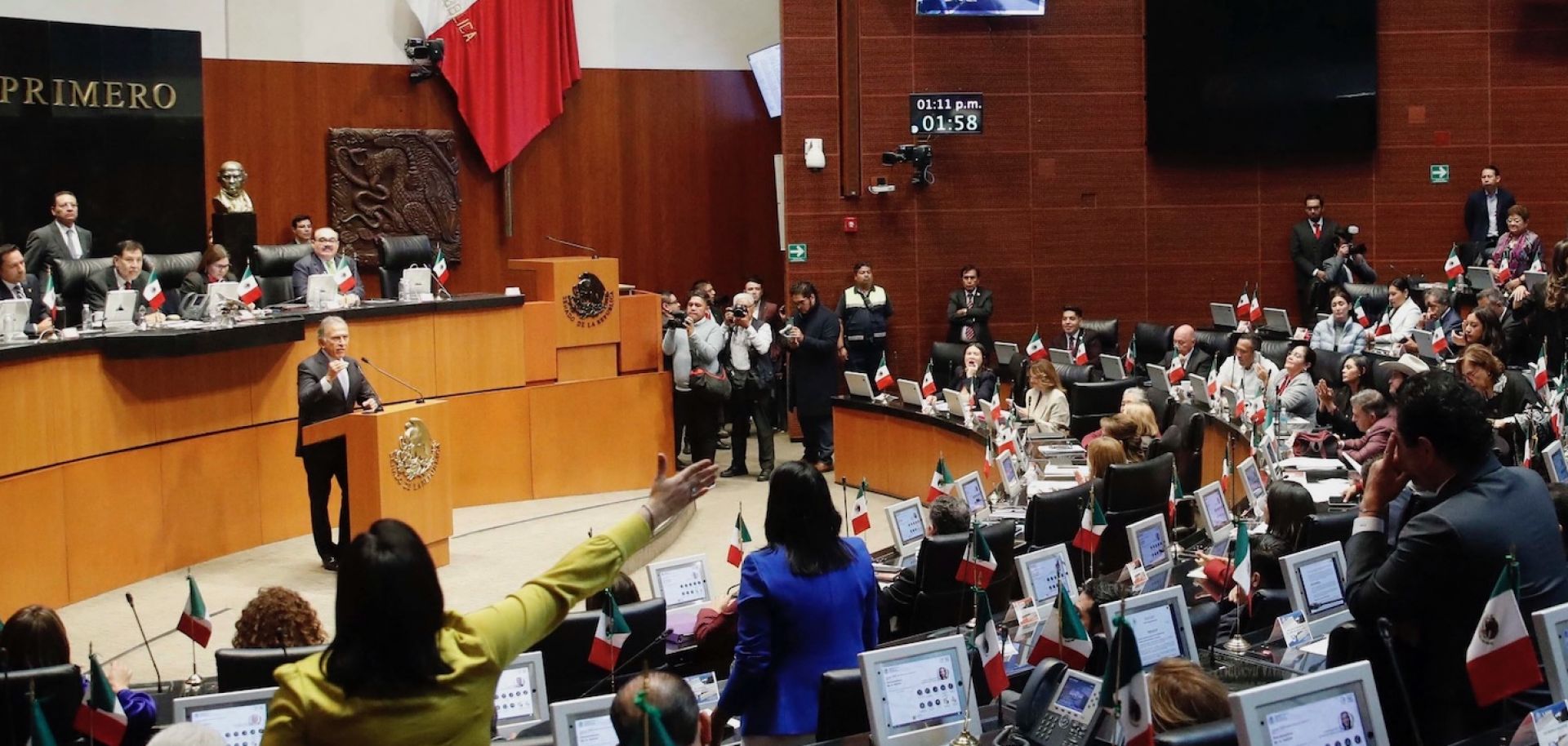
Mexico’s government is expected to centralize power and implement interventionist policies that could increase operational costs for businesses and introduce inefficiencies into the economy. However, the long-term structural factors driving geopolitical shifts are likely to continue attracting foreign investment. On November 1, President Claudia Sheinbaum marked her first month in office, along with the second month of a new legislature controlled by the ruling coalition. In September, the government used its two-thirds majority to fast-track part of an 18-reform package presented by former President Andrés Manuel López Obrador, known as “Plan C.” Among the most controversial aspects was the judicial reform, which Congress passed and the former president enacted in just two weeks.
In addition to judicial reforms, López Obrador's plan included the militarization of the National Guard and expanded rights for Indigenous and Afro-Mexican populations. Since Sheinbaum's inauguration, the legislature has continued pushing through various reforms, and given the ruling coalition's dominance, the full package of reforms is expected to be implemented. Sheinbaum has also outlined 100 additional commitments, focusing on women's and workers' rights.
Key Impacts:
One of the most significant reforms involves transferring the National Guard to the Ministry of Defense, which will increase the militarization of public affairs and reverse the original civilian structure of the force. Furthermore, the expansion of Indigenous and Afro-Mexican rights will provide them legal entitlements to government resources and greater involvement in consultations related to infrastructure projects, potentially delaying licensing processes. Over the long term, these reforms could centralize power further under the ruling Morena party. López Obrador’s Plan C also includes changes to Mexico’s political and electoral systems, such as reducing the number of senators and deputies and eliminating several autonomous agencies, which would consolidate more power in the executive branch.
Business Environment:
These constitutional and regulatory changes will likely affect business operations in the country, especially in sectors like energy and mining. A reform passed in October allows the government to direct the activities of state-owned energy companies like Pemex, which could prioritize political motivations over business logic, potentially leading to inefficiencies and greater public sector involvement. A new energy reform also strengthens the government's role in electricity generation and transmission, potentially reducing business opportunities and efficiency in the power grid.
In addition, Morena’s dominance is expected to result in more interventionist policies in sectors such as agriculture, mining, and telecommunications. A proposal to ban open-pit mining, which accounts for a significant portion of Mexico's mining activities, could affect U.S. and Canadian companies operating in the country. Similarly, proposed bans on genetically modified corn and changes to water usage regulations will impact industries reliant on these resources.
Foreign Investment Outlook:
Despite the risks posed by these reforms, Mexico’s geopolitical role and its attractiveness as an alternative to China for nearshoring will likely continue to drive foreign direct investment. While interventionist policies may increase regulatory burdens and operational costs for companies, the desire to de-risk supply chains in the face of tensions with China will continue to make Mexico an attractive investment destination. In 2024, Mexico is expected to see record-high foreign investment of $38.4 billion, mostly concentrated in manufacturing, with this trend continuing in 2025.
However, with increased interventionism and possible tax hikes to address fiscal deficits, the country’s business environment may face growing challenges. The broader impact of these structural changes could slow the growth of Mexico’s economic sectors, particularly in areas where government interference is significant. Despite these obstacles, Mexico’s role in global supply chains and its relatively stable fiscal position are expected to attract substantial foreign capital in the long term.
News You Should See
FEMA and FCC Set Nationwide Emergency Alert System Test for Today
Lisa's 'Always Lalisa' Documentary Set for November 18 YouTube Premium Release
Darius Rucker Documentary Traces His Rise From Rock to Country Music
Hollywood Honors Glenn Close and Ridley Scott at Governors Awards
Toronto Tempo Claim Top Selection in 2027 WNBA Draft Lottery
Detroit Lions Overpower Patriots 35-10 in Munich Behind Jahmyr Gibbs' Outstanding Performance
Latest News
FEMA and the FCC will test America's Emergency Alert System on November 17 at 2:20 p.m. ET. Radio and TV broadcasts will be interrupted briefly.
Lisa's Always Lalisa documentary arrives on YouTube Premium November 18, featuring her solo career, Coachella performances and The White Lotus experience.
The Hulu documentary explores Darius Rucker's journey from Charleston to rock success with Hootie & the Blowfish and his country music career.
Glenn Close and Ridley Scott receive honorary Oscars alongside Floyd Norman, Pamela Koffler and Christine Vachon at Hollywood's Governors Awards.
Toronto Tempo secure the No. 1 pick in the 2027 WNBA Draft, raising expectations around the franchise's rebuilding plans and potential interest in JuJu Watkins.
Detroit Lions defeat New England Patriots 35-10 in Munich as Jahmyr Gibbs records 252 scrimmage yards and two touchdowns.
Minnesota Vikings defeat Green Bay Packers 30-10 as Kirk Cousins throws two touchdowns and the defense delivers eight sacks and four turnovers.
AAA expects 81.5 million Americans to travel for Thanksgiving 2026, with nearly six million flying as transportation costs influence holiday plans.
Nvidia's upcoming earnings report could offer insights into AI chip demand, data center investments and investor confidence amid uncertainty in the technology market.