McDonald’s Turns a Classic Dessert Into Its Next Seasonal Beverage Strategy
The Caramel Apple Pie lineup expands the chain’s beverage ambitions by combining nostalgia, format diversification, and a familiar brand signature beyond the dessert menu.

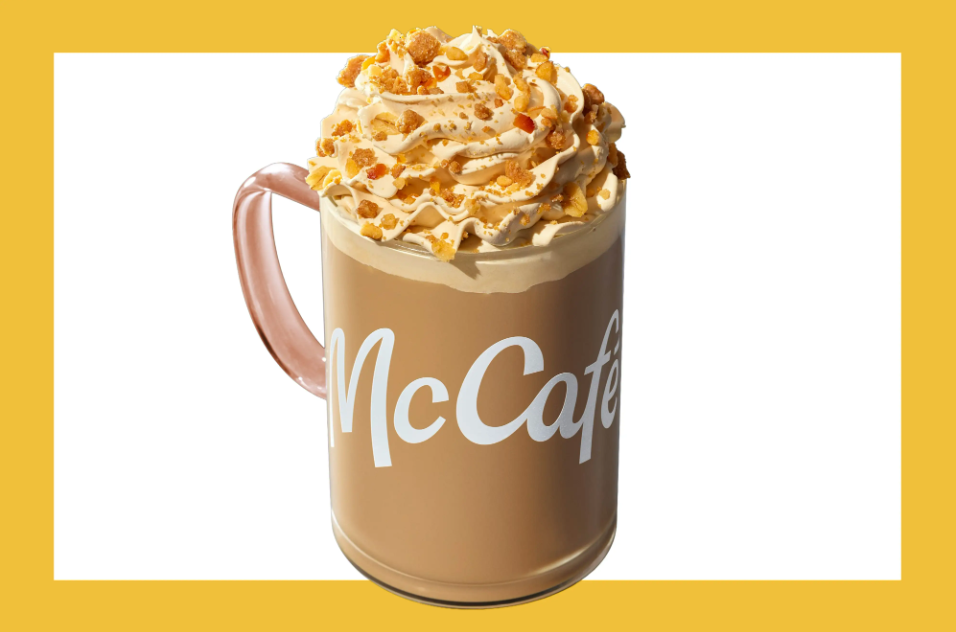
McDonald’s is using one of its most recognizable dessert memories to strengthen a different part of its business: beverages. Starting August 18, 2026, the fast-food giant introduced its limited-time Caramel Apple Pie flavor across a range of coffee-based drinks, positioning the seasonal launch as an alternative to the pumpkin-spice formulas that dominate fall menus. Rather than simply adding another autumn flavor, the move reflects a broader strategy in which McDonald’s is treating beverages as a more important destination for product innovation, customer frequency, and brand differentiation.
The new flavor combines apple and caramel with McDonald’s signature coffee and is finished with whipped cream, salted caramel sauce, and apple-pie crumbles. The topping structure is particularly important from a product-design perspective because it transforms a familiar flavor combination into a multi-layered beverage experience. Instead of relying only on syrup to communicate the concept, the drink incorporates creamy, salty, sweet, and crunchy elements that recreate recognizable characteristics of a caramel apple pie in a format designed for coffee consumption.
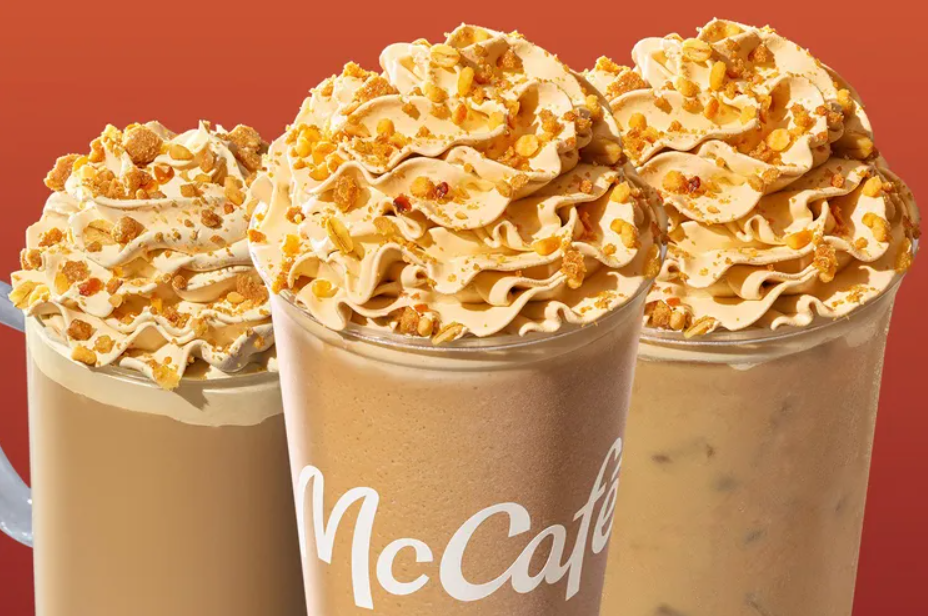
McDonald’s is making the concept available across four formats. Customers can order the Caramel Apple Pie flavor as iced coffee, a hot latte, an iced latte, or a blended Frappe. The hot and iced latte versions can be ordered in any size, while the Frappe introduces a more dessert-oriented blended format. This format diversification allows the same flavor identity to address different consumption occasions, temperatures, preferences, and seasonal conditions rather than limiting the concept to one specific beverage.
The product architecture also gives McDonald’s an opportunity to increase the perceived value of its coffee offering. The combination of espresso or coffee, flavored syrup, whipped cream, salted caramel, and apple-pie pieces creates a specialty-drink proposition that can feel more elaborate than a conventional cup of coffee while remaining within the accessibility of a fast-food drive-thru. The commercial opportunity lies in delivering an experience associated with specialty cafés without abandoning the speed, convenience, and mass-market positioning that define McDonald’s core business.
This positioning is particularly relevant because recent survey data ranks McDonald’s as the third-largest national coffee chain in the United States. That position gives the company an established customer base for coffee while creating an incentive to use seasonal innovation to generate additional visits and incremental purchases. A limited-time flavor can serve as a relatively contained product experiment while simultaneously giving customers a new reason to return to the restaurant or add a beverage to an existing meal.
From a brand perspective, the most valuable component of the launch may be its connection to McDonald’s long-standing apple-pie identity. The chain has served warm apple pies since the late 1960s, placing the dessert within the company's historical product vocabulary. McDonald’s later replaced the original fried version with an oven-baked lattice pie in 1992 and subsequently experimented with alternative fillings, including pumpkin, holiday custard, and strawberries and cream. The new beverage therefore does not introduce an unrelated flavor into the brand; it transfers an established food memory into another category.
That transfer is strategically significant because recognizable brand assets can reduce the amount of explanation required when introducing a new product. Consumers who already associate McDonald’s with apple pie can immediately understand the intended flavor profile without learning an entirely new concept. The beverage becomes an extension of an existing brand story rather than a standalone innovation. This approach can help the company maintain consistency while still producing something that feels new enough to attract attention during a competitive seasonal period.
The choice to move beyond pumpkin spice is another element of the product strategy. Fall beverage menus across the American food-service market are heavily associated with pumpkin spice, creating an environment in which competing brands can easily produce similar seasonal products. By choosing caramel apple pie instead, McDonald’s differentiates its autumn offer through a flavor that remains strongly connected to the season while avoiding direct dependence on the most crowded seasonal category. The result is a product that can participate in fall consumption without becoming another variation of the same pumpkin-based formula.
The launch also reflects a broader change in McDonald’s beverage strategy. The company has recently increased the number and variety of drinks available through its restaurants. Earlier in August, McDonald’s partnered with Red Bull to offer energy refreshers through its drive-thru system, while also expanding its dirty-soda range with additional drinks featuring sweet-cream toppings. These developments indicate that beverages are increasingly being treated as a standalone innovation platform rather than simply an accompaniment to burgers, fries, and other traditional menu items.
The company's previous CosMc’s experiment provides additional context. CosMc’s was created as a beverage-focused concept designed around specialty drinks that resembled the broader café and soda-shop experience. McDonald’s eventually closed all five pilot locations in 2025, but the disappearance of the standalone concept did not eliminate the beverage strategy behind it. Instead, elements of the beverage-first approach appear to have migrated back into the main McDonald’s network, where the company can deploy new drinks across its established national footprint.
This is arguably the most important business implication of the Caramel Apple Pie launch. Rather than requiring a separate store concept, McDonald’s can test increasingly sophisticated beverage ideas through its existing restaurants, supply infrastructure, digital ordering ecosystem, drive-thru network, and customer base. This creates a different economic model from building an entirely new beverage brand. The company can use its existing physical and operational infrastructure to introduce seasonal products while benefiting from the marketing power of the McDonald’s name.
The limited-time nature of the product is also strategically useful. Seasonal products can create urgency because customers know that the item is not expected to remain on the menu indefinitely. This can encourage trial and increase the likelihood of repeat visits within a defined period. At the same time, the company can evaluate consumer response without committing to permanent menu space. If the product performs strongly, the underlying flavor concept or components could potentially inform future beverage development; if demand is weaker, the company can move to another seasonal concept without permanently restructuring the menu.
The four beverage formats further strengthen that testing model. The same core flavor can be evaluated through iced coffee, hot latte, iced latte, and Frappe consumption patterns. This provides McDonald’s with multiple product expressions built around one flavor platform. From a design and operational standpoint, that approach can create efficiencies because the central flavor identity and topping components can be reused across several beverages instead of developing four completely unrelated products.
The visual and textural design of the drinks also matters to their brand potential. Whipped cream, salted caramel sauce, and visible apple-pie crumbles create recognizable visual cues that can make the beverage more distinctive in promotional photography and social-media content. The product is therefore designed not only to deliver a flavor but also to communicate that flavor visually. The presence of toppings can reinforce the dessert association before the consumer takes the first sip, helping the product function as a highly recognizable seasonal object within McDonald’s broader menu.
The strategy is especially relevant to the economics of the fast-food beverage category because drinks can complement existing food purchases rather than necessarily competing with them. A customer visiting for breakfast, lunch, or an afternoon snack can add a specialty beverage to the transaction. In this sense, the beverage category can provide an additional route for increasing transaction value while simultaneously creating new consumption occasions outside the traditional burger-and-fries proposition.
McDonald’s is consequently repositioning coffee and specialty drinks as part of the brand experience itself. The Caramel Apple Pie concept connects a familiar dessert, a seasonal calendar moment, and an established beverage business into a single product story. That combination allows the company to pursue innovation without abandoning the recognizable visual and emotional language of its existing menu.
The product also demonstrates how nostalgia can function as a commercial design tool. Nostalgia is most effective when it is connected to something consumers already recognize, and McDonald’s apple pie has decades of brand history behind it. By translating that flavor into coffee, the company can refresh an established asset without having to create a new emotional association from scratch. The strategy effectively turns historical menu equity into a contemporary beverage proposition.
For McDonald’s, the larger challenge will be maintaining a balance between innovation and brand coherence. A growing beverage portfolio can attract new occasions and consumers, but excessive complexity can also make menus harder to navigate and operations more demanding. The Caramel Apple Pie lineup addresses this challenge by keeping multiple formats connected to one central flavor concept. Rather than creating four unrelated seasonal beverages, McDonald’s is building one recognizable platform that can be expressed through several preparation methods.
The launch therefore represents more than a seasonal coffee flavor. It illustrates McDonald’s continuing attempt to broaden the meaning of its brand beyond its traditional fast-food categories. The company is using established food memories, seasonal demand, beverage customization, and its existing restaurant infrastructure to create products that feel increasingly closer to specialty drinks while remaining rooted in the accessibility and convenience of the Golden Arches.
With CosMc’s no longer operating as a standalone experiment, the beverage-first strategy appears to be moving into the core McDonald’s business. The Caramel Apple Pie lineup demonstrates how that strategy can operate: take a recognizable brand asset, redesign it for a new consumption format, distribute it through existing infrastructure, and use a limited seasonal window to generate trial and measure demand.
In that sense, the real product being tested this fall is not only caramel apple pie coffee. McDonald’s is also testing how far it can extend its beverage identity while preserving the emotional familiarity that makes the brand recognizable. If successful, the approach could strengthen beverages as a recurring source of menu innovation, incremental sales opportunities, and brand engagement rather than leaving coffee and specialty drinks in the secondary role they traditionally occupied within the fast-food menu.
News You Should See
2026 Nobel Medicine Prize Honors Scientists Behind Optogenetics Breakthrough
Oil Prices Edge Lower as Stronger Middle East Exports and G7 Reserves Ease Supply Concerns
Trump Offers U.S. Assistance to Russia After Death at Siberian Plague Research Institute
Trump Takes Economic Message to Nebraska as GOP Faces Rising Cost-of-Living Pressure
U.S. Appeals Court Weighs Trump Administration’s $2.6 Billion Harvard Funding Fight
U.S. Midterm Elections Begin With Resilient Jobs Market and Persistent Cost Pressures
Latest News
The 2026 Nobel Prize in Physiology or Medicine honors Karl Deisseroth, Peter Hegemann and Georg Nagel for pioneering research behind optogenetics and its impact on neuroscience.
Oil prices edged lower as stronger Middle Eastern exports and a planned G7 release of 100 million barrels eased immediate supply concerns, while Gulf security risks and the Strait of Hormuz kept markets alert.
President Donald Trump said the United States would help Russia if needed after a laboratory worker died at a Siberian plague research institute, as Russian authorities imposed precautionary quarantine measures.
Trump’s Nebraska campaign stop highlights rising fuel and grocery costs, beef prices and growing economic pressure on Republicans ahead of the November midterm elections.
A U.S. appeals court is reviewing the Trump administration’s effort to cut Harvard’s federal research funding, with more than $2.6 billion at stake.
The U.S. enters the 2026 midterm elections with unemployment at 4.2%, while higher living and energy costs create economic pressure for households and businesses.
US services growth eased in September as input prices climbed to their highest level since July 2022, with fuel costs, supply-chain disruptions and strong demand increasing pressure on businesses.
Rising Treasury yields are increasing U.S. borrowing costs as Washington manages record debt, persistent inflation and strong economic demand, narrowing its policy options.
A EGP 16 million corporate partnership will establish and equip a bone marrow transplant unit at Cairo’s Coptic Hospital, supporting access to specialized treatment for patients.