McDonald’s Bets on Energy and Customization to Reinvent Its Beverage Business
The Red Bull Dragonberry Energizer and Vanilla Swirl expand McDonald’s beverage ecosystem, targeting novelty-driven consumers while strengthening the brand’s position beyond traditional fast food.

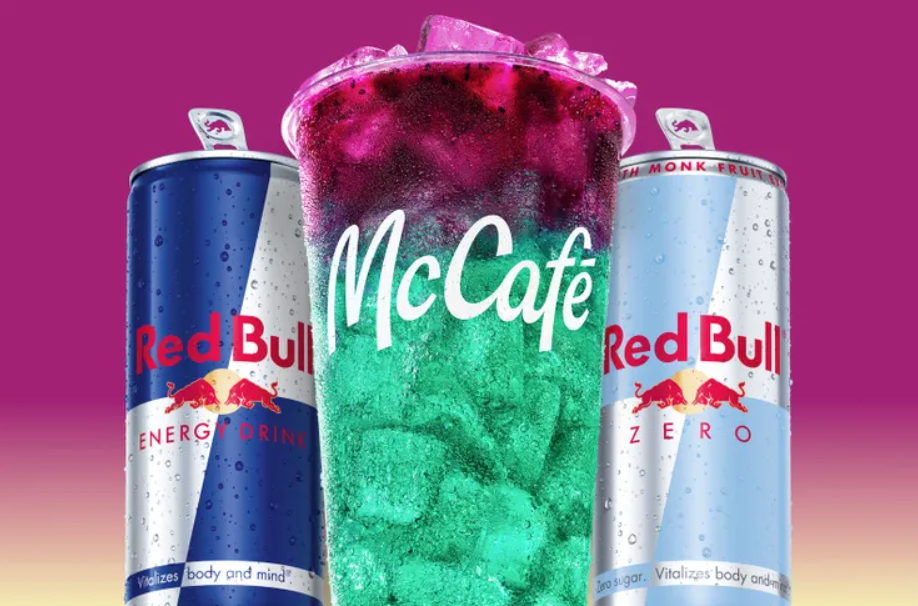
McDonald’s is expanding its beverage strategy with a move that places energy drinks, customization, and experiential consumption at the center of its latest menu development. Beginning August 17, 2026, the fast-food giant will introduce Red Bull to its U.S. restaurants nationwide through a McDonald’s-exclusive beverage designed to connect the energy category with the company’s growing specialty-drink platform.
The centerpiece of the launch is the Red Bull Dragonberry Energizer, a new McCafé beverage that combines Red Bull with tangy blue raspberry syrup and freeze-dried dragon fruit. Customers will also have the option of using Zero Sugar Red Bull, giving the product an additional customization element for consumers who want the energy-drink experience with a different nutritional profile. An 8-ounce Red Bull can will also be available separately, extending the partnership beyond the crafted beverage itself.
The move represents an important shift in McDonald’s beverage positioning. Rather than treating drinks as a supporting purchase attached to a traditional meal, the company is increasingly developing beverages as standalone products capable of generating traffic, creating social interest, and encouraging repeat visits. The Red Bull collaboration gives the chain access to an established energy-drink identity while allowing McDonald’s to reinterpret that category through its own flavor architecture and restaurant experience.
According to Alyssa Buetikofer, McDonald’s chief marketing and customer experience officer, the company has observed increasing consumer enthusiasm for greater beverage variety and options suited to different occasions. The company also pointed to a strong international response to the Red Bull Dragonberry Energizer as part of the rationale for bringing the concept to the U.S. market. This suggests that the launch is not simply a limited promotional experiment, but part of a broader effort to extend McDonald’s presence within the rapidly evolving beverage segment.
The product’s design is particularly significant from a branding perspective. The combination of Red Bull, blue raspberry, and freeze-dried dragon fruit gives the drink a visually distinctive and fruit-forward identity that separates it from conventional fountain beverages. The freeze-dried fruit component also introduces a craft-oriented detail, allowing a global fast-food brand to borrow visual and sensory cues commonly associated with premium beverage chains and specialty drink concepts.
McDonald’s is simultaneously introducing another beverage-focused development on August 17: vanilla syrup will become part of the McCafé offering, including the new Vanilla Swirl. The beverage allows customers to choose Coke, Diet Coke, or Coke Zero as the base before adding vanilla flavor and a cold-foam topping. The result expands the company’s crafted-soda portfolio by transforming familiar soft drinks into more customizable, layered beverages.
Taken together, the two launches demonstrate a deliberate portfolio strategy. Red Bull gives McDonald’s an entry point into the energy category, while Vanilla Swirl strengthens its presence in customized soft drinks. Both products use familiar ingredients or established beverage brands but combine them in formats designed to feel new. This approach reduces the need to educate consumers about completely unfamiliar products while still creating enough novelty to encourage trial.
The strategy is also closely connected to changing consumer behavior. American customers are increasingly looking for beverages that function as quick refreshments, energy boosts, or inexpensive moments of indulgence. The popularity of specialty drinks has encouraged major restaurant chains to expand beyond traditional coffee, soda, and basic fountain offerings.
Gen Z has become an important driver of this trend through what has been described as “little treat culture,” where consumers seek relatively accessible purchases that provide a small sense of novelty or pleasure. For fast-food companies, beverages are particularly well suited to this behavior because they can be purchased at relatively low prices, customized extensively, consumed independently of a full meal, and easily shared through social platforms.
McDonald’s is therefore positioning beverages as a strategic growth engine rather than a secondary menu category. The company has already been developing customized drinks and “dirty soda”-style combinations, and the addition of Red Bull extends this strategy into a category with a strong existing consumer following.
The competitive environment further reinforces the significance of the move. Dunkin’ has expanded its non-coffee beverage portfolio with additional zero-sugar energy options, while Starbucks has also returned to a stronger focus on energy beverages. Other restaurant brands, including Papa Johns and KFC, have experimented with unusual flavor combinations to capture consumer attention.
Smaller beverage-focused chains have also helped establish the market for colorful, customizable energy drinks. Dutch Bros, for example, has built a significant portion of its beverage identity around customizable Rebel Energy Drinks. McDonald’s adoption of a similarly flexible, fruit-forward approach indicates that the competitive battle is no longer limited to traditional fast-food menus. Restaurants are increasingly competing with specialty beverage chains and convenience stores for consumers seeking an afternoon drink, an energy boost, or a small affordable indulgence.
From an economic standpoint, beverages can be an attractive area for restaurant operators because they provide opportunities for customization, premium positioning, and incremental purchases without requiring a major restructuring of the core food menu. A customer who enters for lunch can now obtain an energy drink directly from McDonald’s instead of making an additional stop at a convenience store or another beverage retailer.
The Red Bull partnership consequently expands the occasions on which McDonald’s can participate in consumers’ daily routines. The company is not simply selling another drink alongside burgers and fries; it is attempting to make its restaurants relevant to moments that previously belonged to convenience stores, coffee shops, energy-drink retailers, and specialty beverage chains.
The branding implications are equally important. McDonald’s has historically relied on an instantly recognizable identity built around convenience, familiarity, affordability, and consistency. Its expanding beverage program adds another layer to that identity by associating the brand with experimentation, personalization, color, and contemporary consumer culture.
This evolution allows McDonald’s to remain recognizable while gradually changing what consumers expect from the brand. The objective is not to abandon the traditional fast-food model, but to broaden its relevance through products that fit emerging consumption habits.
The Red Bull Dragonberry Energizer therefore functions as more than a new menu item. It represents a strategic experiment in category expansion, brand collaboration, product customization, and consumer engagement. By combining Red Bull’s established energy-drink equity with McDonald’s own beverage infrastructure, the company can enter a growing category without abandoning the accessibility and operational familiarity that define its core business.
The simultaneous arrival of Vanilla Swirl reinforces the same direction from another angle. Instead of relying solely on new flavors, McDonald’s is building an ecosystem in which customers can modify recognizable beverages and create combinations that feel more personal. This model can encourage repeat visits because consumers are not necessarily choosing from a fixed menu; they are participating in the construction of their drink.
Ultimately, McDonald’s latest beverage strategy reflects a broader transformation taking place across the fast-food industry. Restaurants are increasingly using drinks to generate excitement, increase customization, attract younger consumers, and compete for spending that once belonged to specialized beverage businesses.
With the national launch scheduled for August 17, the Red Bull Dragonberry Energizer gives McDonald’s a highly visible entry into the energy-drink market, while Vanilla Swirl strengthens its position in the rapidly expanding crafted-soda space. Together, the products demonstrate how beverage innovation can become a tool for economic growth and brand repositioning, turning an everyday purchase into a more distinctive consumer experience.
News You Should See
2026 Nobel Medicine Prize Honors Scientists Behind Optogenetics Breakthrough
Oil Prices Edge Lower as Stronger Middle East Exports and G7 Reserves Ease Supply Concerns
Trump Offers U.S. Assistance to Russia After Death at Siberian Plague Research Institute
Trump Takes Economic Message to Nebraska as GOP Faces Rising Cost-of-Living Pressure
U.S. Appeals Court Weighs Trump Administration’s $2.6 Billion Harvard Funding Fight
U.S. Midterm Elections Begin With Resilient Jobs Market and Persistent Cost Pressures
Latest News
The 2026 Nobel Prize in Physiology or Medicine honors Karl Deisseroth, Peter Hegemann and Georg Nagel for pioneering research behind optogenetics and its impact on neuroscience.
Oil prices edged lower as stronger Middle Eastern exports and a planned G7 release of 100 million barrels eased immediate supply concerns, while Gulf security risks and the Strait of Hormuz kept markets alert.
President Donald Trump said the United States would help Russia if needed after a laboratory worker died at a Siberian plague research institute, as Russian authorities imposed precautionary quarantine measures.
Trump’s Nebraska campaign stop highlights rising fuel and grocery costs, beef prices and growing economic pressure on Republicans ahead of the November midterm elections.
A U.S. appeals court is reviewing the Trump administration’s effort to cut Harvard’s federal research funding, with more than $2.6 billion at stake.
The U.S. enters the 2026 midterm elections with unemployment at 4.2%, while higher living and energy costs create economic pressure for households and businesses.
US services growth eased in September as input prices climbed to their highest level since July 2022, with fuel costs, supply-chain disruptions and strong demand increasing pressure on businesses.
Rising Treasury yields are increasing U.S. borrowing costs as Washington manages record debt, persistent inflation and strong economic demand, narrowing its policy options.
A EGP 16 million corporate partnership will establish and equip a bone marrow transplant unit at Cairo’s Coptic Hospital, supporting access to specialized treatment for patients.