Majority of Democrats Seek Major Party Reform, While GOP Unites Behind Trump
Majority of Democrats Seek Major Party Reform, While GOP Unites Behind Trump

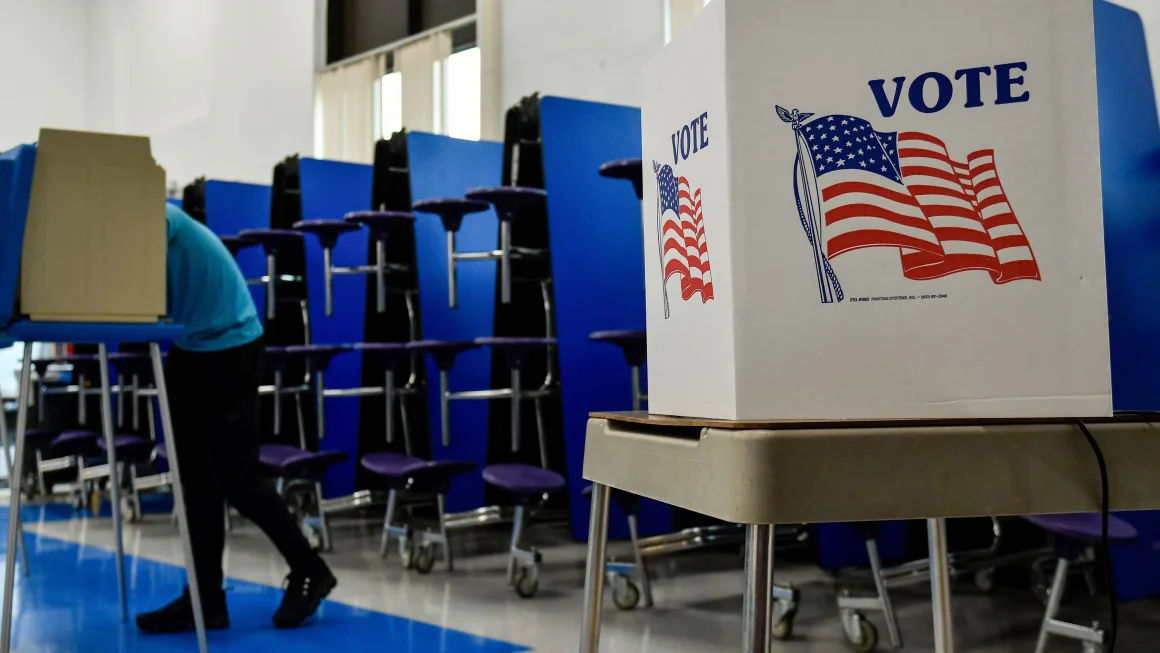
Following the 2024 election, a majority of Democratic Party supporters believe significant reforms are necessary, with many expressing political fatigue, according to a poll conducted by SSRS. The party’s approval ratings have hit their lowest point in over three decades.
Meanwhile, Donald Trump’s return to office is reshaping the Republican Party, as most GOP supporters now view backing the president-elect as essential to being a Republican.
This shift occurs amid widespread political discontent. Even among Republicans, dissatisfaction with politics outweighs feelings of optimism, inspiration, or pride.
The poll reveals that 58% of Democrats and Democratic-leaning independents believe the party requires major changes or a complete overhaul—up from 34% after the 2022 midterm elections. In contrast, the share of Republicans and Republican-leaning independents who feel similarly about the GOP has declined from 38% to 28%.
Only 49% of Democratic-aligned respondents expect their party’s congressional representatives to effectively counter GOP policies. Meanwhile, over 90% of Republican-aligned respondents believe their representatives—who now control both chambers of Congress—will be at least somewhat successful in advancing their legislative agenda.
Across party lines, political frustration dominates. Seventy percent of U.S. adults describe themselves as disappointed, and 64% report feeling frustrated with the state of politics. Nearly half say they are burned out, while about 40% express anger—rising to 52% among Democratic-aligned women. Less than 20% feel optimistic, inspired, or proud.
Public confidence in the political process is also waning. Only 23% of registered voters are satisfied with their influence on politics, a sharp drop from 38% last fall. Additionally, just 48% of Americans believe elections truly reflect the will of the people, although this is a slight improvement compared to previous years. Confidence has flipped along party lines following Trump’s victory, surging from 29% to 67% among Republicans, while dropping from 59% to 39% among Democrats.
Overall, only 33% of Americans have a favorable view of the Democratic Party—its lowest rating in CNN’s polling since 1992. The GOP fares slightly better at 36%. Four years ago, following the January 6 Capitol riot, Democrats had a 49% favorability rating, compared to 32% for Republicans.
While most partisans still view their own parties favorably, Republicans are more unified. Seventy-eight percent of GOP-aligned voters hold a positive view of their party, compared to 72% of Democratic-aligned voters. Among political independents, both parties score just 19% in favorability.
Looking back, 43% of GOP-aligned adults say they feel more connected to their party, compared to 18% who feel less so. Among Democratic-aligned adults, more say they feel alienated (32%) than those who feel more connected (23%).
What Do Americans Want from Their Parties?
Most partisans see their parties as united—79% of Republican-aligned adults and 64% of Democratic-aligned adults believe their parties are mostly cohesive. However, those calling for reform cite internal divisions as a primary concern.
Among Democrats seeking change, key issues include a perception that the party is out of touch, a demand for new leadership, and frustration over ineffective messaging and resistance to GOP policies.
“They are too nice,” a Maryland man commented. “Republicans will do anything to achieve their goals, while Democrats cling to ‘norms.’ They need to be more aggressive, but without resorting to lies.”
“Despite all the good things Democrats have done, they still lost the election,” a woman from Arizona remarked. “Democrats are terrible at messaging.”
Among the smaller share of Republicans who seek changes within their party, only 10% mention Trump or the MAGA movement, and just 4% believe the GOP is too extreme—down from 15% and 10%, respectively, in late 2022.
News You Should See
P&G Raises Fiscal 2027 Cost Warning as Oil and Freight Expenses Threaten Profits
Chemical Tank Leak in Toledo Triggers Evacuations and Industrial Disruptions
Judge Sets December 11 Deadline for Trump Deposition in BBC Defamation Case
Iowa Senate Race Tests How Far Republicans Can Separate Themselves From Trump
California State Workers Strike Over Pay, Healthcare and Return-to-Office Rules
Streaming’s October Showdown: How Disney, Netflix and Major Entertainment Brands Compete for Audiences
Latest News
Procter & Gamble expects commodity, energy and transportation costs to reduce fiscal 2027 profit by $1.4 billion. Quarterly sales rose 4% to $23.28 billion, beating analyst expectations.
A ruptured chemical tank in Toledo, Ohio, prompted evacuations, school closures and an industrial shutdown. Authorities have reduced the restricted zone as the release slows and cleanup preparations continue.
A federal judge has ordered Donald Trump to give a deposition by December 11, 2026, in his $10 billion lawsuit against the BBC, with possible sanctions for noncompliance as the discovery deadline approaches.
Iowa’s 2026 Senate race pits Republican Ashley Hinson, balancing Trump support with economic concerns, against Democrat Josh Turek, who emphasizes bipartisanship amid rising campaign spending.
Thousands of California state workers struck on October 21 over a proposed three-year pay increase, healthcare costs and a four-day office attendance requirement as contract negotiations continued.
October 2026 brings major entertainment releases across Disney+, Netflix, HBO Max, Hulu, Prime Video and Peacock. Explore how familiar franchises, exclusive programming, new music and video games shape competition for streaming audiences.
Saudia advises travelers to book flights through Al Qassim Airport for Riyadh connections, offering free hourly shuttle buses in both directions until further notice.
An AP-NORC poll shows Democratic confidence in accurate vote counting falling to 55%, while Republican confidence rises to 38%, highlighting election integrity concerns ahead of the 2026 US midterms.
Donald Trump campaigns in North Carolina ahead of the November 2026 midterms as low approval ratings, rising fuel costs, Democratic early-voting gains and funding disparities challenge Republican efforts to retain control of Congress.