Liux Turns the Microcar Into a Sustainability-Led European Mobility Strategy
Spain’s Liux is positioning the Big as more than an affordable urban EV, using circular materials, lightweight engineering and a distinctly European brand identity to challenge increasingly dominant Chinese microcar makers.

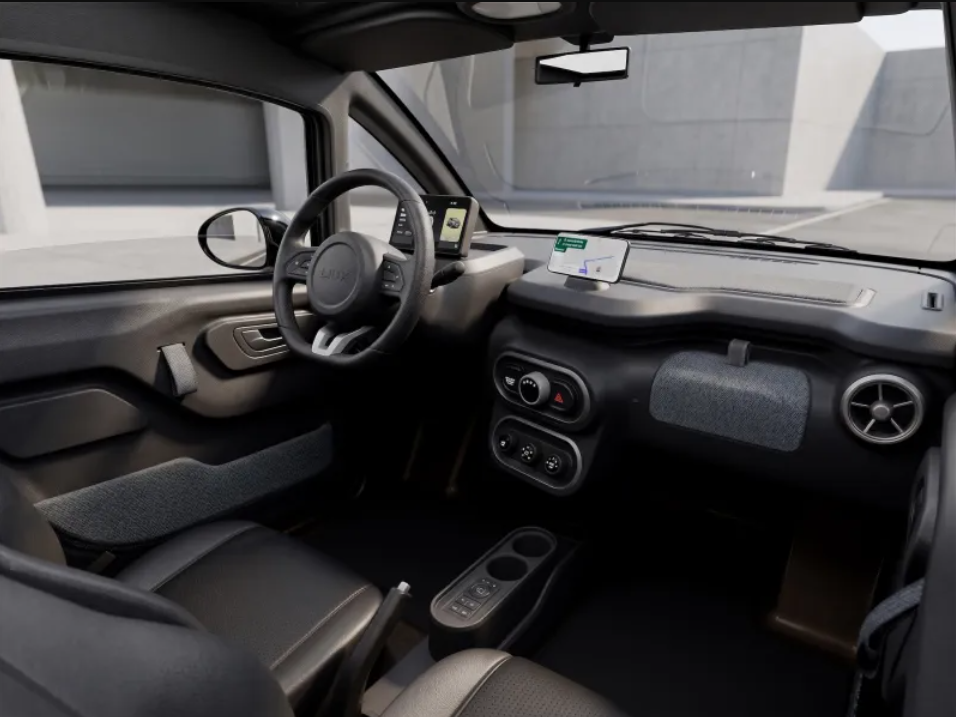
Spanish electric-vehicle startup Liux is attempting to establish a differentiated position in Europe’s increasingly competitive microcar market by treating sustainability not as a secondary environmental feature, but as a central part of the vehicle’s engineering, commercial proposition and brand identity. Its upcoming Liux Big is designed for dense urban environments, where compact dimensions, low operating requirements and easier parking can offer a practical alternative to conventional passenger cars. At the same time, the company is attempting to distinguish its product from a growing wave of small Chinese electric vehicles that have gained ground in Europe.
The competitive environment is significant. European cities have increasingly embraced smaller vehicles, while the traditional image of the European microcar has been challenged by compact Chinese EVs. Even Smart, one of Europe’s most recognizable names in ultracompact vehicles, has shifted manufacturing toward China. Liux is therefore entering a segment in which simply being small and electric is unlikely to provide a sustainable competitive advantage. Its strategy is instead based on making the construction of the vehicle itself part of the product story.
The company was founded in Spain by Antonio Espinosa de los Monteros and David Sancho, whose backgrounds combine sustainability-oriented entrepreneurship and electric-vehicle engineering. Rather than attempting to recreate a completely European automotive supply chain, the founders acknowledge that full supply-chain sovereignty is unrealistic. Their approach is to work within the international nature of automotive manufacturing while maintaining sustainability as the guiding principle for the decisions they can directly control.
That philosophy is reflected most clearly in the materials used in the Liux Big. Its battery systems are not manufactured in Europe, but the vehicle is designed to support home charging, including charging from electricity generated by rooftop solar installations. The company also wants the vehicle to remain easier to maintain and less vulnerable to the rapid technological obsolescence that has increasingly characterized modern automobiles.
One of the most distinctive technical decisions concerns the vehicle’s body. Liux uses a linen-based biocomposite for the body structure, with the material designed so that it can later be separated and recycled. This approach reflects a broader interpretation of circularity: recycling is not treated as something that happens only after a product reaches the end of its life, but as a requirement that should influence how the product is engineered from the beginning. By preserving the integrity of materials and components, Liux aims to make future reuse and recovery more technically realistic.
This philosophy is closely connected to Espinosa’s previous experience. Before founding Liux, he co-founded Auara, a Spanish B Corp focused on natural mineral water sold in bottles made from recycled and recyclable materials. After the brand was acquired by a larger company, Espinosa moved into a new entrepreneurial chapter with Sancho, applying the same broader concept of circularity to mobility.
Sancho brings a different but complementary expertise. His specialization is electric-vehicle engineering and the development of vehicles capable of delivering performance comparable with combustion-powered alternatives. Before Liux, he worked on the Bóreas hybrid supercar, which was unveiled at the 24 Hours of Le Mans in 2017. The combination of these backgrounds helped shape Liux’s initial vehicle concept, the Animal, a fully electric five-seat prototype constructed largely from recycled or plant-based materials.
The company subsequently changed direction. After unveiling the Animal in 2022, the founders concluded that achieving regulatory homologation would be significantly more manageable with a smaller vehicle. The decision resulted in a strategic pivot toward the Liux Big, effectively reducing technical and regulatory complexity while concentrating the company’s resources on a segment where its sustainability proposition could potentially be more commercially accessible.
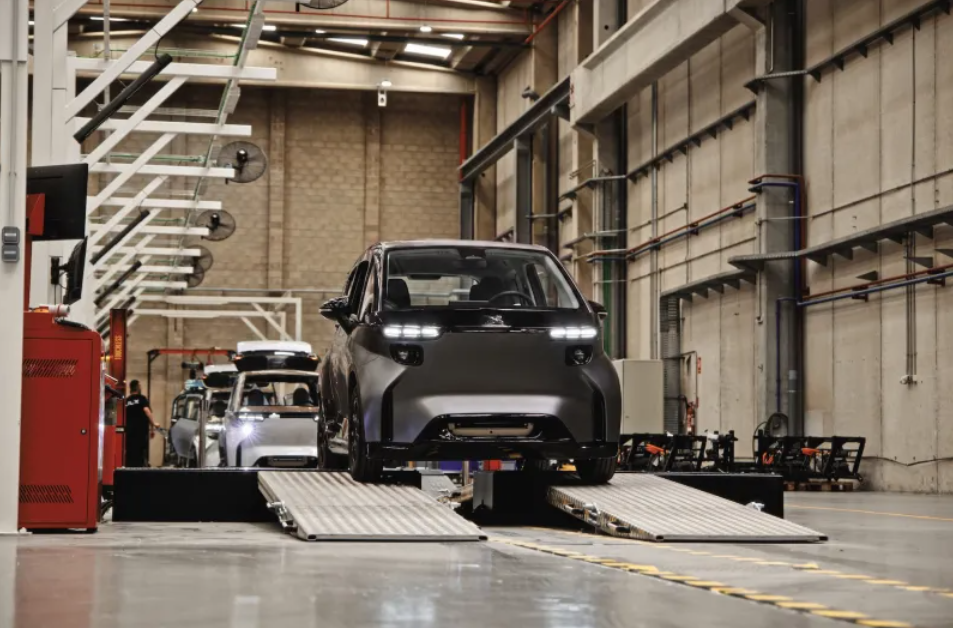
By 2026, Liux had obtained Europe-wide homologation for the Big and was preparing to begin sales during the first half of 2027. The company had expanded to approximately 65 employees and was preparing production across three facilities in Spain. One of those facilities, located in Azuqueca de Henares roughly an hour from central Madrid, illustrates the company’s approach to manufacturing.
The Azuqueca plant is deliberately compact. Rather than attempting to build a vertically integrated manufacturing operation, Liux is applying principles associated with Toyota’s lean-management model. The facility focuses on the final stages of production, allowing the company to keep its manufacturing footprint relatively small. Liux nevertheless estimates that its production capacity could eventually reach 20,000 vehicles annually by 2030.
The economics of the strategy are also becoming clearer through customer interest. More than 7,500 people have joined the waiting list for the Liux Big. Although joining the list does not require a financial commitment, the company has been using the information to understand the profile and expectations of potential buyers. The strongest representation currently comes from urban residents between approximately 55 and 60 years old, leading Liux to anticipate that the Big may frequently operate as a second vehicle within a household rather than replace a family’s primary car.
That positioning could limit the extent to which microcars disrupt traditional car ownership, but Liux is deliberately avoiding a strategy based entirely on predicting how consumer behavior will evolve. Instead, the company is leaving room for partnerships with businesses operating B2B fleets and with organizations that could contribute autonomous-driving capabilities. Such partnerships could create additional commercial applications beyond individual private ownership.
Price will be another important part of the company’s market strategy. Liux has not yet announced the final retail price, but it expects the Big to cost less than €18,000, approximately $21,000, before any potential electric-vehicle subsidies. This would place the vehicle toward the more expensive end of the European microcar market. Liux’s argument is therefore not based on being the cheapest option, but on delivering greater perceived value through engineering, sustainability, usability and brand differentiation.
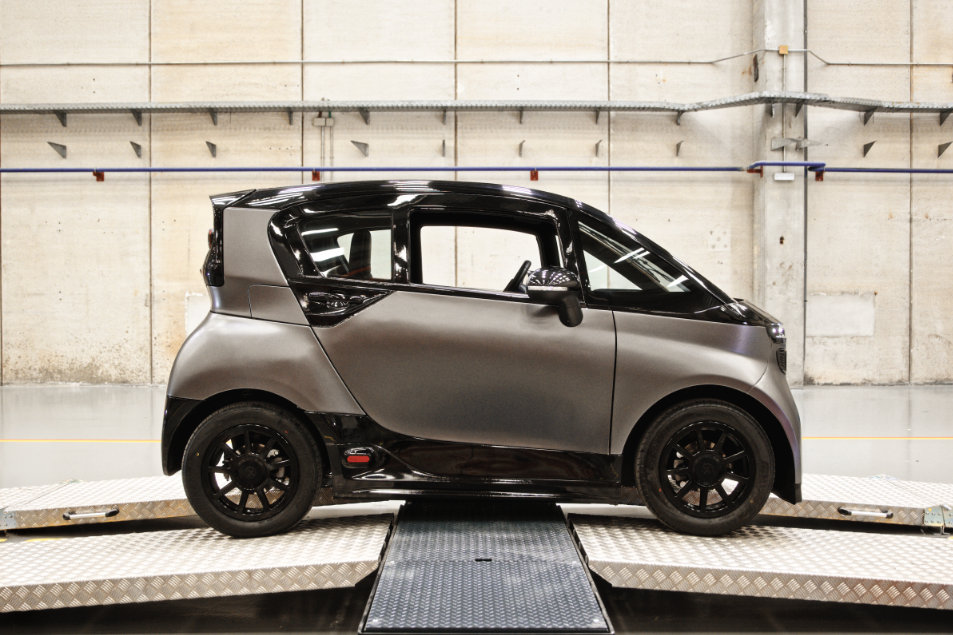
The vehicle’s classification also creates engineering constraints. According to Liux’s head of research and development, Celso Fernández Llorens, weight and size restrictions significantly limit what manufacturers can achieve in the microcar category. European regulations distinguish between the lighter L6e four-wheel category and the heavier L7e classification. Liux chose to work within the L7e framework and used that additional engineering freedom to create a vehicle intended to feel closer to a conventional car than a larger two-wheeler.
One practical result is a 260-liter trunk, a relatively substantial storage capacity for a vehicle of this size. The engineering objective extends beyond packaging, however. Liux wants occupants to perceive the Big as a genuine car rather than simply an enclosed alternative to a scooter or motorcycle. That objective is also connected to safety.
Although the vehicle category does not require conventional crash testing, Liux has conducted its own dynamic evaluations. The company has demonstrated the Big’s braking, slalom and maneuvering capabilities, including testing involving an upcoming off-road variant. The emphasis reflects an important aspect of the product strategy: minimizing vehicle weight cannot come at the expense of structural integrity or predictable handling. A lightweight vehicle must still remain stable during cornering and provide meaningful protection in a collision.
The initial product range is expected to include two battery configurations, with capacities of 15 kWh and 20 kWh. Liux also plans a cargo version, opening the possibility of applications in commercial urban mobility and last-mile transportation. The company has indicated that its ambitions extend beyond a single model, while the engineering background of its founders keeps the possibility of more performance-oriented vehicles open for the future.
For the immediate launch, however, Liux is concentrating on the urban version of the Big. The company has secured €16 million in funding to date, including European funding, and plans to use the capital to bring the vehicle to market through partnerships with dealerships across Europe. This approach reduces the need to build a fully proprietary retail network while allowing Liux to expand geographically through existing automotive distribution infrastructure.
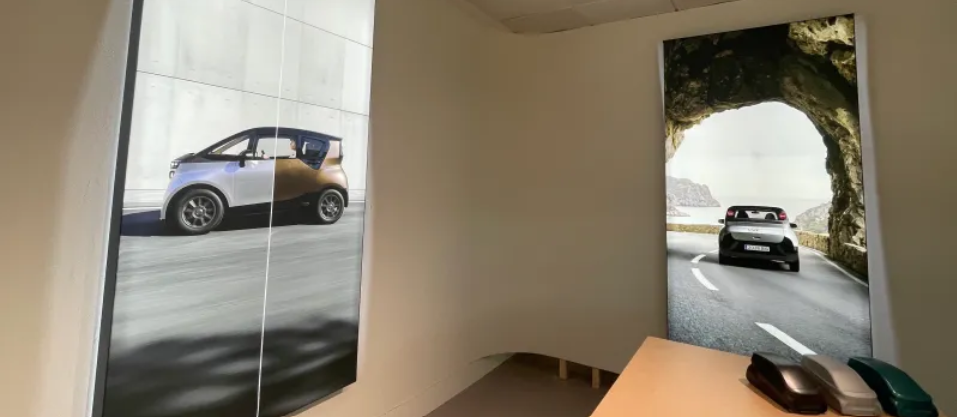
Brand strategy plays a particularly important role in this expansion. Liux’s showroom is designed not merely as a place where customers can see the vehicle, but as an extension of the company’s sustainability narrative. Textile screens, three-dimensional representations of the Big and a linoleum floor inspired by linen materials create a physical environment intended to reinforce the same values communicated through the vehicle’s construction.
The three available color options are also presented as part of this design language. While the number of choices is deliberately limited, the company sees controlled design decisions as a way to build a recognizable identity rather than compete solely through conventional automotive specifications. The showroom therefore functions as a physical expression of the brand: natural materials, restrained choices and a strong connection between design and sustainability.
This is ultimately where Liux’s competitive strategy becomes most distinctive. The company cannot easily compete with large Chinese manufacturers on scale, supply-chain depth or manufacturing economics. Instead, it is attempting to build differentiation around a combination of European production, circular material design, compact urban engineering and an identity that makes sustainability visible across both the product and the customer experience.
The Liux Big consequently represents a broader strategic experiment in European mobility. Its success will depend not only on whether customers accept a small electric vehicle, but on whether they believe the additional engineering and sustainability characteristics justify a price positioned above many conventional microcars. If Liux can translate its material choices, manufacturing model and brand philosophy into meaningful consumer value, the company may demonstrate that a European microcar can compete without simply copying the cost structure or product strategy of Chinese rivals.
News You Should See
2026 Nobel Medicine Prize Honors Scientists Behind Optogenetics Breakthrough
Oil Prices Edge Lower as Stronger Middle East Exports and G7 Reserves Ease Supply Concerns
Trump Offers U.S. Assistance to Russia After Death at Siberian Plague Research Institute
Trump Takes Economic Message to Nebraska as GOP Faces Rising Cost-of-Living Pressure
U.S. Appeals Court Weighs Trump Administration’s $2.6 Billion Harvard Funding Fight
U.S. Midterm Elections Begin With Resilient Jobs Market and Persistent Cost Pressures
Latest News
The 2026 Nobel Prize in Physiology or Medicine honors Karl Deisseroth, Peter Hegemann and Georg Nagel for pioneering research behind optogenetics and its impact on neuroscience.
Oil prices edged lower as stronger Middle Eastern exports and a planned G7 release of 100 million barrels eased immediate supply concerns, while Gulf security risks and the Strait of Hormuz kept markets alert.
President Donald Trump said the United States would help Russia if needed after a laboratory worker died at a Siberian plague research institute, as Russian authorities imposed precautionary quarantine measures.
Trump’s Nebraska campaign stop highlights rising fuel and grocery costs, beef prices and growing economic pressure on Republicans ahead of the November midterm elections.
A U.S. appeals court is reviewing the Trump administration’s effort to cut Harvard’s federal research funding, with more than $2.6 billion at stake.
The U.S. enters the 2026 midterm elections with unemployment at 4.2%, while higher living and energy costs create economic pressure for households and businesses.
US services growth eased in September as input prices climbed to their highest level since July 2022, with fuel costs, supply-chain disruptions and strong demand increasing pressure on businesses.
Rising Treasury yields are increasing U.S. borrowing costs as Washington manages record debt, persistent inflation and strong economic demand, narrowing its policy options.
A EGP 16 million corporate partnership will establish and equip a bone marrow transplant unit at Cairo’s Coptic Hospital, supporting access to specialized treatment for patients.