Kyiv Bridges Under Attack as Russia Targets the Capital’s Mobility
Damage to Kyiv’s Northern Bridge disrupts traffic as repeated strikes expose the economic and logistical importance of urban infrastructure during the war.

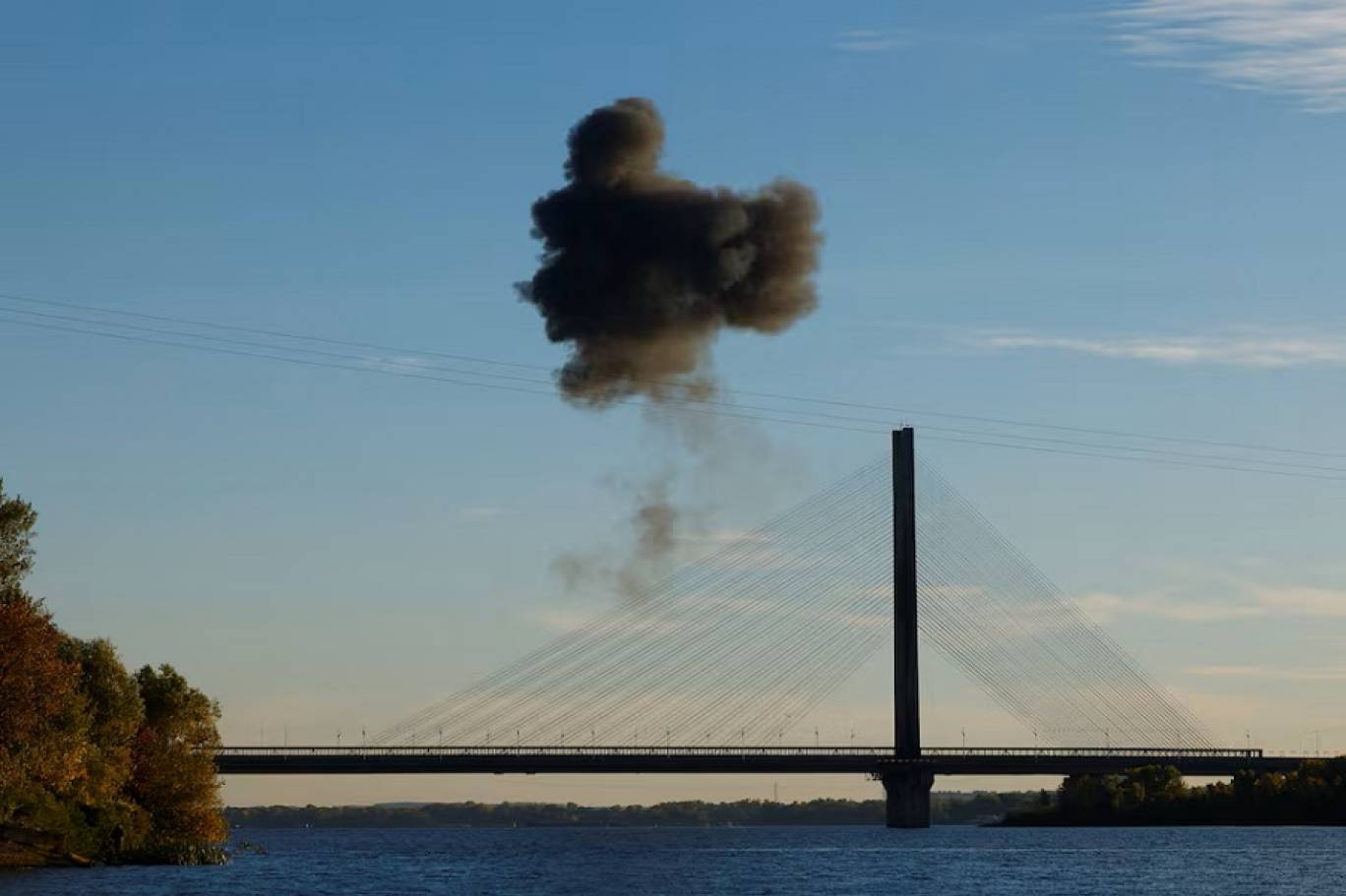
Kyiv’s transportation network has become an increasingly important pressure point in the Russia-Ukraine war, after a Russian strike damaged the capital’s Northern Bridge and forced authorities to suspend traffic across the crossing.
The latest attack left at least six people dead across Ukraine and added another layer of disruption to a city where road infrastructure is essential not only for daily commuting, but also for public transportation, commercial deliveries and the movement of emergency services. Kyiv Mayor Vitalii Klitschko said the strike damaged the road surface and trolleybus cables, while two people were wounded, with one briefly hospitalized.
The Northern Bridge incident followed two days of attacks that had already forced the full or partial closure of three of Kyiv’s six road bridges over the Dnipro River. The concentration of damage on crossings linking different parts of the capital highlights the strategic value of transport infrastructure during a prolonged conflict.
For businesses, the effect extends beyond traffic congestion. Bridge closures can lengthen delivery routes, increase transportation costs, disrupt employee mobility and complicate access to commercial districts. Public transit interruptions can also shift pressure onto alternative roads and services, creating secondary bottlenecks across the urban economy.
Russia’s Defense Ministry confirmed responsibility for the latest strike and said the bridge was used for troop movements and military cargo logistics. That explanation places the attack within a broader military strategy aimed at affecting the infrastructure that supports Ukraine’s operational capacity. At the same time, the immediate consequences are visible in civilian transportation and the functioning of the capital.
The wider aerial campaign is also expanding the range of economic assets exposed to military disruption. Previous strikes have hit residential buildings, supermarket warehouses, gas stations and data centers, while Ukraine has continued attacks against Russian oil facilities and businesses. The result is a conflict in which infrastructure, energy systems, logistics networks and commercial facilities increasingly overlap with military calculations.
The technology of the air campaign is also evolving. Ukraine reported that Russia launched Banderol cruise missiles toward the Odesa region. These low-cost, jet-powered loitering munitions are designed to remain over an area while searching for targets before striking, creating additional challenges for air-defense systems.
The consequences are extending beyond Ukraine’s borders. Moldovan President Maia Sandu said five Russian air-attack weapons, including Banderol missiles and drones, crossed Moldovan airspace and exploded on Moldovan territory. Moldova’s concerns underline how repeated airspace violations can create broader risks for neighboring economies, transportation systems and regional security planning.
The human and economic costs were recorded across several Ukrainian regions. Russian attacks on Kharkiv killed five people and wounded more than 40, while strikes in nearby Izyum injured three and damaged an industrial warehouse and homes. In the Odesa region, a civilian cargo ship flying the Liberian flag was struck, killing one sailor and injuring three others. Ukrainian drone attacks also caused civilian casualties in Russian territory and in Russian-occupied areas of eastern Ukraine.
With the front line stretching roughly 1,250 kilometers and remaining largely deadlocked in recent months, infrastructure disruption is likely to remain an important element of the conflict. For Kyiv, maintaining multiple transport routes is becoming part of broader resilience planning, while companies operating in affected areas face greater pressure to diversify logistics, strengthen contingency systems and prepare for recurring interruptions.
The bridge damage therefore represents more than a temporary transportation problem. It demonstrates how modern warfare can affect the operating environment of an entire city by targeting the physical networks that connect workers, consumers, businesses and public institutions. As long as the conflict continues without concrete signs of a settlement, infrastructure resilience is likely to remain closely tied to Ukraine’s economic continuity and urban security.
News You Should See
2026 Nobel Medicine Prize Honors Scientists Behind Optogenetics Breakthrough
Oil Prices Edge Lower as Stronger Middle East Exports and G7 Reserves Ease Supply Concerns
Trump Offers U.S. Assistance to Russia After Death at Siberian Plague Research Institute
Trump Takes Economic Message to Nebraska as GOP Faces Rising Cost-of-Living Pressure
U.S. Appeals Court Weighs Trump Administration’s $2.6 Billion Harvard Funding Fight
U.S. Midterm Elections Begin With Resilient Jobs Market and Persistent Cost Pressures
Latest News
The 2026 Nobel Prize in Physiology or Medicine honors Karl Deisseroth, Peter Hegemann and Georg Nagel for pioneering research behind optogenetics and its impact on neuroscience.
Oil prices edged lower as stronger Middle Eastern exports and a planned G7 release of 100 million barrels eased immediate supply concerns, while Gulf security risks and the Strait of Hormuz kept markets alert.
President Donald Trump said the United States would help Russia if needed after a laboratory worker died at a Siberian plague research institute, as Russian authorities imposed precautionary quarantine measures.
Trump’s Nebraska campaign stop highlights rising fuel and grocery costs, beef prices and growing economic pressure on Republicans ahead of the November midterm elections.
A U.S. appeals court is reviewing the Trump administration’s effort to cut Harvard’s federal research funding, with more than $2.6 billion at stake.
The U.S. enters the 2026 midterm elections with unemployment at 4.2%, while higher living and energy costs create economic pressure for households and businesses.
US services growth eased in September as input prices climbed to their highest level since July 2022, with fuel costs, supply-chain disruptions and strong demand increasing pressure on businesses.
Rising Treasury yields are increasing U.S. borrowing costs as Washington manages record debt, persistent inflation and strong economic demand, narrowing its policy options.
A EGP 16 million corporate partnership will establish and equip a bone marrow transplant unit at Cairo’s Coptic Hospital, supporting access to specialized treatment for patients.