Karl Lagerfeld’s Former French Mansion Hits the Market at a Surprisingly Affordable Price
Once home to Karl Lagerfeld and Princess Caroline of Monaco, this historic 18th-century estate blends royal heritage, fashion history, and timeless French elegance.

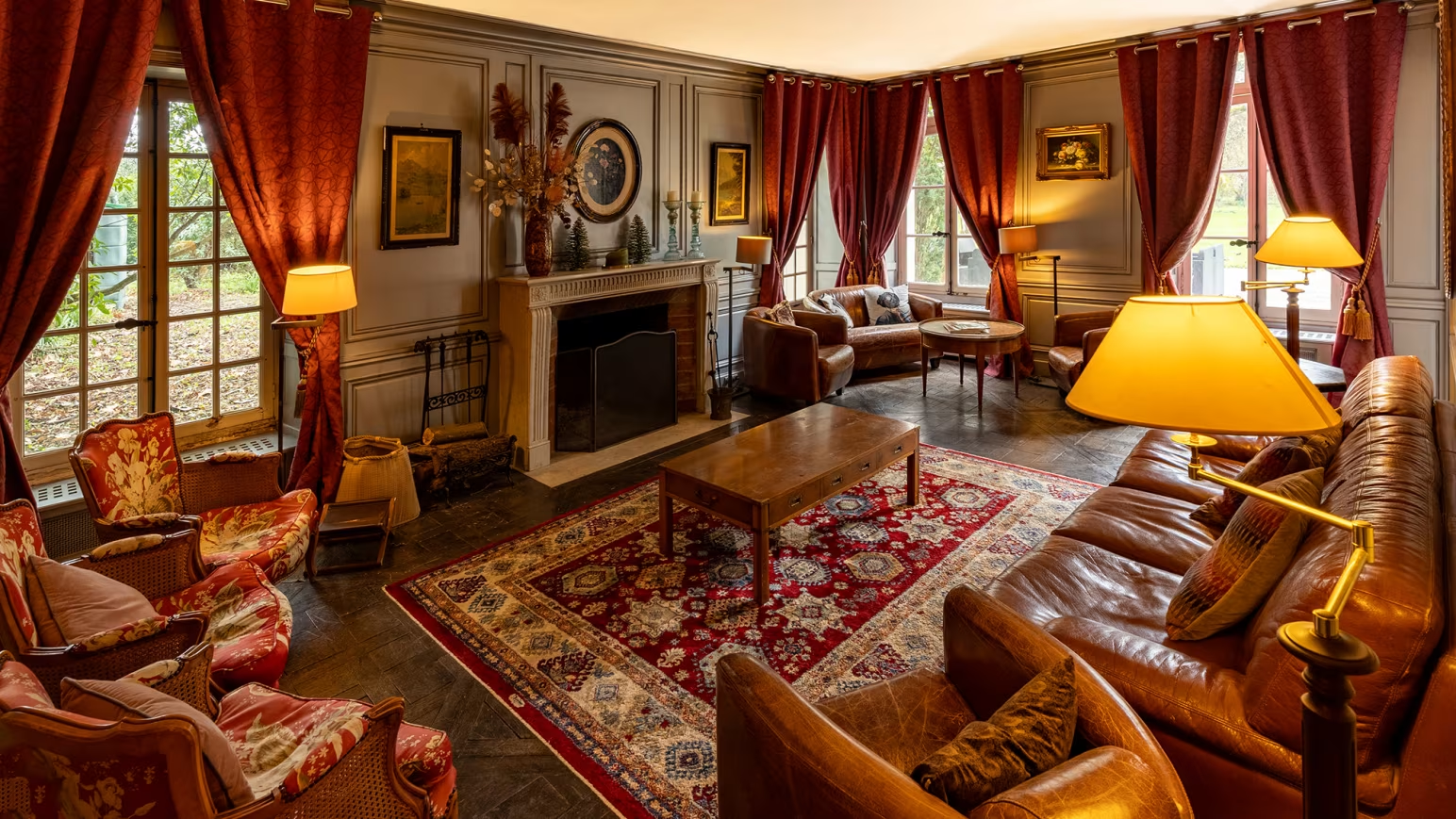
A rare piece of European fashion and royal history has quietly entered the property market near Paris, attracting attention far beyond the world of real estate.
The former residence of legendary fashion designer Karl Lagerfeld, later occupied by Princess Caroline of Monaco, is now listed for approximately 2.7 million euros, or around 3.1 million dollars. For a property tied to such high-profile names and rich cultural history, the price has surprised many observers.
Karl Lagerfeld, the iconic creative force behind Chanel, once famously said that “the most beautiful house is always the next one,” reflecting his lifelong passion for architecture, interiors, and collecting exceptional homes. True to that philosophy, he owned several luxurious properties across Europe, but this elegant estate, located less than an hour from Paris, remains one of the most historically intriguing.
The mansion, known as Manoir du Mée, is an 18th-century residence originally built in 1749 for a prominent local family. According to the listing by PYLA Paris, the estate reflects classic French architectural tradition and has been carefully preserved over centuries.
Lagerfeld owned the property for more than a decade until 1998. During his ownership, the estate was frequently used as a creative backdrop for Chanel photoshoots, including campaigns featuring top models such as Inès de la Fressange. The house became not just a private retreat but also a space of artistic production tied to one of the world’s most influential fashion houses.
Later, Princess Caroline of Monaco and her family lived in the mansion for around six years. During that period, her children attended local schools, and traces of their presence remain in the home today. According to the real estate agency, even small personal details, including drawings made by her daughter Charlotte on the walls, have been preserved as part of the home’s living history.
The current owner purchased the estate from Monaco’s royal family in 2014. Today, the property spans approximately 500 square meters (about 5,380 square feet), surrounded by 1.25 acres of landscaped parkland.
Inside, the mansion retains many of its original 18th-century features. High ceilings, ornate moldings, Versailles-style parquet flooring, carved fireplaces, and wood paneling give the property a strong sense of authenticity. The interior layout reflects a refined lifestyle, featuring reception rooms, a library lounge, dressing areas, a gaming room, and even a private bar space.
The estate also includes a separate guest house measuring nearly 186 square meters (about 2,000 square feet), making it suitable for hosting or multi-family living. According to the listing agent, the property feels like a “private club,” blending historic elegance with warm, livable character.
Beyond its architecture, the mansion carries a strong cultural legacy. Lagerfeld’s influence is still felt in its association with Chanel campaigns, while Princess Caroline’s residency adds a layer of European aristocratic history rarely found in modern real estate listings.
Despite its prestigious background, the property is priced significantly lower than many comparable historic estates near Paris, raising interest among collectors, investors, and fashion enthusiasts alike.
Lagerfeld’s broader real estate portfolio has consistently reflected his eclectic taste and movement between styles and cities. Another of his former residences in Paris, overlooking the Seine and the Louvre, sold in recent years for more than double its asking price, further emphasizing the enduring demand for properties linked to his legacy.
Today, Manoir du Mée stands as more than just a home. It is a preserved fragment of fashion history, royal life, and French architectural heritage now waiting for its next chapter.
News You Should See
Helicopters Over Marseille as Police Pursue Suspects After Jewelry Store Is Targeted
France Protests: TN News Correspondent Documents Police Lines and Crowds in the Streets
Police Presence and Road Barricades Documented in French Protest Footage
France on Edge: Violence, Racism and Political Polarization Raise Fears of a Deeper Divide
DOJ Orders California Counties to Verify Suspected Noncitizen Ballots Ahead of Midterms
Never Stop Making Du’a: Allah’s Door Is Never Closed
Latest News
Police pursued individuals reportedly connected to a jewelry store incident in Marseille’s Cinq-Avenues neighborhood as helicopters flew overhead. Authorities have not confirmed arrests, injuries, theft or property damage.
TN News correspondent Khaled Shokair documents street protests in France, showing police lines, demonstrators, road obstructions and visible haze as key details remain unconfirmed.
Footage from France shows crowds, police officers, road barricades, debris and smoke. The gathering's location, date, cause, and any injuries or arrests remain unconfirmed.
A deadly shooting near Paris, protest-related violence and concerns about France’s 2027 presidential election are intensifying debates over racism, public safety, political polarization and social cohesion.
The U.S. Justice Department has ordered at least 18 California counties to review voter records and set aside ballots linked to suspected noncitizens within 48 hours, escalating a dispute with state officials ahead of the November 3 midterm elections.
Mohamed Amen’s Friday khutbah explores persistent du’a, patience during uncertainty, emotional resilience, and the importance of trusting Allah while pursuing practical solutions.
Procter & Gamble expects commodity, energy and transportation costs to reduce fiscal 2027 profit by $1.4 billion. Quarterly sales rose 4% to $23.28 billion, beating analyst expectations.
A ruptured chemical tank in Toledo, Ohio, prompted evacuations, school closures and an industrial shutdown. Authorities have reduced the restricted zone as the release slows and cleanup preparations continue.
A federal judge has ordered Donald Trump to give a deposition by December 11, 2026, in his $10 billion lawsuit against the BBC, with possible sanctions for noncompliance as the discovery deadline approaches.