Joby Aviation Expands Defense Strategy With $500 Million Resonant Sciences Acquisition
The deal gives Joby a revenue-generating defense business while allowing its core team to concentrate on certifying, manufacturing, and launching electric air taxis.

Joby Aviation is taking a more decisive position in the defense market with its agreement to acquire Resonant Sciences for $500 million in cash and stock. The transaction represents a strategic expansion for a company whose public identity has largely been built around electric air taxis, while creating a separate defense operation designed to generate revenue as Joby continues its longer-term commercial aviation program.
The acquisition will bring Ohio-based Resonant Sciences into Joby as a dedicated defense business. Resonant specializes in radio-frequency and sensing systems, and its co-founder and CEO, J. Micah North, is expected to lead the new division. The unit will also incorporate Joby's existing defense initiatives, including work on turbine-electric and hydrogen-electric aircraft and autonomous aviation technologies.
The structure of the deal is strategically significant because it separates two different stages of Joby's corporate development. The company's core business remains focused on developing an electric vertical takeoff and landing aircraft for urban transportation. That program requires regulatory certification, manufacturing scale and market deployment, all of which are expensive and time-consuming.
By creating a dedicated defense division, Joby can pursue another market without requiring the entire company to operate around the same development timeline.
This is more than a diversification exercise. It is an attempt to build a portfolio in which different businesses contribute value at different points in the company's growth cycle.
The electric air-taxi operation represents Joby's long-term bet on a new category of transportation. The defense business, by contrast, can address customers with immediate demand for advanced aerospace technologies. That difference could become particularly important as Joby continues to spend heavily before its passenger aviation business reaches meaningful commercial scale.
Resonant Sciences provides Joby with an established source of revenue rather than simply another technology project. The company has reported approximately $100 million in trailing 12-month revenue and has access to classified U.S. government programs. Its radio-frequency and sensing capabilities also complement Joby's existing expertise in electric vertical takeoff and landing aircraft.
This combination creates a potentially broader technology platform.
Joby's expertise centers on electric propulsion, vertical flight and autonomous aircraft development. Resonant brings capabilities in sensing and radio-frequency systems. Together, the technologies could support applications that extend well beyond passenger transportation.
The strategic value lies in the possibility of using the same engineering base across multiple markets.
That is particularly relevant to an aerospace company operating in an industry where development costs are high and commercialization can take years. If technologies developed for electric aviation can also generate value through defense contracts, the economic return on those investments can potentially improve.
Joby's decision also builds on an existing defense strategy.
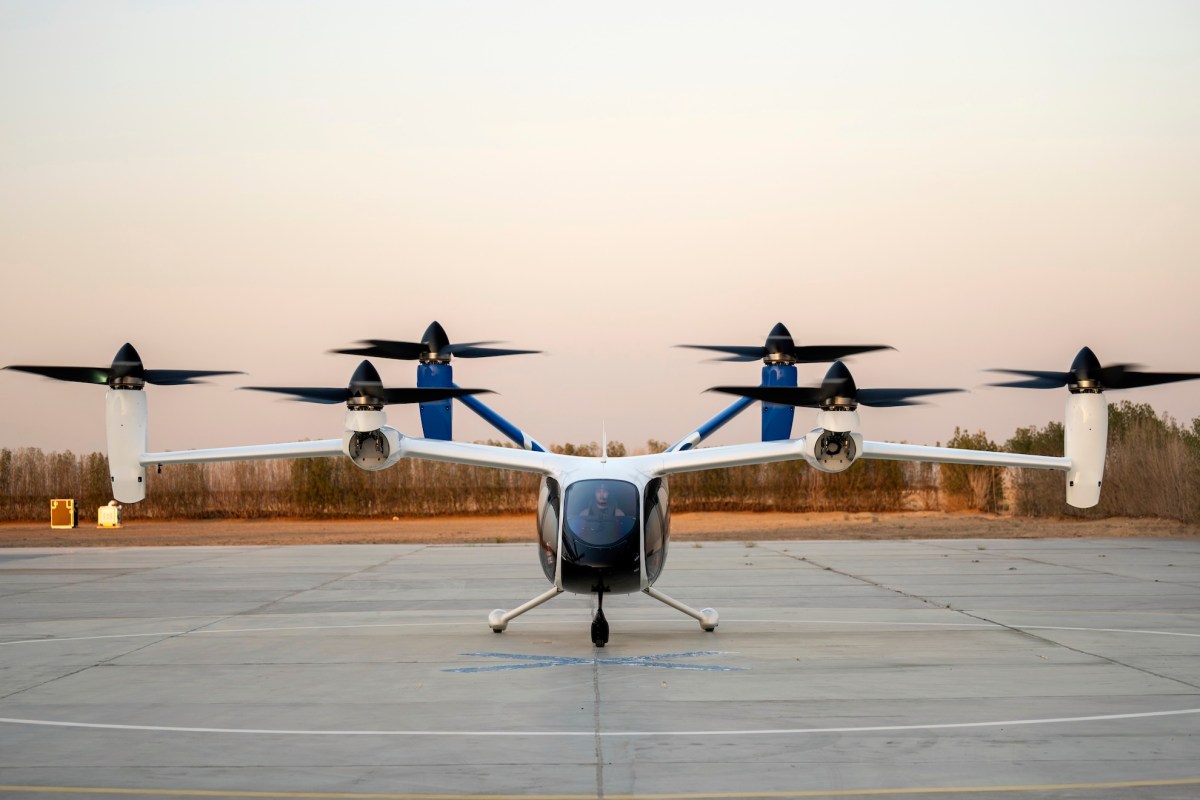
The company has already been working with L3Harris Technologies on opportunities to develop a new class of autonomous hybrid vertical-takeoff-and-landing aircraft for defense applications. The concept is based on Joby's S4 platform, which was originally developed around an all-electric powertrain.
Joby has also demonstrated the potential for alternative power systems. Under a government contract in 2024, the company demonstrated a hydrogen-electric hybrid aircraft that flew 521 miles, more than twice the range of its battery-electric prototype.
These developments suggest that defense is not an entirely new direction for Joby. The acquisition instead gives an existing strategy a dedicated organizational structure and a commercial foundation.
That organizational separation could be one of the most important aspects of the transaction.
Commercial aviation and defense operate according to different customer requirements, procurement cycles and regulatory frameworks. A dedicated defense business can allow Joby to pursue government programs without placing every defense initiative directly inside the organization responsible for commercial air-taxi certification and production.
For the core business, this could mean greater focus.
Joby has explicitly positioned the new structure as a way for the rest of the company to concentrate on certifying, manufacturing and launching its electric air taxi.
That focus matters because the commercial eVTOL market remains a capital-intensive proposition. Developing an aircraft is only the beginning. Companies must navigate certification, production, infrastructure, maintenance, customer acquisition and operational reliability before a new aircraft category can reach sustainable scale.
Joby's defense expansion therefore provides a potential financial counterweight to that long development cycle.
The company has already demonstrated that it is willing to use acquisitions as a way to bring revenue and infrastructure into the business.
In 2025, Joby acquired Blade Air Mobility's helicopter rideshare business for approximately $125 million. The transaction gave Joby immediate access to 12 terminals in major markets, including New York City and several important airport and Manhattan locations.
The Blade transaction also had a measurable effect on revenue. Joby reported $38.6 million in revenue in the second quarter, with $36.2 million attributed to the acquired Blade business.
The pattern is therefore becoming clearer.
Joby is not relying exclusively on organic development of its futuristic aircraft business. It is assembling complementary assets that can generate revenue, establish market access and provide technological capabilities while the core eVTOL program continues toward commercial maturity.
The Resonant acquisition takes that strategy into a much larger and more strategically significant market.
Defense customers can create demand for autonomous aircraft, sensing systems, communications technologies and alternative propulsion architectures. Many of these areas overlap with the engineering challenges that Joby is already addressing through its commercial aviation program.
This overlap creates the possibility of technological cross-pollination.
Advances in autonomy could support both commercial passenger operations and defense missions. Improvements in propulsion can have applications in different aircraft configurations. Sensor technologies can strengthen autonomous systems, while defense requirements can expose engineers to operating conditions that commercial aviation may not encounter.
The economic opportunity, however, depends on execution.
An acquisition worth $500 million creates a substantial expectation that Resonant will contribute more than existing revenue. Joby will need to integrate the business, retain specialized personnel, maintain government relationships and convert technological capabilities into additional programs and contracts.
There is also a difference between acquiring a profitable or revenue-generating company and building a new growth engine.
Resonant's existing revenue gives Joby an immediate commercial foundation, but the larger strategic opportunity depends on whether the combined organization can create new products and win additional defense programs.
That makes integration a critical factor.
Joby's challenge will be to preserve Resonant's specialized capabilities while connecting them with the company's broader aerospace platform. Over-integration could weaken the independence and speed of a specialized defense business, while insufficient integration could prevent the two companies from realizing technological synergies.
The leadership structure is therefore important.
With Resonant's co-founder and CEO leading the defense division, Joby can retain specialized leadership while bringing its existing defense projects under the same organization.
This approach could allow Joby to maintain a clear distinction between its commercial and defense businesses while still benefiting from shared technology.
The acquisition also has implications for Joby's corporate identity.
The company has become closely associated with the vision of quiet electric aircraft transporting passengers through urban skies. Its defense expansion introduces a broader identity centered on advanced aerospace systems, autonomous flight, sensing and government applications.
That could make the company less dependent on a single narrative.
Investors will ultimately judge Joby not only by whether it can certify an air taxi, but also by whether it can turn its technology into a diversified aerospace business capable of generating revenue across several markets.
This is particularly important because Joby became a publicly traded company in 2021 through a merger with a blank-check company. The business has therefore operated under the pressure common to frontier-technology companies: significant investment is required years before the central commercial product can generate large-scale revenue.
Acquisitions provide one way to reduce that mismatch between investment and revenue.
But diversification also introduces risk.
Every new business requires management attention, capital and operational resources. Joby must ensure that the defense expansion strengthens rather than distracts from the commercial aviation program that remains its primary long-term opportunity.
The new structure is designed to address that risk by giving defense its own organizational home.
If successful, the model could provide Joby with a more balanced business portfolio. The defense division could generate nearer-term revenue while the commercial team continues working toward the much larger opportunity represented by electric urban air mobility.
That could also change the competitive landscape for Joby.
Instead of being evaluated solely against other eVTOL developers, the company could increasingly compete as a broader aerospace technology business.
That distinction matters because the potential markets for autonomous flight and advanced aviation extend beyond passenger transportation.
Defense, logistics, government services and specialized aviation could all become potential applications for technologies initially developed for electric urban mobility.
Joby's strategy is effectively built around this wider addressable market.
The company is betting that its most valuable asset will not necessarily be a single passenger aircraft, but the underlying technology platform that includes propulsion, autonomy, vertical flight and advanced sensing.
Resonant Sciences strengthens that platform by adding capabilities that are directly relevant to government and defense customers.
The transaction also illustrates a broader trend in aerospace: the increasing convergence between commercial and defense technology.
The same technological advances can serve different markets, while companies increasingly seek ways to monetize expensive research and development across multiple applications.
For Joby, this approach can potentially improve capital efficiency.
Instead of waiting for the commercial air-taxi market to mature before generating substantial returns from its technology investments, the company can attempt to monetize related capabilities through defense programs in parallel.
But the strategy must remain disciplined.
Joby's electric air-taxi business still requires successful certification, manufacturing and commercial deployment. Defense revenue can provide diversification, but it cannot eliminate the execution requirements of the company's core program.
The strongest outcome would therefore be a model in which both businesses reinforce each other.
Commercial aviation can drive innovation in propulsion, autonomy and manufacturing, while defense can create additional demand and applications for those capabilities.
If Joby can establish that relationship, the $500 million acquisition could become a significant step in the company's evolution from an eVTOL developer into a diversified aerospace technology company.
The immediate test will be whether Resonant's existing revenue and expertise can be transformed into sustainable growth under Joby's ownership.
The longer-term question is even larger: whether Joby can use its combined commercial and defense capabilities to build an aerospace platform with multiple revenue engines rather than depending on the eventual success of one new transportation category.
For now, the acquisition signals a clear strategic direction. Joby is attempting to reduce its dependence on the uncertain timeline of urban air-taxi adoption while expanding the commercial value of technologies it has already developed.
If executed effectively, the defense business could provide revenue, customer access and technological opportunities while allowing the company's main team to remain focused on bringing electric air taxis to market.
That makes the Resonant transaction more than a conventional acquisition. It is a bet on diversification, dual-use aerospace technology and a broader definition of what an electric aviation company can become.
News You Should See
2026 Nobel Medicine Prize Honors Scientists Behind Optogenetics Breakthrough
Oil Prices Edge Lower as Stronger Middle East Exports and G7 Reserves Ease Supply Concerns
Trump Offers U.S. Assistance to Russia After Death at Siberian Plague Research Institute
Trump Takes Economic Message to Nebraska as GOP Faces Rising Cost-of-Living Pressure
U.S. Appeals Court Weighs Trump Administration’s $2.6 Billion Harvard Funding Fight
U.S. Midterm Elections Begin With Resilient Jobs Market and Persistent Cost Pressures
Latest News
The 2026 Nobel Prize in Physiology or Medicine honors Karl Deisseroth, Peter Hegemann and Georg Nagel for pioneering research behind optogenetics and its impact on neuroscience.
Oil prices edged lower as stronger Middle Eastern exports and a planned G7 release of 100 million barrels eased immediate supply concerns, while Gulf security risks and the Strait of Hormuz kept markets alert.
President Donald Trump said the United States would help Russia if needed after a laboratory worker died at a Siberian plague research institute, as Russian authorities imposed precautionary quarantine measures.
Trump’s Nebraska campaign stop highlights rising fuel and grocery costs, beef prices and growing economic pressure on Republicans ahead of the November midterm elections.
A U.S. appeals court is reviewing the Trump administration’s effort to cut Harvard’s federal research funding, with more than $2.6 billion at stake.
The U.S. enters the 2026 midterm elections with unemployment at 4.2%, while higher living and energy costs create economic pressure for households and businesses.
US services growth eased in September as input prices climbed to their highest level since July 2022, with fuel costs, supply-chain disruptions and strong demand increasing pressure on businesses.
Rising Treasury yields are increasing U.S. borrowing costs as Washington manages record debt, persistent inflation and strong economic demand, narrowing its policy options.
A EGP 16 million corporate partnership will establish and equip a bone marrow transplant unit at Cairo’s Coptic Hospital, supporting access to specialized treatment for patients.