JFK’s Transformation Raises New Challenges for Airport Transportation in 2026
Construction, terminal changes and tighter pickup rules are reshaping how passengers, drivers and private car services navigate JFK

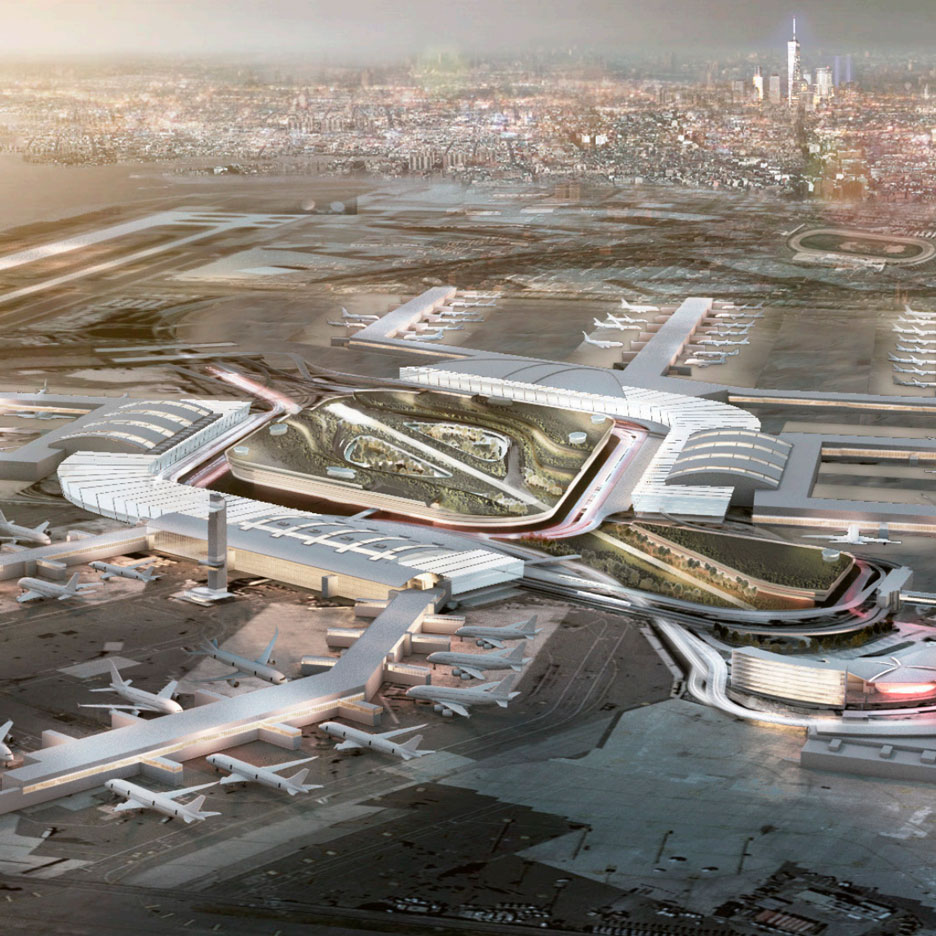
John F. Kennedy International Airport is entering a critical phase of its long-term transformation, and the impact is extending beyond new buildings and upgraded facilities. For passengers and the companies responsible for moving them, the redevelopment is creating a more complicated operating environment in which timing, communication and accurate terminal information have become increasingly important.
JFK currently operates five active passenger terminals: Terminals 1, 4, 5, 7 and 8, serving more than 70 airlines. That concentration of international and domestic carriers makes terminal accuracy a commercial issue as much as a travel detail. A passenger arriving at the wrong terminal can create additional travel time, missed connections and unnecessary pressure on drivers operating within an already congested airport environment.
Terminal 1 is heavily oriented toward international operations and includes carriers such as Air France, Korean Air, Lufthansa, SWISS, Turkish Airlines, EgyptAir and Royal Air Maroc. Terminal 4 is one of the airport’s largest international facilities, serving airlines including Delta Air Lines, Avianca, Emirates, Virgin Atlantic, LATAM, Singapore Airlines and Etihad Airways.
Terminal 5 is primarily associated with JetBlue, Cape Air and Sun Country Airlines, although some late-night JetBlue international arrivals may operate through Terminal 4. Terminal 7 hosts airlines including Aer Lingus, Air Canada, ANA, Ethiopian Airlines, Frontier Airlines, Icelandair and Norse Atlantic Airways. Terminal 8 is a major hub for American Airlines and several international and alliance partners, including British Airways, Alaska Airlines, Cathay Pacific, Iberia, Japan Airlines and Qatar Airways.
The wider strategic issue is that terminal assignments are not necessarily static. Airlines can modify operating arrangements, while airport construction can influence how passengers and vehicles reach different facilities. For transportation providers, this makes real-time flight and terminal verification an essential part of service delivery rather than an optional precaution.
Road congestion is another major factor. Construction activity around JFK can increase travel times for taxis, private vehicles, professional car services and app-based transportation. The effect is particularly significant for airport transfers because a small delay on the final approach can disrupt an entire schedule involving drivers, passengers and aircraft departure times.
For travelers, the traditional assumption that arriving at the airport at the scheduled flight time is sufficient is particularly risky. The actual journey includes baggage procedures, security screening, walking distances and, for some international passengers, additional document checks. A transportation plan that does not account for these stages can turn a manageable road delay into a missed flight.
The operational model for professional car services is therefore shifting toward advance coordination. Providing the complete flight number, confirming the operating terminal, monitoring airport conditions and keeping communication channels open can reduce the uncertainty created by construction and changing access patterns.
JFK’s curbside rules add another layer to the transportation challenge. Vehicles cannot park or wait directly in front of the passenger terminals. The terminal curb is intended for active passenger pickup and drop-off, meaning drivers should not leave their vehicles unattended. Vehicles that violate the rules can be towed.
This changes the economics of airport pickups for professional drivers. Instead of occupying terminal space while waiting for a passenger, drivers need to use designated waiting facilities and approach the terminal only when the passenger is ready. The system is designed to keep the curb moving, but it also requires better coordination between passenger and chauffeur.
JFK provides free waiting options that can support this model. The Lefferts Boulevard Wait Lot is particularly useful for passengers using Terminals 1 and 4, with access to the terminals through the free AirTrain. JFK estimates the AirTrain journey at approximately eight minutes. Drivers using this area are expected to remain with their vehicles.
For pickups involving Terminals 5, 7 and 8, JFK Cell Phone Lot East is positioned less than five minutes from the terminals and provides a practical waiting point. The operational principle is straightforward: the driver should wait until the passenger has collected luggage and is ready at the designated pickup location before moving toward the terminal.
The AirTrain consequently becomes more than a passenger transit service. It functions as part of the airport’s broader transportation infrastructure, connecting terminals with parking areas, public transportation, rental-car services, hotel shuttle zones and designated waiting locations. During periods of road congestion, it can provide an alternative way to move between airport facilities without depending entirely on vehicle access.
From a business perspective, these changes are accelerating the importance of technology in airport transportation. The value of a professional chauffeur is no longer limited to providing a vehicle and reaching the airport. Reliable service increasingly depends on flight monitoring, location accuracy, passenger communication, terminal awareness and the ability to respond to changing airport conditions.
This creates a competitive distinction between transportation providers. Companies that can integrate real-time information into their operations are better positioned to reduce idle time, avoid unnecessary terminal approaches and deliver a more predictable customer experience. In a highly competitive airport transportation market, operational reliability can become a stronger differentiator than vehicle availability alone.
Passenger safety is another important component of the changing airport environment. Travelers are advised not to accept unsolicited transportation offers from individuals approaching them inside or outside the terminal. Prearranged professional services, authorized taxis, designated ride-application pickup areas and official airport transportation providers offer a more controlled alternative. Travelers who need assistance can also seek help at Port Authority Information Centers located in arrivals areas.
The situation also highlights the growing role of digital marketplaces in connecting passengers with independent transportation businesses. Platforms such as LimoAllOver are developing models intended to connect travelers with professional limousine companies and licensed chauffeurs through digital systems. Its driver application is available through the Apple App Store, reflecting the wider movement toward app-based coordination within the ground transportation industry.
For independent limousine companies, digital platforms can potentially improve visibility and access to customers while reducing some of the traditional friction involved in arranging airport transfers. For passengers, the benefit lies in having a more structured way to identify and coordinate professional transportation.
However, technology cannot eliminate the physical constraints created by airport construction. Terminal access, road conditions, pickup procedures and airline assignments can change. The most effective transportation strategy therefore combines digital coordination with continuous verification of official airport information.
JFK’s redevelopment ultimately represents more than an infrastructure project. It is changing the operating environment for airlines, passengers, airports and the businesses that connect travelers with the city. As construction continues, transportation providers will increasingly compete on precision, communication and operational flexibility.
For travelers in 2026, preparation is becoming an essential part of the airport journey. Confirming the airline, flight number, terminal, schedule, passenger contact details and luggage requirements before leaving for JFK can significantly reduce avoidable complications.
For transportation companies, the broader lesson is equally clear: airport mobility is becoming an information-driven service. The companies most capable of combining professional drivers, accurate data, digital communication and flexible operations are likely to be better positioned as JFK moves toward its next stage of development.
News You Should See
2026 Nobel Medicine Prize Honors Scientists Behind Optogenetics Breakthrough
Oil Prices Edge Lower as Stronger Middle East Exports and G7 Reserves Ease Supply Concerns
Trump Offers U.S. Assistance to Russia After Death at Siberian Plague Research Institute
Trump Takes Economic Message to Nebraska as GOP Faces Rising Cost-of-Living Pressure
U.S. Appeals Court Weighs Trump Administration’s $2.6 Billion Harvard Funding Fight
U.S. Midterm Elections Begin With Resilient Jobs Market and Persistent Cost Pressures
Latest News
The 2026 Nobel Prize in Physiology or Medicine honors Karl Deisseroth, Peter Hegemann and Georg Nagel for pioneering research behind optogenetics and its impact on neuroscience.
Oil prices edged lower as stronger Middle Eastern exports and a planned G7 release of 100 million barrels eased immediate supply concerns, while Gulf security risks and the Strait of Hormuz kept markets alert.
President Donald Trump said the United States would help Russia if needed after a laboratory worker died at a Siberian plague research institute, as Russian authorities imposed precautionary quarantine measures.
Trump’s Nebraska campaign stop highlights rising fuel and grocery costs, beef prices and growing economic pressure on Republicans ahead of the November midterm elections.
A U.S. appeals court is reviewing the Trump administration’s effort to cut Harvard’s federal research funding, with more than $2.6 billion at stake.
The U.S. enters the 2026 midterm elections with unemployment at 4.2%, while higher living and energy costs create economic pressure for households and businesses.
US services growth eased in September as input prices climbed to their highest level since July 2022, with fuel costs, supply-chain disruptions and strong demand increasing pressure on businesses.
Rising Treasury yields are increasing U.S. borrowing costs as Washington manages record debt, persistent inflation and strong economic demand, narrowing its policy options.
A EGP 16 million corporate partnership will establish and equip a bone marrow transplant unit at Cairo’s Coptic Hospital, supporting access to specialized treatment for patients.