Japan’s Golden Route: A 14-Day Journey Through Tokyo, Kanazawa, Kyoto and Mount Fuji
A carefully designed two-week itinerary combines Japan’s modern capital with historic cities, traditional crafts, tea culture, regional cuisine and iconic natural landscapes

Japan’s Golden Route continues to serve as one of the country’s strongest introductions for first-time visitors because it combines several distinct sides of Japanese life within a relatively efficient two-week journey.
The itinerary examined here runs for 14 days and 13 nights, beginning in Tokyo and moving through Kanazawa and Kyoto before incorporating Uji, Nara, Osaka and the Mount Fuji area. Rather than treating Japan as a collection of disconnected attractions, the journey builds a progression from contemporary urban life to traditional craftsmanship, religious heritage, culinary culture and natural landscapes.
The appeal of the route is partly logistical.
Japan’s highly developed rail and transportation infrastructure allows travelers to cover several major destinations without spending disproportionate amounts of time on internal travel. That makes a two-week schedule capable of delivering considerable variety while still leaving room for guided experiences, workshops and independent exploration.
Tokyo provides the opening chapter.
The capital represents Japan at its most dynamic, where technology, fashion, commerce and densely populated urban districts coexist with temples, historic neighborhoods and long-established food traditions.
The itinerary dedicates four days to Tokyo, allowing the city to be approached through different perspectives rather than compressed into a single sightseeing session.
One day focuses on the contrast between Tokyo’s old and new identities, while another explores the globally recognizable neighborhoods of Harajuku and Shibuya.
The program then moves toward less obvious sides of the capital, including Yanaka, before turning to Ginza’s highly developed commercial environment.
This structure is important because Tokyo’s scale can easily overwhelm first-time visitors.
A carefully distributed schedule gives travelers an opportunity to understand how different districts operate instead of treating the entire city as one homogeneous destination.
After Tokyo, the journey changes character in Kanazawa.
The city offers a strong counterpoint to the capital through its traditional architecture, historic districts, craftsmanship and gardens.
Kenrokuen Garden is one of the major highlights, but the broader appeal comes from Kanazawa’s ability to connect tourism with living cultural traditions.
The itinerary dedicates two days to the city, including experiences focused on traditional gold craftsmanship and the culture associated with the samurai era.
This is more than a sightseeing choice.
Kanazawa demonstrates how regional cities can strengthen their tourism proposition by transforming cultural heritage into interactive experiences. Visitors are not simply looking at historical objects; they are given opportunities to understand the techniques, skills and traditions behind them.
That approach also helps diversify Japan’s tourism economy beyond its most internationally famous cities.
The next major transition takes travelers to Kyoto.
If Tokyo represents Japan’s contemporary identity and Kanazawa highlights regional craftsmanship, Kyoto places traditional Japanese culture at the center of the journey.
The itinerary emphasizes shrines, temples, traditional neighborhoods and bamboo landscapes, while also introducing visitors to another distinctive Japanese craft through a knife-making experience.
Kyoto’s role in the route is particularly significant because the city has become one of Japan’s most internationally recognizable destinations.
Its popularity creates a tension between cultural preservation and mass tourism, making the timing and pace of a visit increasingly important.
Rather than trying to complete a checklist of landmarks, travelers can benefit from dedicating several days to different cultural experiences and exploring the city at a slower pace.
One of the itinerary’s strongest additions is Uji.
Located near Kyoto, Uji is closely associated with Japanese tea culture and provides an opportunity to experience matcha in the region where it is produced.
A traditional tea ceremony turns an ordinary tasting into a cultural experience, connecting food and beverage with history, ritual and craftsmanship.
This reflects a broader transformation in international tourism.
Travelers increasingly seek experiences that explain why a product or tradition matters rather than simply consuming it.
In Uji, tea becomes a gateway to understanding Japanese aesthetics, hospitality and regional agriculture.
The journey then expands beyond Kyoto to Nara.
Nara provides another perspective on Japan’s historical heritage while offering an experience that is particularly recognizable to international travelers: its free-roaming deer.
The destination also adds a different pace to the itinerary.
Instead of another dense metropolitan environment, Nara allows visitors to combine historic sites, nature and outdoor walking within a compact setting.
The route subsequently reaches Osaka, where the emphasis shifts toward urban energy and food.
Osaka is widely associated with informal dining and street-food culture, providing a useful contrast to Kyoto’s temples and traditional neighborhoods.
Including Osaka also demonstrates how Japan’s major cities can offer very different tourism identities despite their geographic proximity.
The itinerary does not remain entirely within the urban corridor.
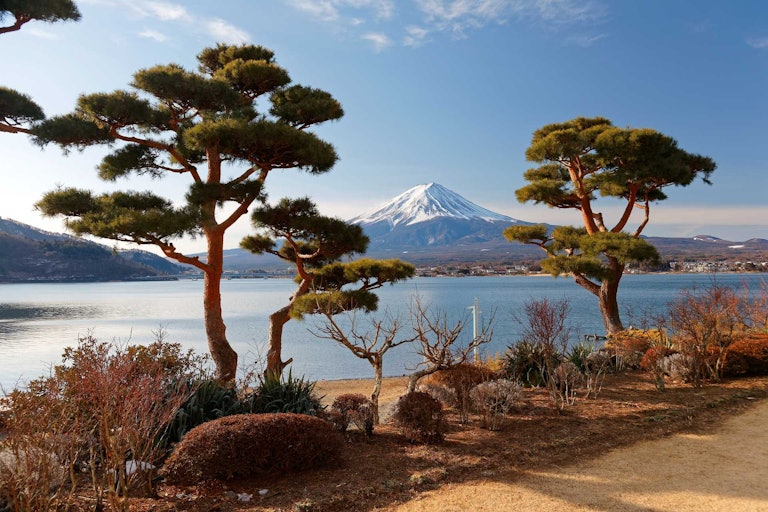
Mount Fuji and the surrounding landscape introduce a natural dimension that balances the concentration of cities and cultural sites.
The itinerary includes an exploration of the Fuji area and the Sea of Trees, followed by a traditional Hoto cooking class and an introduction to sake traditions.
This combination is strategically effective because it connects landscape with regional food culture.
Mount Fuji is not presented solely as a photographable landmark. The surrounding region becomes an opportunity to understand local cuisine, agriculture and traditions that developed around the landscape.
The final structure of the trip therefore creates several layers of Japanese identity.
Tokyo illustrates scale, technology and contemporary culture.
Kanazawa demonstrates craftsmanship and regional heritage.
Kyoto represents historical and religious traditions.
Uji connects the traveler with tea culture.
Nara adds history and nature.
Osaka introduces a more informal urban food culture.
The Fuji region then broadens the experience through landscapes, regional cuisine and traditional production.
This variety is one of the main reasons a 14-day itinerary can work particularly well for first-time visitors.
A shorter trip can force travelers to choose between Japan’s modern cities and its cultural heritage. Two weeks create enough space to experience both without reducing every destination to a rushed stop.
The itinerary also places considerable emphasis on activities rather than passive sightseeing.
Visitors can participate in tea ceremonies, traditional crafts, knife-making and cooking classes. These experiences give the trip an educational dimension and allow travelers to interact directly with elements of Japanese culture.
From a tourism-economy perspective, this is significant.
Experiential tourism generally distributes spending across guides, workshops, local producers, restaurants and cultural institutions rather than concentrating visitor expenditure exclusively around major landmarks.
It also gives regional destinations stronger reasons to attract international travelers.
Kanazawa, Uji and the Fuji area can benefit from visitors who are willing to spend time and money on local experiences rather than simply passing through on the way between Tokyo and Kyoto.
The itinerary’s commercial structure reinforces that model.
The package includes accommodations for 13 nights, daily breakfast, ground transfers, trains and transportation mentioned in the itinerary, as well as listed activities, guided tours, experiences, entrance fees and classes or workshops.
The international flights, travel insurance, personal expenses, gratuities and other non-listed items remain outside the package price. The published starting price is $6,820 per person.
That pricing model positions the journey as a premium, experience-led product rather than a simple transportation-and-hotel package.
Its value proposition is built around convenience and curation.
For international visitors unfamiliar with Japan, having transportation, accommodations, activities and guided experiences organized in advance can remove much of the complexity associated with planning a multi-city journey.
At the same time, the itinerary illustrates a wider shift in the tourism industry toward personalized and curated travel.
Instead of selling a destination as a fixed list of attractions, travel operators increasingly package access to local expertise, cultural experiences and logistical support.
Japan is particularly well suited to this model because its tourism assets are exceptionally diverse.
The same trip can move from one of the world’s largest metropolitan environments to historic districts, traditional craft workshops, tea-producing regions, ancient religious centers and mountain landscapes.
The challenge is maintaining balance.
The Golden Route is popular precisely because it contains many of Japan’s most recognizable attractions. That popularity can also create crowding, particularly in Tokyo and Kyoto.
A more responsible approach is to use the route as a framework rather than a checklist.
Travelers can start early at major attractions, spend time in less crowded neighborhoods, support independent businesses and allow sufficient time for local experiences.
This can improve the quality of the trip while helping distribute tourism spending beyond the most congested areas.
The itinerary also demonstrates why Japan’s tourism future does not necessarily depend on attracting visitors to entirely new destinations.
A more effective strategy can be to encourage travelers already interested in Tokyo and Kyoto to extend their journeys into places such as Kanazawa, Uji, Nara and the Fuji region.
That approach creates a wider economic footprint without requiring travelers to abandon the country’s most famous attractions.
Ultimately, the value of this 14-day Golden Route lies in its contrasts.
It does not attempt to define Japan through a single image.
Instead, it presents the country as a combination of technological modernity, historic continuity, regional craftsmanship, culinary traditions, religious heritage and extraordinary landscapes.
For first-time travelers, that makes the journey more than a conventional sightseeing tour.
It becomes a structured introduction to how Japan has managed to preserve centuries-old traditions while building one of the world’s most advanced modern societies.
The strongest lesson from the itinerary is therefore not simply where to go.
It is how to travel through Japan: move between major cities and regional destinations, replace some sightseeing with participation, spend time understanding local traditions and allow each stop to reveal a different part of the country.
News You Should See
2026 Nobel Medicine Prize Honors Scientists Behind Optogenetics Breakthrough
Oil Prices Edge Lower as Stronger Middle East Exports and G7 Reserves Ease Supply Concerns
Trump Offers U.S. Assistance to Russia After Death at Siberian Plague Research Institute
Trump Takes Economic Message to Nebraska as GOP Faces Rising Cost-of-Living Pressure
U.S. Appeals Court Weighs Trump Administration’s $2.6 Billion Harvard Funding Fight
U.S. Midterm Elections Begin With Resilient Jobs Market and Persistent Cost Pressures
Latest News
The 2026 Nobel Prize in Physiology or Medicine honors Karl Deisseroth, Peter Hegemann and Georg Nagel for pioneering research behind optogenetics and its impact on neuroscience.
Oil prices edged lower as stronger Middle Eastern exports and a planned G7 release of 100 million barrels eased immediate supply concerns, while Gulf security risks and the Strait of Hormuz kept markets alert.
President Donald Trump said the United States would help Russia if needed after a laboratory worker died at a Siberian plague research institute, as Russian authorities imposed precautionary quarantine measures.
Trump’s Nebraska campaign stop highlights rising fuel and grocery costs, beef prices and growing economic pressure on Republicans ahead of the November midterm elections.
A U.S. appeals court is reviewing the Trump administration’s effort to cut Harvard’s federal research funding, with more than $2.6 billion at stake.
The U.S. enters the 2026 midterm elections with unemployment at 4.2%, while higher living and energy costs create economic pressure for households and businesses.
US services growth eased in September as input prices climbed to their highest level since July 2022, with fuel costs, supply-chain disruptions and strong demand increasing pressure on businesses.
Rising Treasury yields are increasing U.S. borrowing costs as Washington manages record debt, persistent inflation and strong economic demand, narrowing its policy options.
A EGP 16 million corporate partnership will establish and equip a bone marrow transplant unit at Cairo’s Coptic Hospital, supporting access to specialized treatment for patients.