Iraq Enters a New Security Phase as U.S. Troops Complete Their Military Withdrawal
The end of the U.S.-led mission against ISIS shifts greater responsibility to Iraqi institutions while leaving unresolved questions over militias, Kurdish security and regional stability.

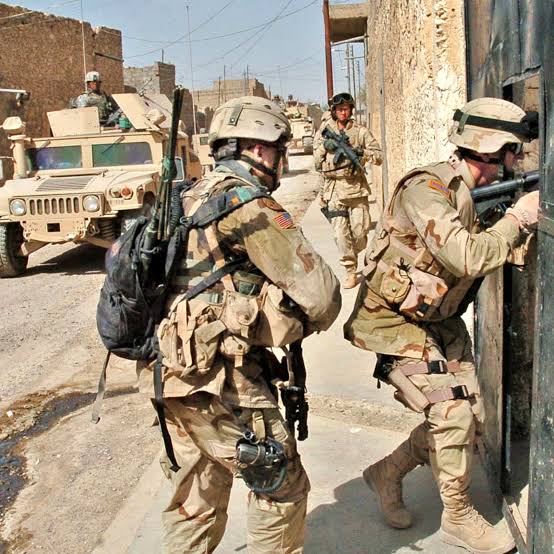
Iraq has entered a new phase in its relationship with the United States after the U.S. military completed the withdrawal of its remaining troops from the country on September 30, ending a 12-year campaign centered on defeating the Islamic State as an organized military threat.
The final U.S. forces departed from an air base in the Kurdish region of northern Iraq under a withdrawal agreement reached between Baghdad and Washington in 2024. The move formally shifts the primary responsibility for domestic counterterrorism operations to Iraqi security institutions, while Washington says its relationship with Baghdad will continue through a more conventional bilateral security framework that includes targeted training and intelligence support.
The significance of the withdrawal extends beyond the departure of military personnel. For Iraq, the transition represents an effort to place national security more firmly under state institutions and to redefine the country’s relationship with foreign military powers. Prime Minister Ali al-Zaidi described the handover as the beginning of a phase centered on Iraqi sovereignty, stronger institutions and balanced partnerships.
The change also reflects how dramatically the security environment has evolved since the U.S.-led coalition returned to Iraq in 2014. American forces initially came back after the Islamic State seized large areas of Iraqi territory. Over time, the group lost its territorial control and was reduced to scattered sleeper cells, allowing Washington and Baghdad to agree in 2024 on a gradual end to the coalition mission.
For the Iraqi government, the next challenge is not simply maintaining the gains made against ISIS. It is establishing a security structure in which armed power is concentrated under state authority. Baghdad had initially linked the September 30 withdrawal timetable to the disarmament of non-state armed groups. Some smaller factions accepted the idea, but powerful Iran-aligned militias rejected disarmament or attached conditions that complicated implementation. The government has subsequently pushed the deadline for militia disarmament to June 2027.
That unresolved issue could become one of the defining features of Iraq’s post-withdrawal security environment. The departure of American forces removes a major external military presence that has been used by some armed groups as part of the justification for retaining their weapons. At the same time, the government must demonstrate that Iraqi institutions can manage security challenges without creating new internal confrontations.
The Kurdish region faces a different set of concerns. Although most U.S. forces had already left Iraqi bases in other parts of the country, American troops remained in the semi-autonomous north until the final stage of the withdrawal. Kurdish officials have expressed particular concern about the removal of U.S. air-defense capabilities after the region experienced more than 1,000 drone and ballistic-missile attacks during the recent U.S.-Iran conflict, according to the Kurdish regional government’s Peshmerga Ministry.
This makes the transition strategically sensitive. The Kurdish region has played an important role in the campaign against ISIS and remains geographically exposed to competing regional security pressures. The withdrawal therefore creates a new requirement for Baghdad and the Kurdish authorities to coordinate their defense responsibilities while adapting to the absence of the American military umbrella.
The economic implications are also tied to the broader question of stability. Iraq’s ability to attract investment, develop infrastructure and maintain commercial activity depends partly on perceptions of security and institutional control. A transition that strengthens state institutions could support a more predictable environment for business, while renewed militia competition or instability in northern Iraq could create additional risks for infrastructure and investment.
For the United States, the withdrawal is part of a broader adjustment in its Middle East military posture. Washington has increasingly sought to reduce some long-term regional commitments while maintaining relationships through training, intelligence cooperation and bilateral security arrangements. The Iraq transition therefore changes the form of U.S. engagement rather than ending the relationship altogether.
Iraq’s institutional identity will also be tested by the change. The government is presenting the withdrawal as evidence of greater sovereignty, but sovereignty in practical terms will depend on the ability of national institutions to control armed activity, protect territory and manage relations among competing domestic and regional interests.
The immediate effects of the U.S. departure may be limited because the American military presence had already been significantly reduced. The longer-term consequences will depend on whether Iraqi forces can sustain pressure on ISIS remnants, whether the government can make progress on militia disarmament and whether security arrangements in the Kurdish region can compensate for the removal of American capabilities.
The end of the U.S. military mission therefore marks less a conclusion than a change in the operating model of Iraqi security. Baghdad now assumes greater responsibility for managing threats that were previously addressed within a U.S.-led coalition framework, while Washington retains a narrower security relationship with Iraq. How effectively that new model functions will shape the country's political stability, investment climate and regional position in the years ahead.
News You Should See
2026 Nobel Medicine Prize Honors Scientists Behind Optogenetics Breakthrough
Oil Prices Edge Lower as Stronger Middle East Exports and G7 Reserves Ease Supply Concerns
Trump Offers U.S. Assistance to Russia After Death at Siberian Plague Research Institute
Trump Takes Economic Message to Nebraska as GOP Faces Rising Cost-of-Living Pressure
U.S. Appeals Court Weighs Trump Administration’s $2.6 Billion Harvard Funding Fight
U.S. Midterm Elections Begin With Resilient Jobs Market and Persistent Cost Pressures
Latest News
The 2026 Nobel Prize in Physiology or Medicine honors Karl Deisseroth, Peter Hegemann and Georg Nagel for pioneering research behind optogenetics and its impact on neuroscience.
Oil prices edged lower as stronger Middle Eastern exports and a planned G7 release of 100 million barrels eased immediate supply concerns, while Gulf security risks and the Strait of Hormuz kept markets alert.
President Donald Trump said the United States would help Russia if needed after a laboratory worker died at a Siberian plague research institute, as Russian authorities imposed precautionary quarantine measures.
Trump’s Nebraska campaign stop highlights rising fuel and grocery costs, beef prices and growing economic pressure on Republicans ahead of the November midterm elections.
A U.S. appeals court is reviewing the Trump administration’s effort to cut Harvard’s federal research funding, with more than $2.6 billion at stake.
The U.S. enters the 2026 midterm elections with unemployment at 4.2%, while higher living and energy costs create economic pressure for households and businesses.
US services growth eased in September as input prices climbed to their highest level since July 2022, with fuel costs, supply-chain disruptions and strong demand increasing pressure on businesses.
Rising Treasury yields are increasing U.S. borrowing costs as Washington manages record debt, persistent inflation and strong economic demand, narrowing its policy options.
A EGP 16 million corporate partnership will establish and equip a bone marrow transplant unit at Cairo’s Coptic Hospital, supporting access to specialized treatment for patients.