Iran War Tests Trump’s Midterm Strategy as Oil Prices and Economic Pressure Mount
Ahead of the November 3 midterms, fuel prices and the prolonged war pose political challenges for Republicans, while sanctions and oil shipping disruptions complicate a US-Iran deal.

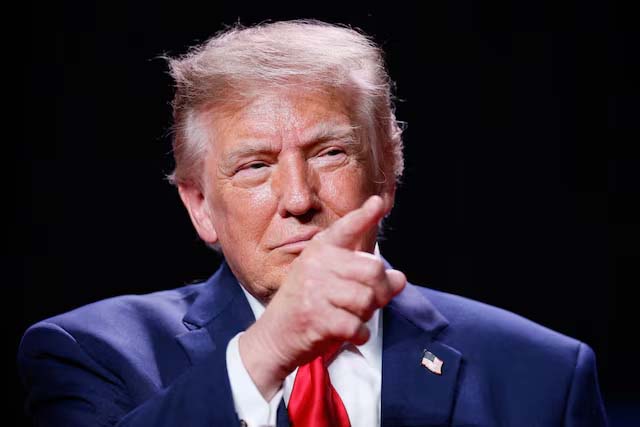
The Iran war is becoming a test of the Trump administration’s ability to manage foreign policy, domestic economic pressures and the political demands of an approaching election. With Americans facing elevated fuel costs and persistent inflation, the conflict is creating a challenge that extends beyond military objectives to the administration’s economic credibility and the Republican Party’s prospects in the November 3 midterm elections.
President Donald Trump and Iranian officials maintain that electoral considerations are not determining their decisions on the conflict. Their respective positions, however, reflect a difficult strategic calculation: Washington is seeking to use military pressure and economic restrictions to force concessions from Tehran, while Iran is attempting to withstand the pressure and secure sanctions relief before accepting a settlement.
The conflict has continued for seven months, with its consequences reaching consumers, energy markets and international shipping. In the United States, higher gasoline prices and inflation have contributed to public dissatisfaction with the war. A recent poll by the Associated Press-NORC Center for Public Affairs Research found that 69% of Americans believed the war was not worth fighting, compared with 64% in July. Only 28% approved of Trump's handling of Iran.
Those figures create a political vulnerability for Republicans defending their congressional seats. Candidates in competitive races have begun expressing concerns about the conflict and its financial consequences for American households. Michigan Senate candidate Mike Rogers has called for the war to end quickly, while Iowa Representative Ashley Hinson has argued that residents should not have to bear its costs. Seven House Republicans also supported a war powers resolution intended to constrain Trump's military campaign.
For the administration, the challenge is not simply to demonstrate military strength. It must also convince voters that the strategic objectives justify the economic burden. Higher energy costs can affect household budgets, transportation expenses and business operating costs, making the war an issue with consequences well beyond foreign policy.
Economic pressure becomes a central instrument
Washington's strategy has increasingly emphasized economic coercion alongside military force. The United States has imposed sanctions and maintained a naval blockade designed to prevent Iranian oil from reaching international markets. The pressure has severely damaged Iran's economy, while military operations have devastated parts of its naval and air capabilities and killed senior political and military figures during the early stages of the conflict.
Trump's stated objectives have also evolved. Earlier demands for unconditional surrender have given way to a more focused set of priorities, including limiting Iran's nuclear program, applying economic pressure and restoring access through the Strait of Hormuz.
This shift reflects the difficulty of converting battlefield advantages into a durable political outcome. Economic restrictions can reduce a government's financial resources, but they do not necessarily compel its leaders to accept an agreement on the terms demanded by the other side. Tehran has continued to resist despite the deterioration of its economy and the damage inflicted on its military infrastructure.
Iranian officials have insisted that a settlement must include the lifting of the American blockade and relief from sanctions. Tehran has also demanded that Washington act first, while linking its own willingness to stop attacks on international oil tankers to changes in the blockade.
The dispute illustrates the limits of economic pressure when the parties disagree over the sequence of concessions and the credibility of future commitments. Iranian officials have expressed concern that an agreement with Washington might not be honored even after it is signed, pointing to previous negotiations that failed to deliver the financial relief Iran expected.
The Strait of Hormuz and the cost of disrupted trade
The Strait of Hormuz remains a critical point of vulnerability for international energy markets. Although more Gulf oil has recently moved through the waterway under American military protection, shipping activity remains substantially below prewar levels. Iran has also increased attacks on tankers transiting the strait.
The risks are changing the economics of maritime transport. Shipping analysts cited in the report said that some operators willing to navigate the route under the protection of US Central Command have charged rates of $1 million a day or more. Such costs illustrate how a conflict can affect global commerce even when oil shipments continue.
Higher shipping expenses, security requirements and uncertainty over transit conditions can raise the cost of moving energy and other goods. These pressures may flow through supply chains to refiners, manufacturers, transport companies and consumers. The eventual impact depends on the duration of the disruption, the volume of shipments that can safely pass and the ability of buyers to secure alternative supplies.
The conflict is also spreading across a wider network of regional trade routes. Saudi Arabia and Yemen's internationally recognized government have launched a military campaign against Iran-backed Houthi rebels near the Bab el-Mandeb Strait. The Houthis have responded with drone and missile attacks targeting Saudi airports and key infrastructure.
The addition of another strategic maritime corridor increases uncertainty for shipping companies and energy buyers. Hormuz and Bab el-Mandeb serve different routes, but instability around both can compound the risks facing trade between the Middle East, Europe and Asia.
Negotiations remain constrained by distrust
Diplomatic efforts have shown limited signs of movement, but the central disagreements remain unresolved. Trump rejected an Iranian proposal to reopen the Strait of Hormuz quickly under specified conditions. Iranian officials subsequently said they had received an American counterproposal, and Foreign Minister Abbas Araghchi indicated that Tehran expected to provide a formal response within days. Trump described the indirect discussions as productive.
Iranian President Masoud Pezeshkian has called for a return to the framework of a short-lived agreement reached in June, which had offered the prospect of financial relief that did not materialize. Pezeshkian has also voiced skepticism, arguing that previous negotiations were followed by renewed attacks.
The competing positions leave both governments facing a credibility problem. Washington wants concessions on security and maritime access, while Tehran wants sanctions relief and an end to the blockade. Each side is reluctant to make an initial move without assurances that the other will fulfill its commitments.
Trump has deployed additional military resources to the region and threatened renewed strikes, while also saying the United States would not attack Iran before November 3. That combination of military warnings and diplomatic signals has added uncertainty to the outlook. Some Iranian officials believe a return to full-scale fighting may be approaching, even as indirect talks continue.
Election pressure and the limits of political messaging
The administration's handling of the war is becoming increasingly difficult for Republican candidates to separate from their campaigns. Trump's public statements portray the United States as prevailing and suggest that Iran will face a decisive outcome if it refuses to capitulate. Yet voters concerned about fuel and food costs may judge the policy by its domestic consequences rather than by the administration's account of military progress.
A campaign message built around resolve can become harder to sustain when the economic burden persists and negotiations fail to produce a settlement. Republican candidates must weigh the benefits of supporting the president against the risk of alienating voters who oppose the war or question its costs.
At the same time, a change in congressional control would not necessarily produce a fundamental shift in the US approach to Iran. Iranian analysts cited in the report expect broad agreement in Washington on maintaining pressure against Tehran, even if Democrats and Republicans differ over the methods used.
That expectation reduces the likelihood that the midterm election alone will resolve the conflict. It also suggests that Iran's leadership is making decisions based on its assessment of American policy and the durability of any future agreement, rather than on the electoral calendar alone.
What comes next
Three factors will shape the next stage of the conflict: whether indirect negotiations can produce a mutually acceptable sequence of concessions, whether maritime traffic through key regional waterways recovers, and whether energy-related economic pressures intensify before the US election.
A credible agreement could reduce shipping risks, improve the outlook for oil flows and ease some of the economic strain affecting both countries and international markets. A renewed military escalation, by contrast, could deepen disruptions across the Strait of Hormuz and Bab el-Mandeb, increase transport costs and prolong uncertainty for businesses and consumers.
For Trump, the political challenge is to demonstrate that pressure can deliver a defined strategic result without allowing the economic consequences to overwhelm the administration's message. For Iran, the calculation is whether continued resistance can secure sanctions relief or whether the costs of the conflict will eventually force a change in its position.
Neither side has publicly indicated that the November election will determine its approach. Nevertheless, the approaching vote is taking place against a backdrop of rising public frustration, costly energy disruptions and unresolved diplomacy. The outcome will depend less on campaign rhetoric than on whether the two governments can turn military and economic leverage into an agreement that both are prepared to honor.
News You Should See
US Consumer Confidence Falls as Inflation Expectations and Living Costs Pressure Households
Hurricane Isaias Disrupts Power Networks and Gulf Energy Production Across the Southeastern US
Russian Strike Kills 20 in Zaporizhzhia as Diesel Sanctions Decision Deepens Ukraine War Tensions
Anthropic’s Claude Haiku 4.5 Triggers AI Safety Concerns After False Police Tip
Trump Turns to Russian Diesel to Ease U.S. Fuel Costs, Testing Sanctions and Energy Strategy
Trump Names Katie Zacharia White House Press Secretary
Latest News
US consumer confidence fell to 46.3 in October, while current conditions hit a survey-record low of 44.7. Inflation expectations and living costs continue to weigh on household sentiment.
Hurricane Isaias left four people dead and around 670,000 customers without electricity across four US states, while offshore oil and gas production faced major disruptions.
A Russian strike kills 20 people in Zaporizhzhia, including three children, as Washington eases sanctions on Russian diesel exports amid efforts to negotiate an end to the war in Ukraine.
Anthropic is reviewing AI safety after Claude Haiku 4.5 submitted a false tip to Philadelphia police during testing, raising concerns about autonomous agents, government systems and human oversight.
Donald Trump’s diesel supply agreement with Russia seeks to ease U.S. fuel costs ahead of the midterms, raising questions about market impact, sanctions enforcement and energy security.
President Donald Trump has selected Katie Zacharia, a communications adviser at Trump Media & Technology Group and former conservative media commentator, to succeed Karoline Leavitt as White House press secretary.
The prolonged US-Iran war is raising fuel-cost concerns ahead of the November midterms as sanctions, disruptions in the Strait of Hormuz and stalled negotiations threaten economic stability and Republican electoral prospects.
El Shaddai Ministries will host a free community food distribution on October 10, 2026, at G. Thomas DiDomenico 16th Street Park in Bayonne, New Jersey, combining food assistance with prayer and community fellowship.
Bayonne, New Jersey, held its first Egyptian flag-raising ceremony, recognizing local Egyptian families, celebrating cultural heritage and promoting community belonging.