Inter Miami Turn Messi Momentum Into a Wider MLS Growth Strategy
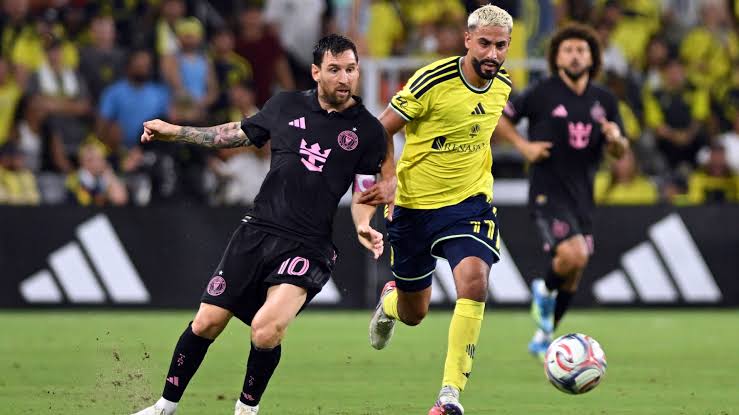
After winning the MLS title last season, Inter Miami enters the 2026 campaign as a growing global sports brand, with Lionel Messi continuing to drive its competitive and commercial appeal.

Inter Miami’s 2026 MLS campaign is no longer simply the story of a young club benefiting from the arrival of Lionel Messi. The team has entered a more demanding phase in which sporting performance, commercial expansion and global brand positioning are increasingly connected.
Founded in 2018 and owned by a group that includes former England international David Beckham, Inter Miami has developed at an unusually rapid pace. The arrival of Messi transformed the club’s international profile, but the sporting project has also produced tangible results. The team secured the Supporters’ Shield before going on to win its first MLS Cup last season, defeating Vancouver Whitecaps in the final.
That progression changes the commercial equation. A club can use a global superstar to attract attention, but sustained value depends on converting that attention into competitive credibility, stronger fan engagement and a durable identity. Inter Miami is now attempting to move from a Messi-led phenomenon into a recognizable football brand capable of competing beyond the current generation of stars.
The 2026 season provides an important test of that transition. Inter Miami competes in the Eastern Conference, where the regular season consists of 34 matches. The league includes 29 teams divided between the Eastern and Western conferences, with seven teams from each conference qualifying directly for the playoffs and the eighth- and ninth-place teams entering a qualifying round.
As of the latest standings, Inter Miami sits second in the Eastern Conference after 20 matches, with 11 wins, six draws and three defeats. The club has scored 48 goals and conceded 38, giving it 39 points, seven behind conference leader Nashville. The numbers illustrate both sides of the team’s current position: Miami remains one of the conference’s strongest attacking forces, but its defensive record leaves room for improvement if it intends to challenge consistently for major honors.
The schedule also highlights the scale of the competitive challenge. Following the August 20 draw away to Philadelphia Union, Inter Miami is scheduled to face Toronto at home on August 23, Montreal on August 30 and Atlanta United on September 6. The closing stages of the regular season will then bring further tests against Chicago Fire, Nashville, San Diego, Columbus Crew, DC United, New York City, Atlanta United, New York Red Bulls, Cincinnati, New England Revolution and Charlotte.
For the club, those fixtures have significance beyond the league table. Home matches provide opportunities to monetize one of the strongest entertainment brands currently operating in American soccer, while high-profile away fixtures extend Inter Miami’s visibility across major U.S. markets. Messi’s presence increases the commercial value of those encounters, particularly for broadcasters, sponsors and ticketing operations.
The distribution model is also central to the club’s digital reach. MLS matches featuring Inter Miami and Messi are available through Apple TV, reinforcing the growing relationship between premium sports content and global streaming platforms. This creates a business environment in which the club’s value is not restricted to stadium attendance. Digital audiences, international followers, merchandise demand and sponsorship exposure all become part of the broader commercial ecosystem.
Messi remains the most visible component of that ecosystem, but relying indefinitely on one player would create a strategic vulnerability. His sporting longevity is finite, while the value generated by the club’s brand can potentially endure for decades. Inter Miami’s longer-term challenge is therefore to build institutional recognition that survives changes in the squad and coaching staff.
The club’s competitive progress gives it an opportunity to do that. Winning the MLS Cup provided an achievement that cannot be explained solely through celebrity appeal, while the Supporters’ Shield demonstrated regular-season consistency. Repeating those results would strengthen the argument that Inter Miami has evolved into a genuine sporting institution rather than a short-term entertainment project.
The 2026 campaign has already shown that maintaining that position will not be straightforward. Inter Miami has dropped points in several high-scoring matches and currently trails Nashville despite possessing significant attacking output. Closing that competitive gap will require greater defensive stability and squad depth, particularly as the season moves toward the playoff stage.
From a brand perspective, however, the club remains exceptionally well positioned. Its combination of Beckham’s international football profile, Messi’s global popularity, Miami’s cultural identity and MLS’s expanding commercial footprint gives Inter Miami a differentiated position within the American sports market.
The next stage of growth will depend on whether the club can convert that visibility into lasting sporting standards. If Inter Miami can remain a regular title contender while gradually reducing its dependence on individual superstars, its value proposition will become considerably stronger. The ultimate objective is not simply to build the most recognizable club in MLS today, but to establish a sports brand with relevance long after the Messi era ends.
News You Should See
2026 Nobel Medicine Prize Honors Scientists Behind Optogenetics Breakthrough
Oil Prices Edge Lower as Stronger Middle East Exports and G7 Reserves Ease Supply Concerns
Trump Offers U.S. Assistance to Russia After Death at Siberian Plague Research Institute
Trump Takes Economic Message to Nebraska as GOP Faces Rising Cost-of-Living Pressure
U.S. Appeals Court Weighs Trump Administration’s $2.6 Billion Harvard Funding Fight
U.S. Midterm Elections Begin With Resilient Jobs Market and Persistent Cost Pressures
Latest News
The 2026 Nobel Prize in Physiology or Medicine honors Karl Deisseroth, Peter Hegemann and Georg Nagel for pioneering research behind optogenetics and its impact on neuroscience.
Oil prices edged lower as stronger Middle Eastern exports and a planned G7 release of 100 million barrels eased immediate supply concerns, while Gulf security risks and the Strait of Hormuz kept markets alert.
President Donald Trump said the United States would help Russia if needed after a laboratory worker died at a Siberian plague research institute, as Russian authorities imposed precautionary quarantine measures.
Trump’s Nebraska campaign stop highlights rising fuel and grocery costs, beef prices and growing economic pressure on Republicans ahead of the November midterm elections.
A U.S. appeals court is reviewing the Trump administration’s effort to cut Harvard’s federal research funding, with more than $2.6 billion at stake.
The U.S. enters the 2026 midterm elections with unemployment at 4.2%, while higher living and energy costs create economic pressure for households and businesses.
US services growth eased in September as input prices climbed to their highest level since July 2022, with fuel costs, supply-chain disruptions and strong demand increasing pressure on businesses.
Rising Treasury yields are increasing U.S. borrowing costs as Washington manages record debt, persistent inflation and strong economic demand, narrowing its policy options.
A EGP 16 million corporate partnership will establish and equip a bone marrow transplant unit at Cairo’s Coptic Hospital, supporting access to specialized treatment for patients.