IDScan Breach Exposes the Hidden Risks Behind the Global Identity Verification Economy
The theft of more than 150 million driver’s license records raises new questions about data retention, cloud security, and the growing dependence on identity verification infrastructure.

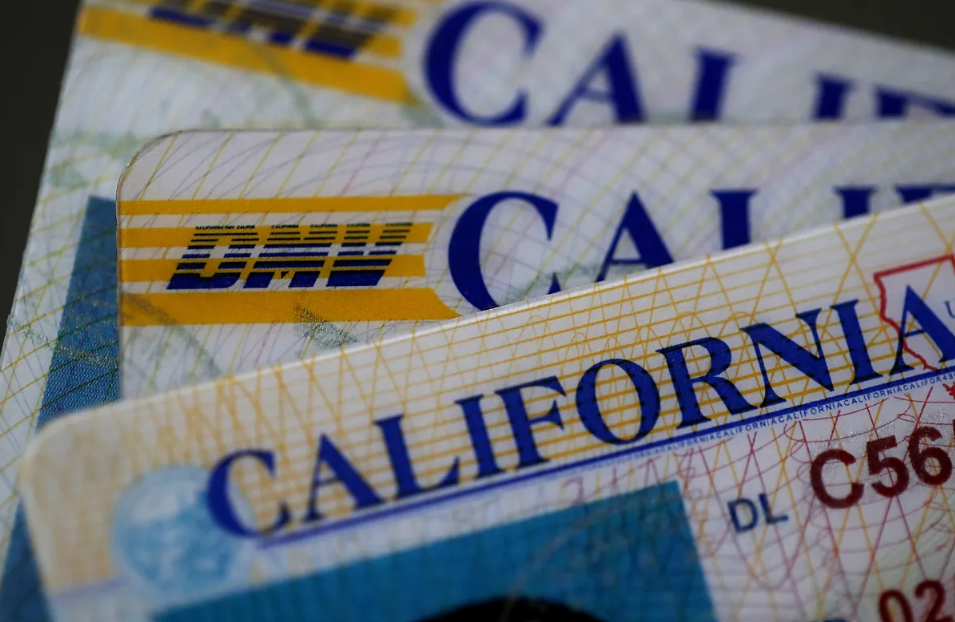
ID verification company IDScan has confirmed that it suffered a major data breach involving the theft of driver’s license information from its systems, bringing renewed attention to the growing risks surrounding the infrastructure that powers digital identity verification. The confirmation came about a week after reports indicated that the company had been compromised in what was described as a year-long hack, with a database containing information linked to more than 150 million people in the United States and Canada reportedly made searchable online. According to a notice published by the Louisiana-based company, hackers stole information from its cloud environment, including people’s full names and driver’s license numbers, as well as identity numbers associated with other government-issued documents such as passports. The announcement marks IDScan’s first formal acknowledgement that its systems had been hacked after the company previously said it was investigating an incident without confirming an intrusion.
IDScan provides identity document verification technology to corporate customers operating across a variety of industries, from entertainment venues to cannabis dispensaries. Its services are designed to help businesses inspect and verify government-issued identification documents presented by customers. This role places the company within a rapidly expanding digital identity economy in which businesses increasingly depend on specialized technology providers to manage age verification, identity checks, access control and other compliance-related processes. The breach therefore extends beyond the security of a single company and raises broader questions about the growing concentration of highly sensitive personal information within third-party technology infrastructure.
The company said it received information about a claim of a hack on or around September 1, the same day cybersecurity journalist Brian Krebs first reported evidence of a breach involving IDScan. Krebs had been alerted to a website on the dark web that allowed users to search driver's license information belonging to more than 150 million people living in the United States and Canada. The database reportedly included access to photographs associated with the records, increasing the sensitivity of the exposed information. Krebs verified the authenticity of the data by examining his own record, while another security researcher also confirmed information from the database. Reports indicated that the collection included records belonging to high-profile individuals, including U.S. Secretary of Defense Pete Hegseth. The Pentagon previously told TechCrunch that it was aware of the suspected breach, while a spokesperson for the FBI said the agency was also investigating the incident.
The scale of the reported exposure highlights a fundamental challenge in the design of modern identity verification systems. These platforms are built to create trust by helping organizations determine whether individuals are who they claim to be, but performing that function often requires access to some of the most sensitive information a person possesses. A password can be changed after a breach, and a payment card can be cancelled and replaced, but government-issued identity information is far more persistent. Names, driver's license numbers, passport-related identity numbers and photographs can remain valuable long after an initial cybersecurity incident has been discovered. This makes identity data especially attractive to cybercriminals and significantly increases the long-term consequences when large collections of such information are exposed.
From a technology design perspective, the incident also raises questions about how much information identity verification companies should retain after a verification process has been completed. The greater the amount of data stored by a centralized provider, the more useful that provider may become to businesses seeking efficient and standardized services. At the same time, every additional record increases the potential value of the company as a target. IDScan has not disclosed exactly how many individuals were affected by the breach, but the company notes on its website that it holds more than 150 million driver's license records. This concentration illustrates one of the defining trade-offs of the platform economy: centralization can reduce operational costs and simplify complex processes for businesses, but it can also create a single point of failure capable of affecting enormous numbers of people.
The economic model behind identity verification has become increasingly important as more organizations move sensitive processes into digital environments. Businesses can outsource the technical complexity of document verification instead of developing specialized systems internally, while customers benefit from faster and more automated experiences. However, the convenience created by centralized infrastructure can obscure the complexity of the data journey. A consumer may believe they are simply sharing an ID with a retailer, venue or service provider, while the information may actually pass through a network of third-party technology companies, cloud services, storage systems and security platforms. The visible brand experience is therefore often very different from the underlying architecture responsible for processing and protecting the data.
This gap between user experience and data infrastructure has important consequences for brand trust. Companies that collect identity documents are effectively asking consumers to exchange highly sensitive information for access, convenience or regulatory compliance. For an identity verification provider, trust is not simply a marketing advantage but a central part of the product itself. A major breach can therefore create a dual crisis involving both technical security and brand identity. The immediate questions concern how attackers gained access, which systems were compromised and what information was taken. The longer-term challenge concerns whether customers, business partners and consumers will continue to view the affected company as a reliable guardian of identity information.
IDScan said its investigation remains ongoing and that it is providing information through its website to notify potentially affected individuals. The company's statement also said that full access to the exposed information required payment, apparently referring to the larger cache of stolen data associated with the incident. However, IDScan has not publicly stated how many individuals were directly affected. The company also did not respond to TechCrunch's request for additional comment, including questions about whether the attackers had contacted the company with a ransom demand in exchange for not releasing the stolen information. These unanswered questions reflect a common challenge during large-scale cyber incidents, where investigators must determine how attackers entered a system, what data they accessed, whether information was copied and how long unauthorized access may have continued.
For affected individuals, however, uncertainty can become part of the damage. People whose identity documents may have been exposed need to understand what information was taken and how it could potentially be used. Identity records can be particularly valuable in fraud and impersonation schemes because they provide information that is difficult or impossible to replace completely. When stolen records are organized into searchable databases rather than existing as isolated files, the potential for misuse can become even greater. The reported database connected to the IDScan breach demonstrates how cybercriminals can transform stolen information into a structured resource that may be easier to search, cross-reference and exploit.
The incident also arrives as demand for identity verification continues to expand across both digital and physical services. Governments, financial institutions, online platforms, retailers, travel companies and entertainment businesses are increasingly implementing systems that require people to prove their identity or age. What was once an occasional process associated primarily with opening a bank account or completing an official transaction is becoming a routine part of everyday life. This expansion creates significant commercial opportunities for identity technology companies, but it also means that larger volumes of government-issued documents are being collected and processed across the technology industry.
As identity verification becomes more deeply integrated into customer journeys, questions about data minimization and retention are likely to become increasingly important. Companies will face greater pressure to determine whether they need to retain complete copies of identity documents, how long sensitive records should remain accessible and who should be allowed to access them. Stronger encryption, restricted access controls, continuous security monitoring and clearer separation between customer environments may become increasingly important elements of identity technology design. The central issue is no longer simply whether a company can verify an individual's identity quickly, but whether it can do so without creating an unnecessarily large and valuable repository of personal information.
The breach may also lead businesses that depend on third-party identity verification providers to reassess their relationships with technology vendors. Companies frequently compare providers based on functionality, cost, speed, integration capabilities and regulatory compliance. Cybersecurity is also a major consideration, but an incident of this scale demonstrates how deeply a vendor's security practices can affect the reputation of every organization using its services. If a consumer submits an identity document to a business and that information is later exposed through a third-party provider, the consumer may still associate the incident with the original brand that requested the information.
This creates a shared responsibility model for digital trust. Organizations can no longer fully separate their own reputation from the security of the technology infrastructure operating behind their customer experience. As digital ecosystems become increasingly interconnected, cybersecurity supply chains are becoming business, economic and brand issues rather than purely technical concerns. Companies may therefore demand greater transparency from identity technology providers about where information is stored, how long it is retained and which systems or third parties have access to it.
The IDScan incident ultimately illustrates the changing architecture of trust in the digital economy. Modern businesses increasingly rely on technology systems that verify identity, reduce fraud and support regulatory requirements. These systems can make transactions faster and more convenient, but they also create large repositories of information that individuals cannot easily replace when compromised. The reported theft involving more than 150 million driver's license records demonstrates that identity verification infrastructure has itself become a high-value target for cybercriminals.
For companies operating in this sector, security can no longer be treated as an additional technical feature operating behind the product. It has become part of the product's design, economic value and brand identity. The investigation into the IDScan breach remains ongoing, and important questions concerning the full scope of the compromised information and the number of affected individuals have yet to be answered. Nevertheless, the strategic implications are already clear. As identity verification becomes a standard layer of everyday transactions, the companies responsible for collecting and processing official documents will face increasing pressure to redesign how sensitive data is stored, retained and protected. The challenge for the next generation of identity technology will not simply be proving who people are. It will be proving that the systems created to protect identity do not become one of the greatest threats to it.
News You Should See
2026 Nobel Medicine Prize Honors Scientists Behind Optogenetics Breakthrough
Oil Prices Edge Lower as Stronger Middle East Exports and G7 Reserves Ease Supply Concerns
Trump Offers U.S. Assistance to Russia After Death at Siberian Plague Research Institute
Trump Takes Economic Message to Nebraska as GOP Faces Rising Cost-of-Living Pressure
U.S. Appeals Court Weighs Trump Administration’s $2.6 Billion Harvard Funding Fight
U.S. Midterm Elections Begin With Resilient Jobs Market and Persistent Cost Pressures
Latest News
The 2026 Nobel Prize in Physiology or Medicine honors Karl Deisseroth, Peter Hegemann and Georg Nagel for pioneering research behind optogenetics and its impact on neuroscience.
Oil prices edged lower as stronger Middle Eastern exports and a planned G7 release of 100 million barrels eased immediate supply concerns, while Gulf security risks and the Strait of Hormuz kept markets alert.
President Donald Trump said the United States would help Russia if needed after a laboratory worker died at a Siberian plague research institute, as Russian authorities imposed precautionary quarantine measures.
Trump’s Nebraska campaign stop highlights rising fuel and grocery costs, beef prices and growing economic pressure on Republicans ahead of the November midterm elections.
A U.S. appeals court is reviewing the Trump administration’s effort to cut Harvard’s federal research funding, with more than $2.6 billion at stake.
The U.S. enters the 2026 midterm elections with unemployment at 4.2%, while higher living and energy costs create economic pressure for households and businesses.
US services growth eased in September as input prices climbed to their highest level since July 2022, with fuel costs, supply-chain disruptions and strong demand increasing pressure on businesses.
Rising Treasury yields are increasing U.S. borrowing costs as Washington manages record debt, persistent inflation and strong economic demand, narrowing its policy options.
A EGP 16 million corporate partnership will establish and equip a bone marrow transplant unit at Cairo’s Coptic Hospital, supporting access to specialized treatment for patients.