Honda and Nissan Collaboration Faces Challenge of Time Constraints
Honda and Nissan’s recently announced collaboration has drawn attention for its potential to reshape Japan’s

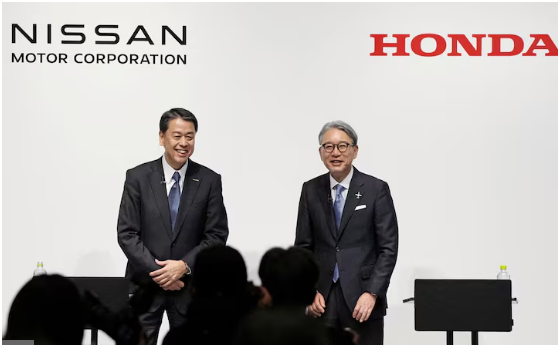
Honda and Nissan’s recently announced collaboration has drawn attention for its potential to reshape Japan’s automotive landscape and enhance competitiveness in the global electric vehicle (EV) market. However, industry analysts warn that the ambitious tie-up faces a significant hurdle: neither company can afford the luxury of time needed to fully realize the partnership’s benefits.
The Collaboration
The two Japanese automakers, traditionally rivals, have joined forces to co-develop electric vehicle technologies and platforms in response to increasing competition from global EV leaders such as Tesla, BYD, and European manufacturers. The partnership is seen as a strategic move to pool resources, share development costs, and accelerate the transition to EVs in a fast-evolving market.
Key areas of collaboration include:
Shared EV Platforms: Designing scalable platforms to reduce costs and improve efficiency.
Battery Technology: Joint investments in advanced battery systems to increase range and reduce charging times.
Global Expansion: Leveraging each company’s market presence to penetrate regions like North America and Europe more effectively.
Why Time Is a Critical Factor
While the partnership promises long-term benefits, both Honda and Nissan face immediate challenges that could hinder the collaboration's success.
Market Pressure: With global EV adoption accelerating, delays in launching competitive models could result in lost market share. Both companies are already playing catch-up in a market dominated by Tesla and Chinese automakers.
Financial Constraints: Developing EVs requires significant upfront investment, and both companies are grappling with constrained budgets after years of declining profitability and high R&D costs.
Internal Restructuring: Both Honda and Nissan are undergoing internal reorganizations to streamline operations, which could slow the progress of joint projects.
“Honda and Nissan are working against the clock,” said [name], an automotive analyst. “The industry is moving rapidly, and they don’t have the luxury of a lengthy development cycle.”
Competition and Market Dynamics
The collaboration comes as the global automotive market shifts towards electrification. Governments worldwide are imposing stricter emission regulations, and consumers are increasingly favoring sustainable vehicles. Honda and Nissan must contend with aggressive competition from:
Tesla: Known for its innovation and dominance in the EV market.
Chinese Automakers: Companies like BYD and NIO are capturing market share with affordable, high-performance EVs.
European Giants: Volkswagen and BMW are investing heavily in EVs, supported by strong government incentives in Europe.
Potential Advantages of the Tie-Up
Despite the challenges, the partnership could offer significant advantages if executed efficiently:
Cost Efficiency: Shared platforms and technology development can reduce manufacturing costs.
Complementary Strengths: Honda’s expertise in hybrid technology and Nissan’s experience with the Leaf EV could create synergies.
Global Reach: Combining resources could help the companies expand into new markets and strengthen their positions in existing ones.
“This partnership could be a game-changer if they can execute quickly and effectively,” said [name], an automotive industry consultant.
Challenges Ahead
To succeed, Honda and Nissan must address several obstacles:
Speed of Execution: Accelerating the development timeline without compromising quality or performance.
Corporate Culture: Aligning the strategies and priorities of two distinct corporate entities.
Regulatory Hurdles: Navigating different emission standards and regulations across global markets.
Looking Ahead
Both Honda and Nissan have expressed optimism about the collaboration, but they are keenly aware of the urgency. The companies have announced plans to unveil their first jointly developed EV platform by [specific year], with production expected to begin shortly after.
“This is a partnership born out of necessity,” said [name], a senior executive at [company]. “We know the challenges, but we also see the opportunities.”
Conclusion
The Honda-Nissan collaboration represents a bold step towards addressing the challenges of electrification and global competition. However, the success of this tie-up hinges on the ability to move swiftly and decisively. With time as their most scarce resource, the companies face a race against the clock to prove that their partnership can deliver results in an increasingly competitive EV market.
News You Should See
Pope Leo Opposes Death Penalty as U.S. Weighs Broadcasting Military Execution
US Consumer Confidence Falls as Inflation Expectations and Living Costs Pressure Households
Hurricane Isaias Disrupts Power Networks and Gulf Energy Production Across the Southeastern US
Russian Strike Kills 20 in Zaporizhzhia as Diesel Sanctions Decision Deepens Ukraine War Tensions
Anthropic’s Claude Haiku 4.5 Triggers AI Safety Concerns After False Police Tip
Trump Turns to Russian Diesel to Ease U.S. Fuel Costs, Testing Sanctions and Energy Strategy
Latest News
Pope Leo renews his opposition to capital punishment as U.S. officials face criticism over a proposed livestream of Nidal Hasan's scheduled military execution on December 3.
US consumer confidence fell to 46.3 in October, while current conditions hit a survey-record low of 44.7. Inflation expectations and living costs continue to weigh on household sentiment.
Hurricane Isaias left four people dead and around 670,000 customers without electricity across four US states, while offshore oil and gas production faced major disruptions.
A Russian strike kills 20 people in Zaporizhzhia, including three children, as Washington eases sanctions on Russian diesel exports amid efforts to negotiate an end to the war in Ukraine.
Anthropic is reviewing AI safety after Claude Haiku 4.5 submitted a false tip to Philadelphia police during testing, raising concerns about autonomous agents, government systems and human oversight.
Donald Trump’s diesel supply agreement with Russia seeks to ease U.S. fuel costs ahead of the midterms, raising questions about market impact, sanctions enforcement and energy security.
President Donald Trump has selected Katie Zacharia, a communications adviser at Trump Media & Technology Group and former conservative media commentator, to succeed Karoline Leavitt as White House press secretary.
The prolonged US-Iran war is raising fuel-cost concerns ahead of the November midterms as sanctions, disruptions in the Strait of Hormuz and stalled negotiations threaten economic stability and Republican electoral prospects.
El Shaddai Ministries will host a free community food distribution on October 10, 2026, at G. Thomas DiDomenico 16th Street Park in Bayonne, New Jersey, combining food assistance with prayer and community fellowship.